

Mess food service UK: a guide to home-cooked Indian meals for students and busy households
Saakshi's Kitchen EditorialKey Takeaways
A mess food service UK can mean more than a regular takeaway: it is often a practical way to keep familiar, home-style meals ready for busy days. The right choice depends on delivery details, storage, ingredients and how well the service fits your routine.
- Mess-style meals are usually planned for everyday eating rather than a single restaurant occasion.
- Frozen delivery can make meal planning easier for students, professionals and families.
- Check portions, postcode coverage, minimum orders, reheating guidance and allergen labelling.
- Compare the full basket cost with the takeaway habits you are trying to replace.
- Choose a kitchen that explains its food and service standards clearly.
What “mess food service” means in the UK
In the UK, “mess food service” is an informal phrase for regular, home-style meals supplied to a group or household. It may describe a tiffin arrangement, a weekly meal box or frozen dishes ordered for later. Unlike a restaurant order made for one evening, the idea is usually tied to routine, value and the comfort of familiar food.
How mess-style meals differ from takeaway food
Takeaway food is commonly chosen around a craving, a late finish or a night when nobody wants to cook. Mess-style meals are planned differently: portions are selected for an ordinary lunch or dinner, and the menu may include dal, rajma, chole, kadhi or a seasonal sabzi alongside rice, roti or another staple. The occasion is different too; restaurant Indian food can feel like celebration food, while ghar ka khana belongs on a Tuesday night.
A meal service may also offer several portions together, so the food works as part of a household plan rather than as a sharing platter ordered on impulse. That distinction matters when comparing price, storage and how often you expect to eat at home.
Who typically uses a mess food service
Students often look for a dependable alternative to cooking in a small shared kitchen, especially during deadlines or exam periods. Busy professionals may want a few evening meals without committing to a large shop, while families can use delivered portions on school-run nights or during demanding weeks.
It can also suit relatives arranging meals for someone living away from home. The practical question is not whether a service sounds convenient, but whether its portion sizes, delivery window and storage format match the person receiving it.
When a tiffin or meal delivery service may be a better fit
A tiffin or meal delivery service is worth considering when you want a repeatable pattern rather than a different takeaway menu each night. It may be especially useful if cooking facilities are limited, shopping is irregular or you would rather keep several meals in the freezer for later.
For students comparing options in a particular city, a Manchester student meal guide can help frame questions about budgets, delivery reliability and different meal formats. The best fit is the one that leaves you with a realistic plan, not a box of food you cannot store or finish.
What to look for when choosing a service
Choosing a service involves more than browsing attractive dish photographs. Look at how the menu changes, how orders are packed, whether your postcode is covered and how clearly ingredients are described. These details tend to matter more after the first order, when the service becomes part of the week.
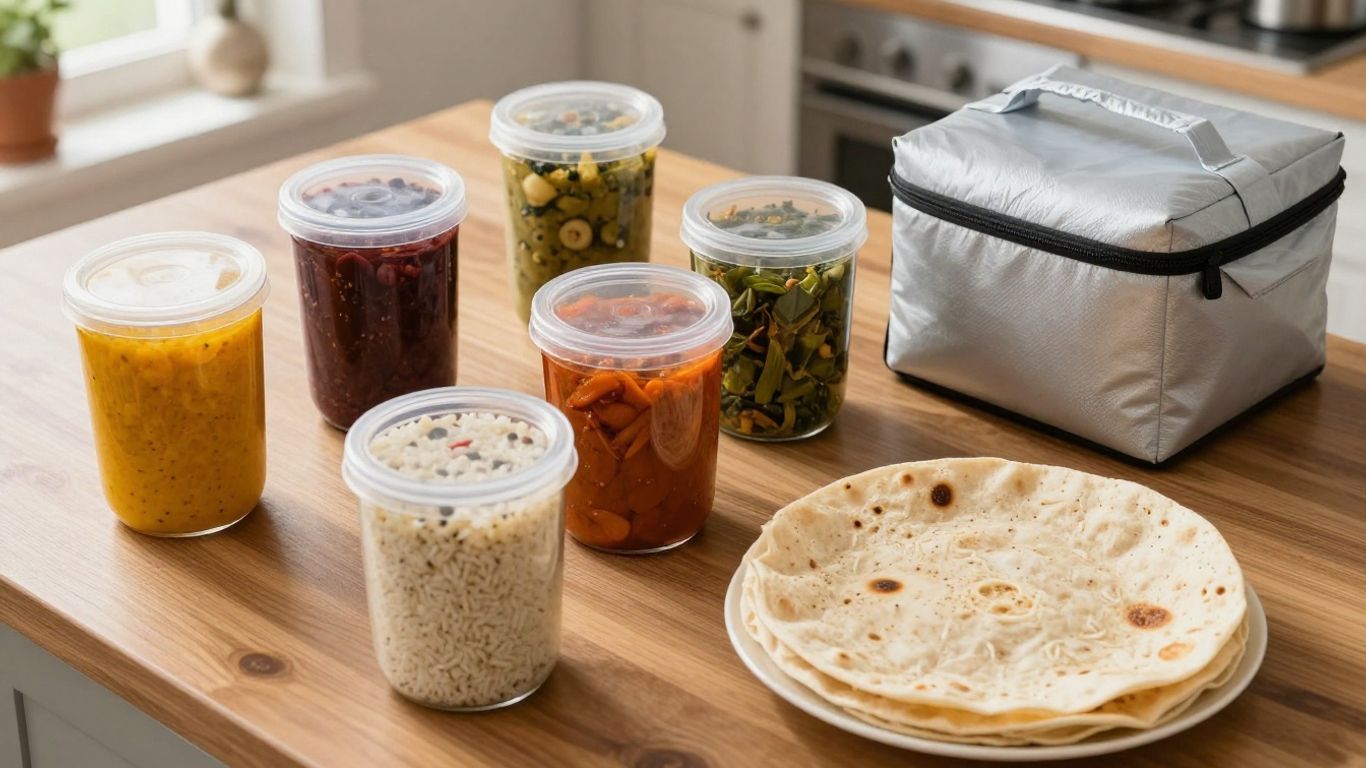
A useful comparison also considers how much work remains once the food arrives. If you are equipping a small kitchen, practical kitchen gadgets may help with reheating and serving, but the meal provider should still explain its own instructions clearly.
Menu variety and ordering flexibility
A rotating menu can prevent a weekly plan from feeling repetitive, but variety should not mean choosing dishes you will not eat. Check whether there is a mix of vegetarian and meat dishes, familiar staples and less frequent regional recipes. It is also worth seeing whether you can order individual dishes, a box or a recurring plan.
Some services suit people who want the same structure each week; others work better for one-off orders around travel, deadlines or guests. Read the menu alongside the ordering terms rather than treating the menu as a promise of unlimited flexibility.
Portion sizes and household needs
Portion language can be vague, so look for weights, serving guidance or clear photographs used consistently. A single student, a couple and a family will measure value differently, and a generous portion for one person may be awkward if freezer space is limited.
Think about the rest of the meal as well. A dish intended to sit alongside rice or roti may not be equivalent to a complete meal portion, so compare like with like before deciding that one service is cheaper.
Delivery areas, schedules and minimum orders
Postcode coverage should be checked before you build a weekly routine around a provider. Also confirm delivery days, whether someone needs to be present, what happens at student accommodation and whether there is a minimum basket value.
Delivery charges can change the apparent price of a meal. If a service publishes a locations page, use it first; a home-cooked meal box guide is another useful way to think through postcode coverage, portions and delivery arrangements without rushing the decision.
Ingredient and allergen information
Ingredient and allergen information should be easy to find before payment. Look for dish-level details rather than a broad statement about the whole menu, and contact the service when the labelling does not answer a specific question.
Do not assume that a vegetarian dish has no allergens, or that a familiar recipe is suitable for every dietary requirement. Clear information makes it easier to choose confidently and to explain the order to someone else in the household.
How frozen meal delivery works
Frozen delivery changes the rhythm of eating: you receive meals in one delivery and decide when to use them. That can be useful for a student with an uneven timetable or a household that does not eat at the same time every day. It also means freezer capacity and reheating instructions need to be considered before ordering.
Preparing for delivery day
Make room in the freezer before the delivery arrives, particularly if you are ordering several portions. Check that the address, access instructions and contact details are correct, and decide who can receive the parcel if the usual recipient is at work or in a lecture.
If the order is for student accommodation, ask about reception procedures and collection times. A little planning prevents meals being left in an unsuitable place or becoming difficult to identify later.
Safe freezer storage and reheating
Follow the provider’s storage and reheating instructions rather than relying on a general assumption about every dish. Keep meals frozen as directed, use suitable cookware and make sure the centre is thoroughly hot before serving.
Microwave, hob and oven timings can vary with portion size and equipment. If instructions are missing or unclear, contact the service before reheating; guessing is not a sensible shortcut.
Planning meals around study, work and family routines
A freezer plan works best when it is visible and modest. Start with the number of meals you can reasonably use in a week, then leave space for social plans, cooking and meals eaten elsewhere. A short weekly check can keep food from being forgotten at the back of the freezer.
For a student or busy household, a practical routine might look like this:
- Choose two or three evenings when cooking is least convenient.
- Keep one or two portions for late finishes or unexpected changes.
- Pair dishes with rice, roti or another staple already in the cupboard.
- Review the remaining portions before placing the next order.
This approach keeps delivery as a useful part of the week rather than making it another fixed commitment. A student meal planning guide can also help when comparing inclusions, portion sizes and reheating details on a limited budget.
What to check on packaging and instructions
Before putting everything away, check the dish name, date information, storage direction and allergen details on the packaging. Keep the original instructions with the meals if you transfer anything into an outer freezer box, and do not rely on memory for timings.
It is sensible to contact the provider if a label is damaged, a seal looks unusual or the contents do not match the order. Good packaging information should make the next step obvious.
Comparing the cost and value
Price per portion is only one part of the calculation. Delivery, minimum basket values, the amount of accompaniment required and the number of meals actually eaten all affect value. A cheaper order is not necessarily better if half of it sits unused.
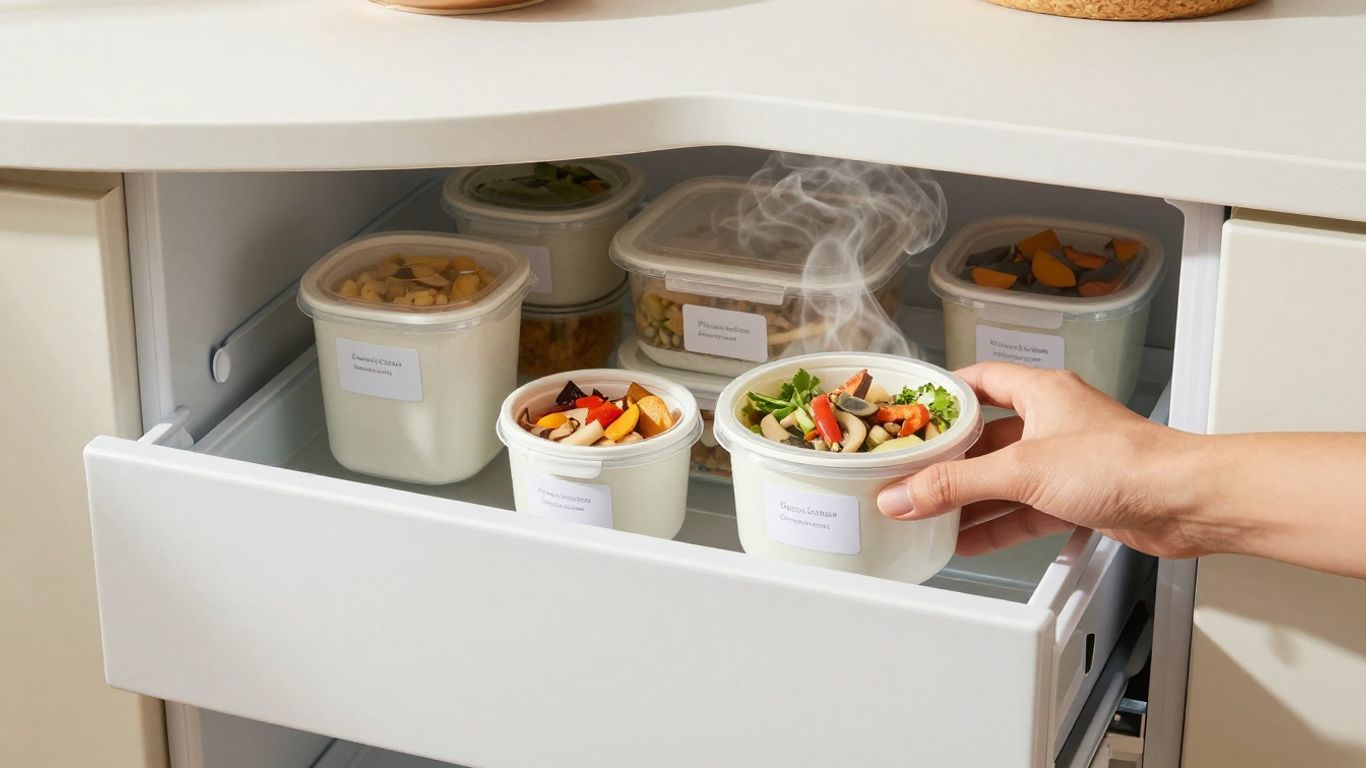
The fairest comparison is with your real routine, including the takeaway orders or last-minute supermarket trips you are trying to reduce. It can help to write down a typical week before choosing a plan.
One-off orders versus recurring meal plans
One-off orders give you room to test dishes, portion sizes and delivery arrangements. A recurring plan can be convenient when you already know how many meals your household uses and when you want less ordering administration.
Read the pause, skip and cancellation terms carefully. A plan is only useful if it can accommodate holidays, term breaks and changes in working hours.
Delivery fees and minimum basket values
A delivery fee may be reasonable for a small order but less significant when spread across a larger basket. Minimum values can also encourage over-ordering, so check freezer space and expected consumption before adding extra dishes.
Some providers publish thresholds or delivery areas prominently; others place the detail later in the checkout process. Finding it early makes comparisons more honest.
Comparing meal delivery with takeaway spending
Takeaway spending often looks manageable order by order, but a weekly total can tell a different story. Compare the full meal-delivery basket with the number of takeaway meals it replaces, including drinks, sides and delivery charges where relevant.
This is not an argument that one format suits everyone. Takeaway has its place; frozen home-style meals simply offer a different way to organise ordinary dinners.
Ordering for one person, couples or families
For one person, individual portions and freezer-friendly dishes may be more useful than a large mixed box. Couples might share staples while choosing different mains, whereas families may need a combination of familiar dishes and varying portion sizes.
The household’s eating pattern should guide the order. If one person is away several nights a week, a smaller first basket may provide a more accurate picture of value than buying for the whole calendar week.
Food safety and service standards
Food safety begins with the provider’s information and continues in your own home. Look for a kitchen that explains its hygiene position, storage method, reheating guidance and allergen process without making you search for basic answers. Reviews can add context, but they do not replace clear operational information.
Checking the kitchen’s hygiene information
A provider should make its relevant hygiene information easy to locate and should be willing to answer sensible questions about handling and packaging. Check whether the information refers to the kitchen actually preparing the meals, rather than relying on a vague general statement.
You can also compare how consistently the service communicates across its menu, packaging and customer support. Clear, repeated guidance is more useful than a single reassuring phrase.
Understanding halal food descriptions
Halal wording should be read precisely. If a provider says its kitchen-cooked meats are halal, that is the scope of the statement; it should not be expanded into assumptions about certification or every item on the menu.
Where a household has particular requirements, ask about the specific dish and preparation information before ordering. Precision is kinder than guesswork, especially when arranging food for someone else.
Reviewing allergens and dietary requirements
Allergen information should be checked for every dish selected, including sauces, sides and accompaniments. If you have an allergy or strict dietary requirement, ask direct questions about ingredients and handling before placing an order.
Do not substitute a dish because its name sounds similar to another one. Recipes and labelling vary, so the provider’s current information is the appropriate reference.
Assessing customer reviews and delivery history
Reviews are most useful when you look for patterns: whether parcels arrive as expected, whether instructions are understandable and whether customer service responds when something goes wrong. A handful of enthusiastic comments cannot tell you everything about a delivery history.
It is also worth reading the provider’s own service information alongside reviews. For general household planning, discreet cleanup guidance and professional gutter installation are separate practical topics, but the same habit applies: check the scope of a service rather than assuming it covers more than it says.
Choosing an Indian meal service for UK students
Students need food that can fit around lectures, part-time work, shared kitchens and changing budgets. A meal service should therefore be judged on access and routine as much as taste. University accommodation can add its own complications, from reception hours to limited freezer space.
Ordering by university, city or postcode
Start with the delivery postcode, not just the university name. Campuses can span several addresses, and halls may have different rules for couriers or frozen parcels. Confirm the exact delivery instructions before paying.
City-focused advice can be helpful when you are comparing options; a London student food guide covers practical questions around budgets, subscriptions and accommodation delivery. The final decision should still be based on the recipient’s postcode and timetable.
Managing meals during term time and holidays
Term dates can make a recurring plan either useful or inconvenient. Consider pausing or reducing orders during reading weeks, placements and holidays, and decide whether there is enough freezer space for a larger delivery before travelling home.
Students may also prefer a one-off order during exams and a more regular pattern during ordinary teaching weeks. Flexibility is valuable when the academic calendar keeps moving.
How parents can arrange deliveries
Parents arranging meals should first agree on preferences, portion expectations and delivery access with the student. It is helpful to share the order confirmation and reheating instructions, particularly when the parcel is going to halls or a shared house.
A student-focused university meal delivery guide offers another checklist for delivery access, dietary questions and planning. The arrangement works best when the student remains involved rather than receiving an unexpected box they cannot store.
Building a practical weekly meal routine
A workable student routine does not need to cover every meal. Choose a few dependable evenings, keep cupboard staples available and leave room for campus meals or cooking with friends. The aim is to remove some last-minute decisions without making the week feel over-scheduled.
Some students also find it useful to keep a note of dishes they would reorder, portions that suited them and any questions raised by the labels. That small record makes the next order quicker and more considered.
Why consider Saakshi’s Kitchen for home-cooked Indian meals
Saakshi’s Kitchen prepares home-cooked Indian meals in a FSA 5-star kitchen and delivers them frozen, ready to reheat. The food is positioned around Punjabi home cooking and everyday family recipes rather than restaurant-style occasion food. That makes the service relevant to students, working households and relatives arranging meals for family members elsewhere in the UK.
Meals prepared in a FSA 5-star kitchen and delivered frozen
The meals are prepared in a FSA 5-star kitchen and delivered frozen for storage at home. The kitchen’s food is built around familiar pantry ingredients and a masala made from scratch each batch, with dishes such as dal, rajma, chole and seasonal sabzi forming the sort of weekly rotation associated with home cooking.
The kitchen also has an FSA 5-star rating. Readers who want to review the ordering process and delivery format can visit Saakshi's Kitchen for further information.
Indian dishes designed for straightforward reheating
Meals arrive ready to reheat, so the main task at home is following the instructions and choosing an appropriate accompaniment. The cooking approach includes a proper bhuno, spices ground and blended in the kitchen, and a tadka added at the end for dishes where that method applies.
The result is intended for everyday eating: spiced rather than necessarily hot, with food that can sit alongside rice or roti. Kitchen-cooked meats are halal, while dish-level ingredient and allergen information should still be checked for each order.
Delivery options for households across mainland UK
Delivery planning matters as much as the menu, particularly for students and families ordering to different addresses. Check the postcode, delivery information and storage requirements before placing an order, then make sure the recipient has enough freezer space.
For a broad view of the menu and service, Saakshi's Kitchen provides information about home-cooked Indian meals delivered across mainland UK. It is still sensible to confirm the current details at checkout, since delivery arrangements can depend on location and order size.
Customer feedback, repeat ordering and service experience
Customer feedback can help you judge whether the service fits ordinary life, especially when comments discuss delivery, packaging and reheating rather than only flavour. Saakshi’s Kitchen reports a 4.6★ rating from 800+ verified reviews, 16,000+ deliveries and that 79% of orders come from returning families.
Those figures describe the service’s reported history, not a guarantee about every order. For another practical perspective on meal delivery and home routines, a weekly meal routine guide can help you decide what to ask before committing.
Conclusion
A mess food service UK can be a useful bridge between cooking every meal and relying on takeaway, provided the portions, delivery arrangements, storage and ingredient information suit your household. Compare the whole routine rather than just the headline price, and choose a provider whose food and service standards are explained plainly.
Frequently Asked Questions
What is a mess food service in the UK?
It is usually a regular meal arrangement offering home-style dishes through tiffin, meal boxes or frozen delivery, often for students, professionals or households.
Is mess food the same as takeaway?
Not usually. Takeaway is commonly ordered for one occasion, while mess-style food is planned for regular meals and may arrive in several portions for later use.
Are frozen meals suitable for student accommodation?
They can be, provided the accommodation accepts the delivery, the student has enough freezer space and the meals can be reheated according to the provider’s instructions.
How do I compare the cost of meal delivery?
Compare the complete basket, delivery charges and minimum order with the number of meals it replaces. Include sides, drinks and delivery fees in any takeaway comparison.
What should I check for food allergies?
Read the allergen information for each selected dish and contact the provider if anything is unclear. Do not infer suitability from a dish name or from another customer’s experience.
Can parents order meals for university students?
Yes, but they should confirm the student’s address, reception arrangements, food preferences, freezer capacity and preferred delivery timing first.
Should I choose a one-off order or a meal plan?
A one-off order is useful for testing portions and dishes. A recurring plan may suit a stable routine, provided it allows pauses or changes during holidays and timetable breaks.
Order home-cooked Indian meals from Saakshi's Kitchen · UK delivery locations.
Students: 15% off every order over £40
Verify once with Student Beans and 15% comes off every one-off order over £40 at checkout, for as long as you are studying. First order? Use FIRST20 for 20% off instead. One code per order, so the two do not stack.
Get the student discount → · Student meal boxes for UK students