

Weekly tiffin service UK: how to choose home-cooked Indian meals for your routine
Saakshi's Kitchen EditorialKey Takeaways
A weekly tiffin service can make weekday meals simpler, but the right choice depends on portions, storage, delivery and the sort of cooking you actually want to eat.
- Check whether meals arrive frozen and understand how much freezer space you need.
- Compare dishes, portion sizes, allergens and meat options before ordering.
- Confirm postcode coverage, delivery charges and the expected delivery window.
- Work out the true cost per portion, including minimum orders and fees.
- Read kitchen, review and refund information before committing to a recurring plan.
Understand what a weekly tiffin service includes
A weekly tiffin service UK option usually means prepared meals that arrive together, rather than a restaurant order placed each evening. The useful questions are practical ones: how many portions are included, how are they packed, and do you order once or repeat automatically? A good service should make those details easy to find before payment.
Typical meal formats, portions and serving sizes
Meal formats vary from individual tubs to larger family portions, and the label may describe a dish rather than a complete meal. Look for whether rice, roti, dal or a side is included, rather than assuming a curry box will feed two people. A complete everyday meal might combine sabzi, dal and roti or rice; sharing platters are a different proposition.
For anyone used to ordering takeaway, a Birmingham tiffin guide offers a useful way to think about the distinction between a tiffin meal and an occasional restaurant order. The more clearly a provider states serving sizes, the easier it is to plan lunches, dinners and leftovers without guessing.
Frozen delivery and how it fits into weekly meal planning
Frozen delivery suits households that want to spread meals across the week instead of eating everything on arrival. You can place portions in the freezer, move only what you need to the fridge, and build meals around work shifts or late finishes. This also means checking your freezer capacity before choosing a larger box.
Saakshi's Kitchen describes its meals as home-cooked Indian meals prepared in a FSA 5-star kitchen, delivered frozen and ready to reheat. That format is particularly useful when Tuesday dinner needs to be decided in advance, rather than left to a last-minute takeaway search.
One-off orders versus recurring weekly plans
A one-off order is a sensible first step if you are unsure about flavours, serving sizes or how much storage you have. A recurring plan can be more convenient when the same household already knows its weekly rhythm, but read the pause, cancellation and amendment terms first. “Weekly” should not automatically mean you are locked into a long commitment.
Some services let you choose dishes each week, while others provide a set menu or a bundle. Compare the ordering page with the delivery information, and use a weekly Indian meal delivery guide as a prompt to check whether the advertised flexibility applies to your postcode and order size.
Compare menus and meal choices
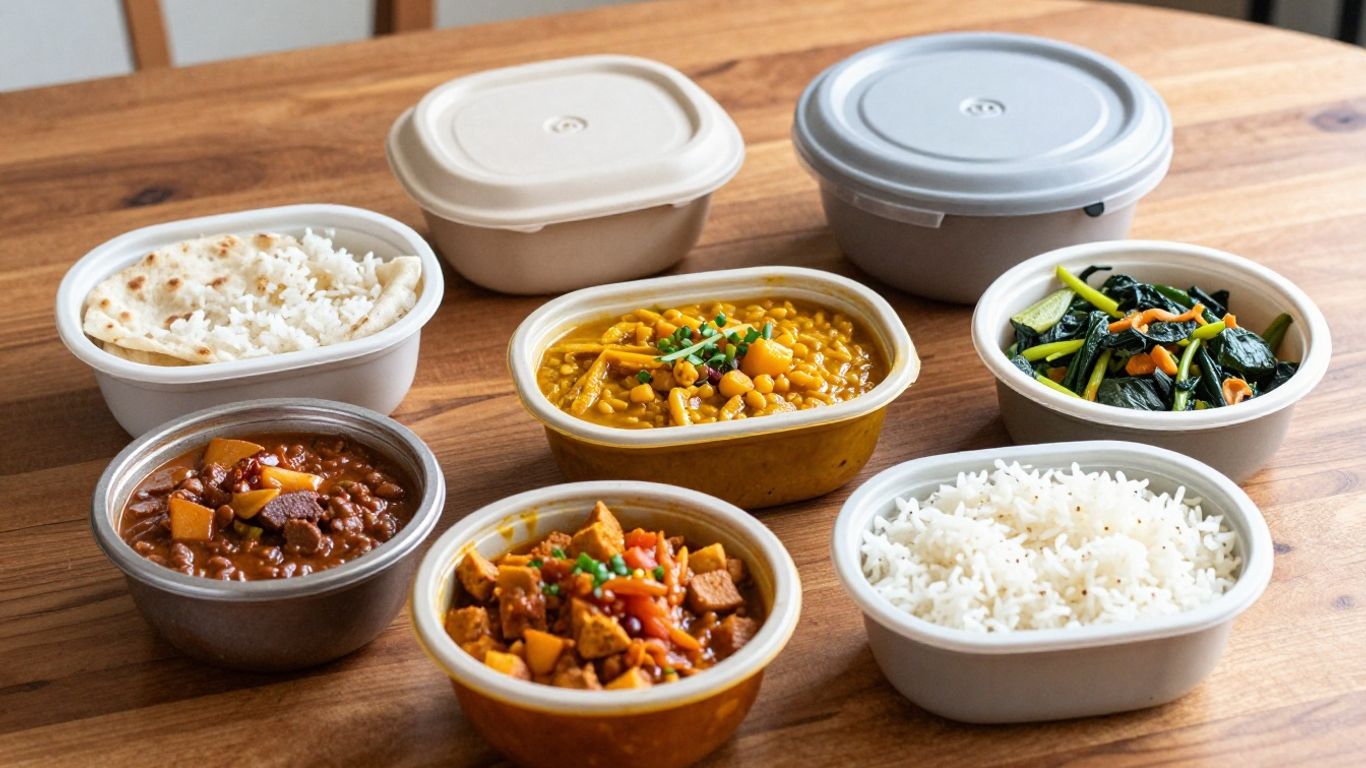
Menu choice matters as much as convenience. Home cooking is not one single flavour profile: a Punjabi-style rotation may include dal, rajma, chole, kadhi and seasonal sabzi, with spice used for flavour rather than sheer heat. Before ordering, consider whether you want familiar staples, a changing selection, or enough variety to keep a household interested.
Regional dishes and variety across the menu
A menu becomes easier to judge when dishes are named clearly and described in ordinary terms. Rajma chawal is kidney bean curry with rice; kadhi is a gently spiced yoghurt-based dish; baingan bharta is smoked aubergine cooked with aromatics. Those details tell you more than a broad promise of “Indian food”.
Check how often the menu changes and whether vegetarian dishes sit alongside chicken, mutton or fish choices. A menu with regional range can feel varied without making every meal unfamiliar, which is often the sweet spot for a busy household.
Choosing meals for individuals, couples and families
For one person, individually portioned meals can reduce waste and make weekday planning straightforward. Couples may prefer a mixture of single dishes and larger servings, while families need to know whether a portion is intended as one main meal or part of a shared spread. Mildly spiced dishes may also be more practical when several people are eating together.
It helps to list the meals you genuinely eat during a normal week before choosing a bundle. Consider these four checks:
- How many dinners need to be covered?
- Will anyone need a packed lunch or late meal?
- Are rice, roti or sides already available at home?
- Is there enough freezer and fridge space for the selected portions?
That short exercise turns an attractive menu into a realistic order. It also prevents paying for more variety than the household can use.
Checking ingredients, allergens and halal meat options
Read the allergen information on each dish, not just the general menu page. Ingredients can vary between recipes, and a vegetarian label does not answer every question about dairy, nuts, mustard or other allergens. If meat is important to your choice, check the provider’s exact wording rather than relying on assumptions.
Kitchen-cooked meats are halal at Saakshi's Kitchen. That statement is narrower and more useful than treating every dish or every dietary preference as covered, so still review the individual dish information before ordering.
Check delivery coverage and logistics
Delivery is where a promising meal plan either becomes convenient or awkward. National coverage can still have postcode exclusions, different delivery days and order thresholds. Put the practical details alongside the menu before you compare prices.
Confirming delivery to your postcode
Enter your full postcode early, ideally before spending time building a large basket. Some areas may be served on a particular route, while remote or outlying postcodes can have different terms. A UK meal delivery locations guide can help you think about coverage, but the provider’s own postcode checker should be the final word.
If you are ordering for an elderly relative, a student in rented accommodation or a family with a reception desk, confirm the delivery address and handover arrangements. A meal arriving at the wrong entrance is a small detail until it becomes a weekly problem.
Understanding delivery days, time windows and fees
Look for a stated delivery day and a realistic time window, rather than assuming the parcel will arrive at a convenient hour. Check whether delivery is included, charged separately or waived above an order threshold. The cheapest-looking meal can change position once a delivery fee is added.
A useful comparison is to write down the basket total, delivery fee and number of usable portions. This keeps the decision grounded in the order you would actually place, not a headline price for a single dish.
Planning freezer space before your order arrives
Frozen meals are convenient only when there is somewhere sensible to store them. Clear a shelf, measure the available space and check whether tubs can be stacked safely. Do not plan a large weekly box around an already full freezer.
If meals are for several people, label or group them by day so the household can see what is available. That small bit of organisation avoids rummaging through the freezer at 8pm and makes the weekly plan feel calmer.
Make reheating part of your decision
Reheating is part of the meal experience, not a footnote. A service may be ideal on paper but less suitable if the instructions do not fit your kitchen, timetable or equipment. Read the storage and reheating guidance before ordering a quantity that will cover several nights.

Microwave, oven and hob reheating methods
Check whether the packaging can go in the microwave or oven and whether a dish should be transferred to a pan. Microwave times often depend on portion size and appliance power, while hob reheating may suit dishes that need stirring. The instructions should also explain how to check that the centre is hot before serving.
Try one portion first if you are testing a new service. You will learn how long your own appliance takes and whether you prefer a softer, saucier or more reduced finish without committing the whole household to an unfamiliar routine.
Organising meals around work, study and school-run routines
A frozen meal can be moved into the fridge the night before, then reheated when the day allows. For professionals, that may mean dinner after a late meeting; for students, it might be a meal between lectures; for families, it can take pressure off the school-run window. The best plan is the one that matches the hours you really keep.
Use a simple weekly rhythm: choose two early-week meals, two later meals and keep one portion for a night when plans may change. A London tiffin planning guide offers another practical angle on fitting home-cooked meals around busy working weeks.
Following storage, defrosting and serving instructions
Follow the provider’s instructions for freezer storage, defrosting and reheating rather than improvising with every dish. Keep track of dates, avoid refreezing food that has fully defrosted unless the instructions say otherwise, and serve meals promptly once heated. Good planning is mostly about making those steps routine.
The same habits help whether meals are for yourself, a partner or a relative. Write the instructions somewhere visible for the first week, then adjust your routine once you know what works in your kitchen.
Compare the overall value
Price is only one part of value. A tiffin order may replace ingredients, preparation time and several decisions, but it may also include delivery charges or a minimum spend. Compare like with like: the number of portions you will eat, the cost of the food you would otherwise buy, and the time involved in cooking.
Calculating the cost per portion
Start with the full basket total, including delivery, and divide it by the portions you expect to use. If a box contains sides or rice, count them as part of the meal rather than comparing the box with a single curry from elsewhere. If some portions are likely to remain uneaten, use the realistic number instead.
| Cost element | What to check | Why it matters |
|---|---|---|
| Meal price | Dish or bundle total | Shows the food cost clearly |
| Delivery | Fee and order threshold | Changes the final basket cost |
| Portions | Stated serving size | Prevents misleading comparisons |
| Extras | Rice, roti or sides | Clarifies what a meal includes |
After that calculation, compare the result with your normal weekday alternatives. A slightly higher price may still suit you if it removes shopping, chopping and washing up on nights when those jobs are least welcome.
Weighing delivery charges against cooking and takeaway costs
Takeaway is often judged against the menu price alone, while home cooking is judged against ingredients alone. Add the less visible parts: travel or delivery, cooking time, leftover ingredients and the likelihood of ordering something else when plans change. A weekly service sits somewhere between cooking from scratch and ordering an evening meal on impulse.
That comparison should be personal rather than moral. If you enjoy cooking most nights, a tiffin service may be an occasional convenience; if you regularly arrive home tired, it may earn its place through consistency.
Reviewing minimum orders, bundles and cancellation terms
Before subscribing, find the minimum order value, delivery threshold and payment schedule. Read how to pause a week, change an address or cancel a recurring order. These terms matter more than a small introductory saving if your working pattern changes.
For families, bundles can make sense when every portion will be eaten. For one person, a smaller first order may be better, even if the per-portion figure is not the lowest available.
Assess the provider before ordering
A provider is more than a menu and a checkout button. Look for evidence that the kitchen communicates clearly, handles questions properly and explains its food and delivery process. This is especially important when you are ordering for someone who may not be present to resolve a problem.
Reading verified customer reviews and repeat-order signals
Reviews are most useful when they describe specific experiences: portion size, packaging, delivery communication and how meals reheated. Look for patterns across recent reviews rather than treating one glowing comment or one complaint as decisive. Repeat-order information can add context, but it should be read as an indicator of customer behaviour, not a promise about your own experience.
A provider’s home-cooked Indian meal guide can also help you form a checklist before reading reviews. Ask whether the language used by customers matches what the menu and ordering pages actually promise.
Checking the kitchen’s food hygiene information
Food hygiene information should be easy to locate and specific to the kitchen preparing the meals. In the UK, the Food Standards Agency rating is a useful point to check, but it is still sensible to read storage and handling guidance as well. Clear information tends to make ordering less stressful.
Do not substitute attractive photography for kitchen details. The basics—where meals are prepared, how they arrive and how they should be stored—are more valuable when you are choosing a recurring service.
Reviewing customer support, delivery updates and refund policies
Check how you can contact the provider if a parcel is delayed, damaged or incomplete. Look for delivery updates, a stated response route and a refund or replacement policy. Save the order confirmation and instructions, particularly for a first order.
If you are arranging meals for a parent or student, make sure the recipient knows who to contact. A service is easier to rely on when responsibility is clear before anything goes wrong.
Decide whether Saakshi’s Kitchen suits your needs
The final decision comes down to fit rather than a universal ranking. Consider whether you want frozen, ready-to-reheat meals, whether the menu resembles the food your household enjoys, and whether delivery reaches your postcode. It is also worth asking if the portion and ordering format match the way you plan a normal week.
Home-cooked Indian meals prepared in a FSA 5-star kitchen
Saakshi's Kitchen offers home-cooked Indian meals prepared in a FSA 5-star kitchen, delivered frozen and ready to reheat. The cooking is rooted in Punjabi home food: masala is built from onion, tomato, ginger and garlic, with spices ground and blended in the kitchen and dal finished with a tadka. That points to everyday dishes such as rajma, chole, kadhi and dal, rather than an occasion-only menu.
The distinction is simple: restaurant Indian food can be celebration food, while ghar ka khana is Tuesday night. If that is the kind of meal planning you want, the format may be a sensible match.
FSA 5-star kitchen information and halal kitchen-cooked meats
the FSA 5-star kitchen has an FSA 5-star rating, and kitchen-cooked meats are halal. Those are useful facts to include in your comparison, alongside the individual ingredient and allergen information for each dish. They do not remove the need to check whether a particular meal suits your household.
The provider also states that it has more than 800 verified reviews with a 4.6-star rating. Treat that as background evidence while still checking current menus, delivery terms and the experience you need from a weekly order.
Delivery options for busy professionals, families, elderly relatives and UK students
A frozen, ready-to-reheat format can suit a professional who needs dependable weeknight food, a family managing the school run, an adult child ordering for an elderly relative, or a UK student who wants familiar meals between lectures. The right choice still depends on postcode, freezer capacity, portion size and preferred dishes.
For students, check the exact accommodation address and any reception rules. For relatives, confirm that the storage and reheating instructions are manageable. For families, order enough variety without filling the freezer with meals no one has chosen.
When you are comparing options, unrelated planning disciplines can still offer useful reminders: Spain bank holiday planning, CQC compliance guidance, El Poblado food tours, discreet travel companionship, and cat food guidance each demonstrate, in their own fields, the value of checking dates, standards, preferences and suitability before committing. They are not meal-service advice, but the underlying habit—verify the detail before you buy—is sound.
Conclusion
Choosing a weekly tiffin service means matching food, storage, delivery and reheating to the life you actually lead. Compare portions and menu details, check the kitchen and terms, then start with an order size you can store and use comfortably.
Frequently Asked Questions
What is a weekly tiffin service UK option?
It is a meal-delivery arrangement where prepared dishes are supplied for several days, often as individual portions or bundles. Depending on the provider, meals may arrive frozen and be reheated at home.
Are tiffin meals delivered frozen?
Some are, while others use different packaging and delivery formats. Check the provider’s storage instructions, delivery information and use-by guidance before ordering.
How do I choose the right portion size?
Read whether the stated size is intended for one person, two people or part of a wider meal. Consider whether rice, roti, dal and sides are included, then compare that with how your household normally eats.
How can I check delivery to my postcode?
Use the provider’s postcode checker or enter your address during the ordering process. Confirm the delivery day, time window, fees and any restrictions affecting flats, halls or reception desks.
What should I ask about allergens?
Read the allergen information for every dish and contact the provider if anything is unclear. Do not assume that vegetarian or meat labels answer questions about dairy, nuts, mustard or other ingredients.
Is a recurring plan better than a one-off order?
A recurring plan can simplify regular meal planning, while a one-off order lets you test flavours, portions and storage first. Compare pause, cancellation, minimum-order and payment terms before subscribing.
What should I check before reheating a tiffin meal?
Follow the provider’s instructions for defrosting, container use, heating time and serving. Make sure the food is heated through, and store or discard leftovers according to the stated guidance.