

How to send food to a university student in the UK: a practical guide for parents
Saakshi's Kitchen EditorialKey Takeaways
Sending food to a university student is easiest when the meals, address and delivery plan fit their actual routine.
- Choose meals that can be stored and reheated in the student’s accommodation.
- Confirm the full halls address, postcode and parcel-room arrangements before ordering.
- Compare portion sizes, menu variety, delivery charges and ordering frequency together.
- Leave room in the freezer and share clear storage instructions.
- Adjust future orders around lectures, exams, holidays and the student’s preferences.
Why sending home-cooked Indian meals can help university students
For many parents, food is a simple way to stay involved after a child moves away. A box of familiar Indian meals can make a busy week feel a little more manageable, especially when lectures, library sessions and social plans leave little time for cooking. If you are searching for how to send food to a university student uk, begin with their daily routine rather than with a fixed menu.
Balancing lectures, revision and everyday cooking
University life rarely follows a neat Monday-to-Friday pattern. A student may have a late seminar one day, an early lecture the next and a long revision session at the weekend. Meals that can be taken from the freezer and reheated when needed are often more practical than something that assumes they will be home at a particular time.
Ask how often they use the kitchen, whether the microwave is reliable and which evenings tend to be busiest. A few dependable meals can take pressure off without trying to replace every meal they eat.
Choosing familiar meals during the first term
The first term brings plenty of change: new rooms, new people and unfamiliar routines. Familiar dishes such as dal tadka, rajma chawal, chole or kadhi can provide a reassuring taste of home. These are everyday Punjabi home-cooked meals, rather than restaurant-style sharing dishes, so they make sense as part of an ordinary week.
It can help to ask about spice and texture before ordering. A student who enjoys mild, family-style cooking may prefer meals that are spiced but not intensely hot, while someone else may want more variety across the box.
Sending practical support from home, wherever you live
Parents do not need to be in the UK to arrange a delivery. The useful part is knowing the student’s term-time address, checking when they can collect a parcel and choosing an order they can manage in a shared kitchen. That small amount of planning turns a food delivery into something genuinely helpful rather than an unexpected box to store.
For a broader checklist of menus, portions and delivery areas, you can also read this student meal delivery guide before making a decision.
Choose the right food delivery option
The best option depends on how the student eats, not simply on whether a service delivers to their town. Frozen meals can be kept for later, while other formats may assume the recipient is available immediately. Look at the practical details together: storage, reheating, variety, portions, ingredients and total cost.
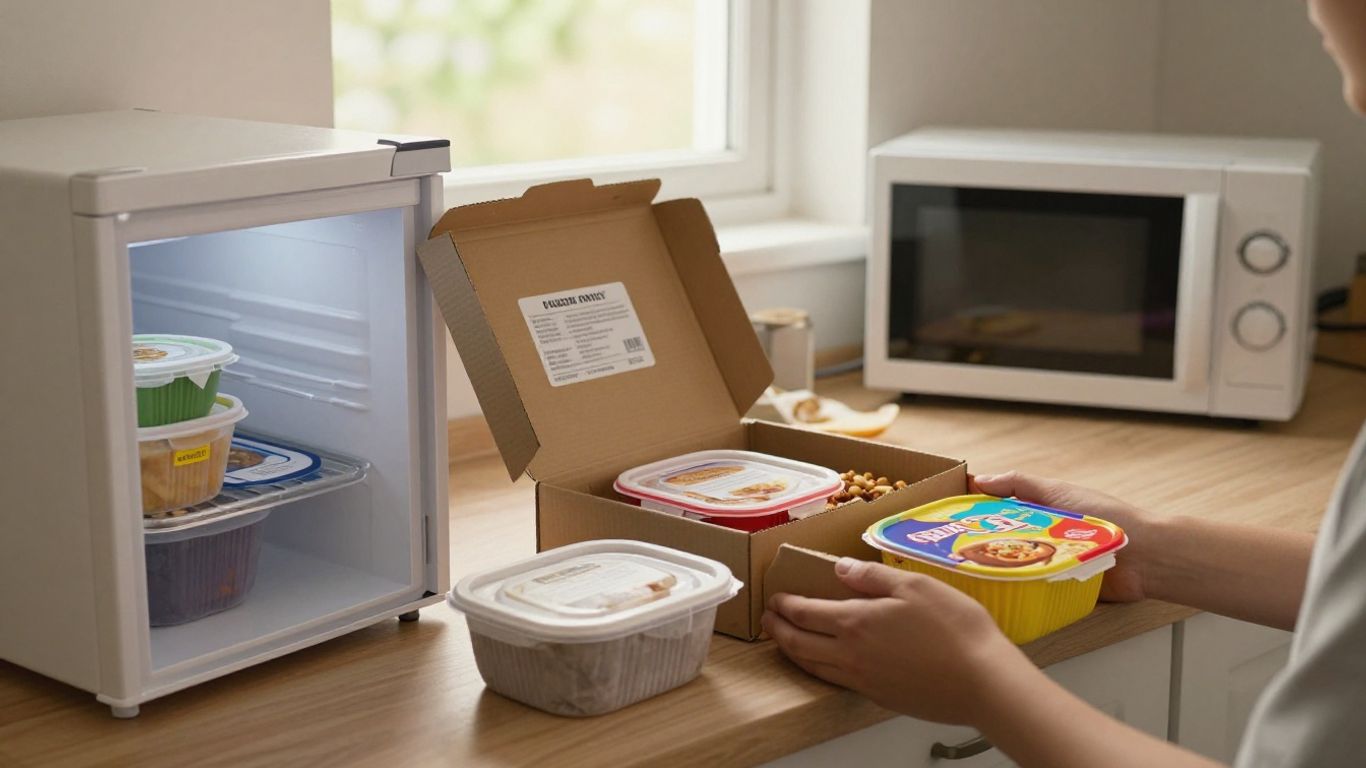
Frozen meals versus takeaway delivery
Takeaway food is usually chosen for the moment; frozen meals can be planned around the week. That difference matters when a student has back-to-back commitments or does not want to cook from scratch every evening. A frozen box also gives them more control over when a meal is eaten, provided there is enough freezer space.
The question is not which format is universally best. Ask whether the student wants occasional convenience, a small stock of weekday meals or a regular supply that can be fitted around term-time life.
How meal variety, portion sizes and ordering frequency affect value
A large order is not automatically good value if half of it remains untouched. Start with a modest selection, then see which meals disappear first. Some students prefer complete individual portions; others would rather have a mix of mains and staples to combine across several days.
A simple comparison can make the decision clearer:
| What to compare | Why it matters | Useful question |
|---|---|---|
| Portion size | Shows how many meals an order may provide | Will one pack suit one sitting? |
| Menu variety | Prevents an order becoming repetitive | Are there several familiar favourites? |
| Delivery charge | Changes the real cost per meal | Does the total still fit the budget? |
| Ordering frequency | Affects freezer space and planning | Would monthly or occasional ordering suit them? |
Use the total delivered cost rather than the headline meal price. The student’s appetite, schedule and storage capacity are more reliable guides than ordering the biggest box available.
Checking ingredients and allergen information before ordering
Read the ingredient and allergen information with the student, particularly if they share a kitchen or have known sensitivities. Do not rely on a dish name alone; recipes and preparation details are what matter. If anything is unclear, contact the food business before paying rather than guessing.
It is also worth agreeing how much variety the student actually wants. A menu that looks exciting online may not suit someone who prefers a familiar rotation of dal, rice, sabzi and roti.
When kitchen-cooked halal meats may be important
If the student eats meat only when it is halal, confirm the kitchen’s wording before ordering. Saakshi's Kitchen states that its kitchen-cooked meats are halal; that is a specific food detail, not a reason to assume every item on a menu contains meat or meets every dietary preference.
For more questions to consider when comparing halal student meals, this halal student food guide may be useful. Keep the conversation direct: ask which dishes contain meat, which are vegetarian and how the student wants the order divided.
Plan delivery to a university address
A university address can be more complicated than a home address. It may include a residence name, building, flat number, room number and a postcode shared by several blocks. Before ordering, ask the student to copy the exact format supplied by their accommodation team.
Delivery timing matters too. A parcel sent during a lecture, a weekend away or a university closure may be harder to collect. A few minutes spent checking the rules can prevent a box being returned or left somewhere unsuitable.
Finding the correct halls, flat and postcode details
Use the student’s official term-time address, not just the university name. Include the residence or halls name, block, flat and room details exactly as the accommodation lists them. Add the student’s full name and mobile number if the ordering form allows it, since reception staff may handle parcels for many residents.
If the student has moved rooms, check the address again before reordering. Postcodes can cover several buildings, so the building name is often just as important as the postcode itself.
Checking reception, concierge and parcel-room policies
Accommodation policies differ. Some receptions accept ordinary parcels, some have limited opening hours and some ask residents to meet larger deliveries. The student should check whether food deliveries are accepted, where they are stored and how quickly they need to be collected.
University guidance can be quite specific; for example, this parcel collection information explains why reception procedures, notifications and large deliveries should be checked rather than assumed. Even when a different university is involved, the principle is useful: the residence’s own policy takes priority.
Selecting a delivery date around lectures and term-time routines
Choose a date when the student expects to be nearby and able to collect the order. If they have a packed timetable, ask which day usually leaves them free. It may be better to arrange delivery before a quieter evening than to aim for the first available slot.
Term dates deserve attention as well. Freshers’ week, reading weeks, examination periods and the end of term can all change where a student is staying and how much food they can store.
Preparing for missed deliveries or limited freezer space
Before ordering, ask the student to measure or clear a section of the freezer. Shared accommodation often means that space is divided informally, and a full box may not fit. They should also know what to do if a courier arrives while they are away.
A short plan is usually enough:
- Confirm who can receive the parcel.
- Check where it will be held if the student is in a lecture.
- Keep the student’s phone available on the delivery day.
- Make freezer space before the order arrives.
These steps reduce last-minute messages and make the delivery easier for everyone. They also help the student decide whether a smaller order would be more sensible.
Order Indian meals from Saakshi’s Kitchen
Saakshi's Kitchen provides home-cooked Indian meals prepared in a FSA 5-star kitchen and delivered frozen, ready to reheat. For parents arranging a parcel from elsewhere in the UK or from overseas, the student website is a useful starting point for checking the delivery location and choosing meals. The service is about everyday ghar ka khana, not a restaurant-style order for a single occasion.
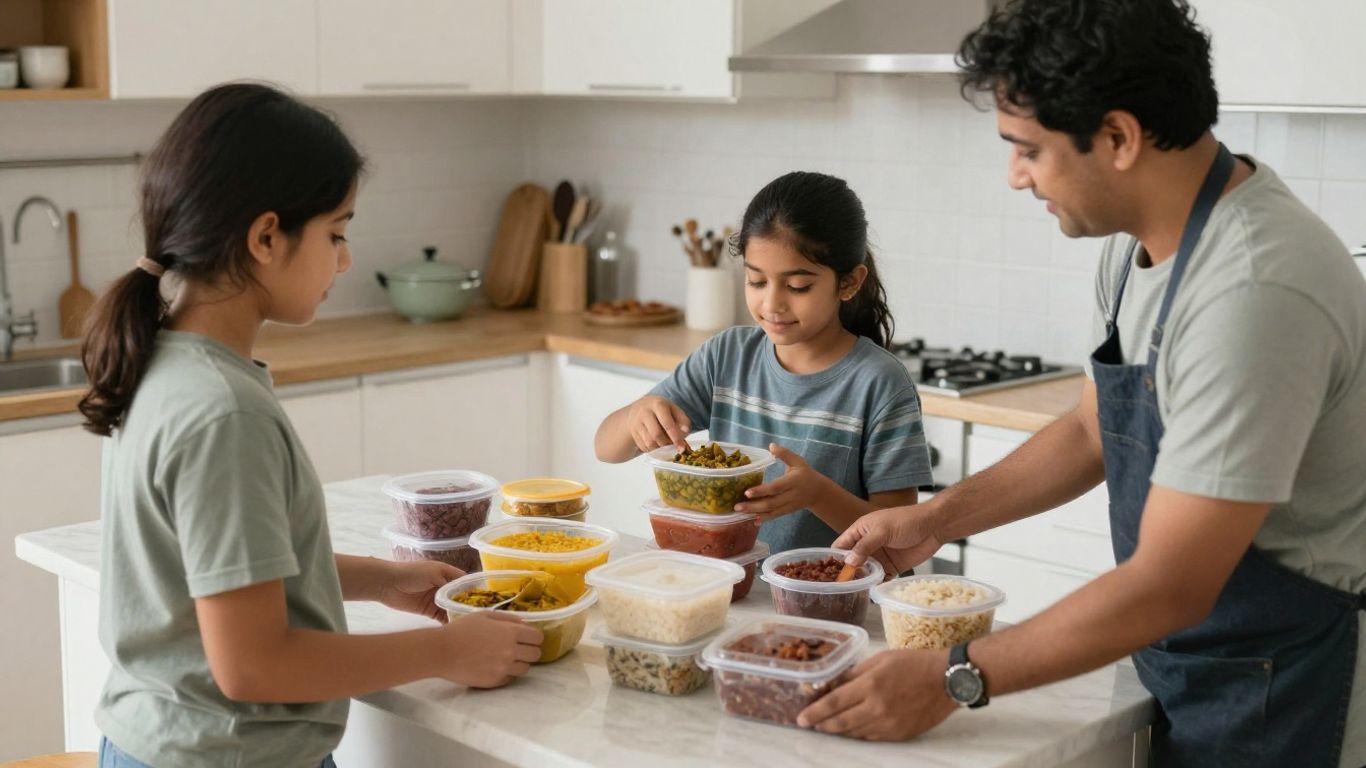
Exploring the student website and UK location pages
Start on the Saakshi's Kitchen student website and look for the relevant UK location or university information. The student’s town, postcode and term-time address should guide the search. If you are still comparing what to order, the UK university meal options page offers another useful way to think through coverage, timing and practical delivery questions.
Avoid ordering until the student confirms where they will be living. A university city may have several accommodation areas, and the most convenient arrangement is not always the one closest to the campus.
Selecting home-cooked Indian meals prepared in the FSA 5-star kitchen
The meals are home-cooked Indian food prepared in the FSA 5-star kitchen. The cooking follows the feel of a family kitchen, with familiar dishes such as dal, rajma, chole and seasonal sabzi rather than a menu built only around restaurant favourites. A student can choose a selection that reflects what they would actually eat at home.
That may mean a mixture of vegetarian meals and kitchen-cooked halal meats, depending on their preferences. The safest choice is an order shaped by the student’s own tastes, not by what looks most varied on a screen.
Understanding that meals arrive frozen and ready to reheat
Meals arrive frozen and ready to reheat, so the student needs freezer space and suitable kitchen equipment. They should read the storage and reheating information supplied with the order, and avoid leaving the food sitting around while deciding where to put it.
This format can suit irregular university routines because the student can choose a meal when it fits. It still requires sensible planning: a freezer that is already full may turn a convenient delivery into a storage problem.
Using delivery information to confirm the student’s location
Before submitting an order, compare the delivery details with the student’s message or accommodation record. Check the name, room or flat information, postcode, phone number and any instructions about reception. If the student is between addresses, wait until the term-time location is settled.
The Saakshi's Kitchen meal delivery guide is a helpful reference for checking coverage, portions, meal formats and freezer planning. Use it as a prompt, then verify the details for the individual order.
Help students store and reheat their meals safely
A delivery is only useful once it fits into the student’s kitchen. Shared fridges and freezers can be crowded, microwave instructions may be unfamiliar and packaging can look similar when several meals arrive together. A little organisation at the start makes the box easier to use over the following days.
Storage should be treated as part of the order, not an afterthought. The student may need to clear space, label meals and decide which ones they will eat first.
Making space in a shared or compact freezer
Ask the student to check freezer capacity before delivery and agree which shelf or drawer is available. They may need to move older items, but should not throw food away without checking whose it is in a shared flat. A quick photograph of the available space can even help you judge whether the planned order is too large.
Flatmates may also appreciate a clear label with the student’s name. It reduces confusion and makes it less likely that meals will be moved or mistaken for communal food.
Reading storage and reheating instructions
The student should follow the instructions provided with each meal, including storage guidance and reheating times. Microwaves vary, so they may need to check that the centre of the meal is properly hot before eating. If a packet has unclear or damaged instructions, ask the supplier rather than improvising.
Write the reheating information somewhere easy to find if the student is new to using a microwave. Clear instructions are especially useful during a late study night when nobody wants to search through emails.
Planning meals around microwave and kitchen facilities
Not every student accommodation has a large hob, oven or generous worktop. Choose meals that match the equipment they actually use. If the microwave is the main option, the student should know which containers are suitable and where they can safely place a hot meal.
The kitchen tools guide may help with general equipment planning, although the student should prioritise the instructions supplied with the food and the rules of their accommodation. A few basic utensils are usually more useful than a crowded cupboard of gadgets.
Managing shared accommodation, labels and meal organisation
A simple meal list on the freezer door can show what is available and what should be eaten first. Labels with the dish name and date can prevent guesswork, particularly when several packs look alike. The student can then plan a couple of meals around lectures without emptying the whole freezer.
Keep the arrangement realistic. If they dislike detailed meal planning, a loose division into “this week” and “later” may work better than a strict timetable.
Make a student food delivery work within a budget
Food support should feel generous without becoming wasteful or difficult to afford. The cost includes the meals, delivery and sometimes the practical cost of buying storage containers or using other food alongside the order. A smaller, well-chosen delivery can be better value than a large box that does not match the student’s habits.
Talk about the budget openly. Students often know which weeks are tight and which meals they can prepare themselves, so their input will improve the plan.
Comparing individual orders with larger planned deliveries
Compare the delivered total for a smaller order with the total for a larger planned delivery. Consider how many portions the student will genuinely eat and whether they have somewhere to store them. A bulk order can be convenient, but only if the freezer and the student’s term-time routine can support it.
Write down the full figures before ordering rather than comparing meal prices alone. This gives a clearer view of the cost per portion and prevents delivery charges from being overlooked.
Choosing meals for busy weekdays and quieter weekends
Busy weekdays may call for familiar meals that need little decision-making. At weekends, the student may have more time to cook, meet friends or eat elsewhere, so ordering every portion for every day could be unnecessary. A flexible mix often works better than a rigid weekly schedule.
A parent might choose a few dependable weekday meals and leave some space for the student’s own shopping. That way, the delivery supports university life without dictating it.
Accounting for delivery charges and ordering schedules
Check delivery charges, minimum order conditions and the available delivery schedule before paying. These details can change the value of an order, particularly when it is sent to a student living outside a major city. Add the delivery cost to the meal total and decide whether the timing still works.
It is also worth setting a reminder for the next review rather than arranging automatic repeat orders immediately. The student’s timetable and address may change within a few weeks.
Using student offers and seasonal support without over-ordering
Student offers can help, but a discount is not a saving if it encourages an order the student will not use. Look at the final amount, storage space and likely eating pattern. Seasonal occasions may be a good reason to send a thoughtful box, while ordinary weeks may call for a smaller selection.
For general ideas on student budgeting, this student discounts resource can sit alongside your meal-cost comparison. Keep the food decision personal and check the current terms of any offer before relying on it.
Keep food support useful throughout the university year
The first order is a starting point, not a permanent contract. A student’s routine may settle after several weeks, or it may become busier as assignments and exams approach. The most useful support changes with them.
A short message after delivery can reveal more than a guess: Which meals were finished first? Was anything difficult to store? Did the delivery arrive at a workable time? Those answers make the next order more considered.
Adapting orders after the first few weeks
Review the first box once the student has had time to try it. They may discover that they prefer dal and rice to heavier meals, want more vegetarian choices or need smaller portions. They may also find that their accommodation has less freezer space than expected.
Remove the dishes they did not enjoy and repeat the ones that fitted naturally into their week. Personal preference is a better basis for reordering than trying to make every menu category look equally represented.
Sending meals during revision periods and exam season
Revision and exam periods often make ordinary errands feel harder to organise. A delivery arranged for a known study period can provide a few familiar options without requiring a separate food plan every day. Check the student’s exam timetable before choosing a date, since libraries and revision groups may change their availability.
Do not assume more food is always better. A manageable box, with clear collection arrangements, may be more welcome than a large delivery arriving during the busiest week of term.
Coordinating deliveries around holidays and travel
Students may leave halls for reading week, Christmas, Easter or a summer placement. Ask where they will be staying before placing an order, and avoid sending food to an address they will leave shortly afterwards. If they are travelling, wait until they have returned and can collect the parcel themselves.
A shared calendar reminder can help parents and students coordinate without repeated messages. It is a small habit, but useful when several family members are arranging support.
Reordering based on the student’s actual preferences
The best long-term plan is guided by what the student eats, not just what parents hope they will enjoy. Keep a note of favourite dishes, preferred spice levels, portions and meals that work well with their equipment. Revisit that note after each term, because tastes and routines can shift.
Food is one way to say “khaana khaya?” from a distance. When the order is practical as well as familiar, it becomes a steady piece of family care rather than another obligation for a busy student.
Conclusion
To send food to a university student in the UK successfully, match the meals to their routine, confirm the accommodation details and plan storage before ordering. Familiar home-cooked Indian food can offer practical support across lectures, revision and the quieter weeks of term, provided the delivery is sized and timed for the student’s real life.
Frequently Asked Questions
Can I send food to a student living in university halls?
Yes, but check the residence’s parcel policy first. Confirm whether reception accepts food deliveries, how the student will be notified and how quickly the parcel must be collected.
What address details are needed for university delivery?
Use the student’s full name, halls or residence name, building or block, flat and room details, postcode and a working phone number where requested. Copy the address format provided by the accommodation team.
Are frozen meals suitable for student accommodation?
They can be suitable when the student has enough freezer space and access to a microwave or other appropriate equipment. Check the accommodation rules and follow the storage and reheating instructions supplied with the meals.
How much food should I send in the first order?
Begin with an amount the student can store and realistically eat. A modest selection helps you learn their preferred dishes, portion sizes and ordering rhythm before planning a larger delivery.
Should I arrange delivery during exam season?
You can, provided the date fits the student’s exam timetable and collection arrangements. Ask when they will be at their accommodation and avoid sending a parcel during a known period of travel or extended study away from halls.
How can I keep the cost under control?
Compare the complete delivered total, not just the price of each meal. Consider portion sizes, delivery charges, freezer capacity and how many meals the student will actually use before choosing an order size.
What should a student do if a delivery is missed?
They should check the courier or accommodation notification, contact reception if appropriate and follow the delivery instructions. For future orders, choose a date when they can collect the parcel and confirm whether someone else is permitted to receive it.
Order home-cooked Indian meals from Saakshi's Kitchen · UK delivery locations.
Students: 15% off every order over £40
Verify once with Student Beans and 15% comes off every one-off order over £40 at checkout, for as long as you are studying. First order? Use FIRST20 for 20% off instead. One code per order, so the two do not stack.
Get the student discount → · Student meal boxes for parents ordering for a student