

Halal meal prep for students: a practical UK guide to planning, cooking and reheating meals
Saakshi's Kitchen EditorialKey Takeaways
Halal meal prep can make student life calmer without turning Sunday into an all-day cooking project.
- Plan two or three reliable meals rather than attempting a different dish every day.
- Use halal proteins, adaptable staples and sauces to keep portions varied.
- Cool, label, freeze and reheat meals carefully, following practical food-safety guidance.
- Share kitchen space considerately and keep equipment simple.
- Compare cooking, frozen meals and delivery by cost, storage space and routine.
Why halal meal prep works for student life
University life rarely follows a neat timetable. Lectures run late, shifts move around and revision can take over an evening, so having a meal ready can prevent an expensive last-minute takeaway. Halal meal prep for students works best when it is practical rather than perfect: cook food you genuinely enjoy, in quantities you can store, and leave room for plans changing.
Managing meals around lectures, work and revision
Start by looking at your actual week, not an imagined one. A student with morning seminars may want breakfast items and packed lunches, while someone working evenings may need a reheatable dinner waiting in the freezer. Choose one cooking window, then keep one or two portions aside for days when the timetable goes sideways.
A small plan also reduces daily decisions. Write down which meals need to travel, which can be eaten at home and which evenings are likely to be too busy for cooking. That simple distinction makes the routine feel supportive rather than restrictive.
Balancing cost, time and variety
Cooking in bulk usually saves effort, but eating the same bowl five times can become tiresome. Build variety through small changes: serve a curry with rice one day, tuck it into a wrap another day, or add it to a baked potato. Small changes keep repetition manageable without requiring five separate recipes.
Buy ingredients that can work across several meals, and avoid purchasing a specialist item for one dish only. A tin of chickpeas, for example, can become part of a curry, a filling or a salad, depending on what else needs using.
Choosing meals that store and reheat well
Dishes with sauce tend to be forgiving after storage, while dry foods may need a splash of water before reheating. Dal, rajma, chole, stews and saucy chicken dishes can sit alongside rice or flatbreads, giving you several useful combinations. Keep crunchy toppings, yoghurt and herbs separate until serving so the texture survives.
A good student meal is one that still tastes like dinner after a day in the fridge or freezer. If a recipe becomes watery, hard or bland when reheated, adjust the recipe or reserve it for a meal eaten immediately.
Avoiding common student meal prep mistakes
The usual problems are predictable: cooking more than the freezer can hold, forgetting dates, underestimating cooling time and buying ingredients without checking what is already in the cupboard. Another mistake is making every portion identical, which can make the plan feel like a chore by Wednesday.
Keep the first batch modest. Once you know how much storage you have and how quickly you eat, increase the quantity. A short menu that gets used is more valuable than an ambitious one that ends up forgotten.
How to plan a halal student meal prep menu
A useful menu has a few dependable building blocks rather than a long list of unrelated recipes. Choose the main filling first, add a staple, then decide how vegetables and sauces will change the final meal. This approach suits both a shared kitchen and a limited budget because ingredients can cross over between dishes.
Think in portions for one person, and be honest about how much you eat after a long day. The aim is food that feels familiar and satisfying, not a rigid spreadsheet. Keep the menu flexible enough to swap one meal when plans change.
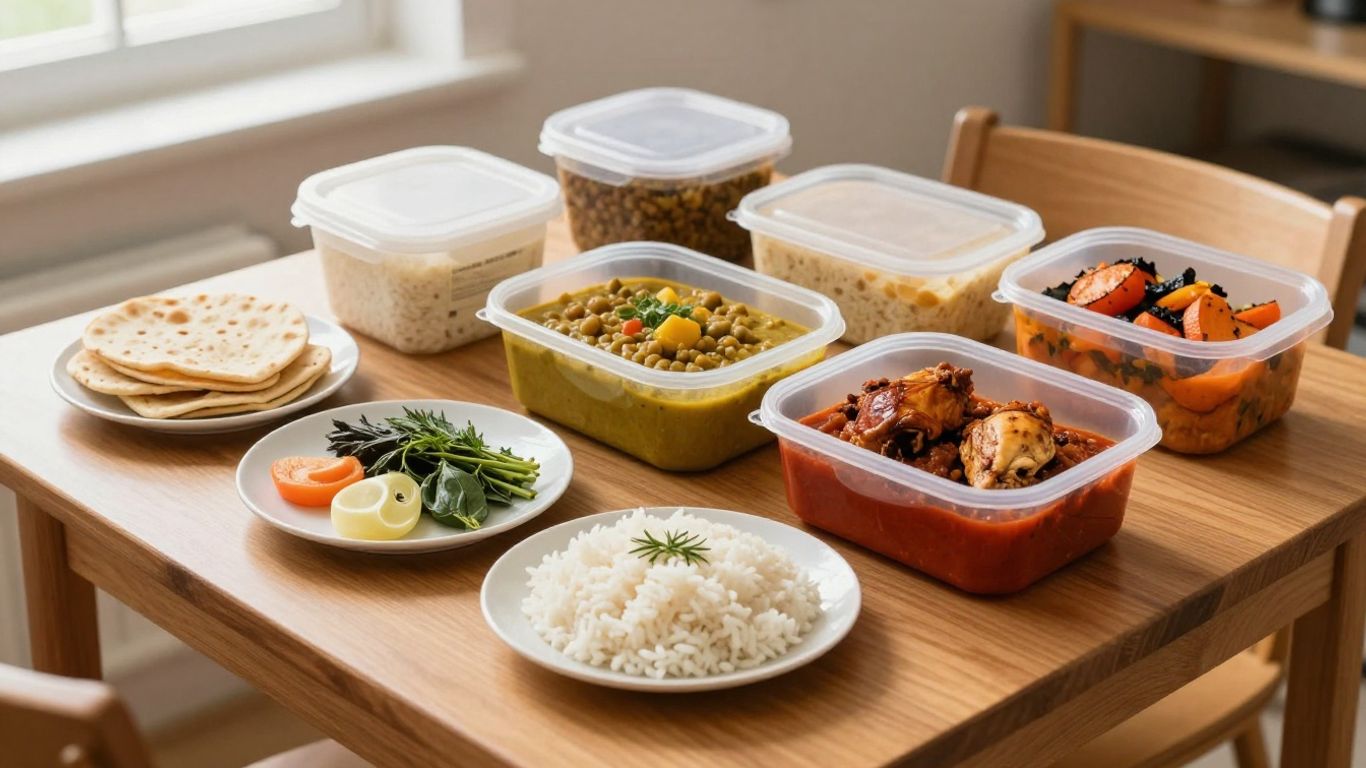
Selecting halal protein options
Check the packaging and ask the butcher or supplier how meat is described before buying. Chicken, lamb, beef, eggs, lentils, beans and chickpeas all give you different textures and cooking times. For vegetarian meals, dal, rajma and chole can provide the central filling rather than being treated as an afterthought.
If you order prepared food, look for clear ingredient information and a direct statement about halal meat. Saakshi's Kitchen states that its kitchen-cooked meats are halal, and its meals are home-cooked Indian food prepared in a FSA 5-star kitchen and delivered frozen for reheating.
Combining rice, pasta, bread and potatoes with fillings
Staples make a meal feel complete and help you stretch a pot of filling across several servings. Rice pairs naturally with dal, rajma and chicken; pasta can take a tomato-based sauce; bread works for wraps and toasties; potatoes suit curries, egg dishes and spiced vegetable fillings.
Cook only what your storage allows, and keep some staples separate if you expect to freeze meals. That makes it easier to change the combination later instead of opening several identical boxes.
Adding vegetables, sauces and toppings for variety
Vegetables can be roasted, stirred into a sauce or kept raw for serving, depending on your equipment and schedule. A spoonful of chutney, a squeeze of lemon, chopped coriander or a little raita can make yesterday's base feel different without another full cooking session.
For broader menu inspiration, browse these vegetarian Mediterranean dishes and borrow the useful principle of combining vegetables, pulses and adaptable staples. It is not about following another cuisine exactly; it is about noticing how a few components can create several plates.
Creating a rotating weekly menu
A two-week rotation is often enough. Give each week two main fillings, two staple choices and one flexible meal, then change the seasoning or accompaniment. You might alternate rajma chawal, chicken curry, dal tadka, pasta bake and egg wraps, depending on your preferences and available equipment.
A simple planning table can keep shopping focused. Use it as a prompt rather than a promise, so an unexpected invitation does not make the whole system feel failed.
| Meal component | Option one | Option two | Storage note |
|---|---|---|---|
| Main filling | Dal or chickpeas | Halal chicken or eggs | Sauce usually reheats well |
| Staple | Rice | Pasta, bread or potatoes | Store separately when practical |
| Vegetable side | Roasted peppers | Peas, spinach or carrots | Add delicate toppings later |
| Flavour finish | Chutney and lemon | Herbs or yoghurt | Keep separate for texture |
After filling in the table, check that at least one meal uses what is already in your cupboard. That small step keeps the rotation affordable and stops menu planning becoming an excuse for a large shop.
How to shop and batch cook on a student budget
A student shop should be flexible enough to cope with supermarket offers, changing plans and a small fridge. Begin with meals, then write the ingredients underneath them, rather than wandering around the aisles collecting interesting items. Compare the cost of a complete portion with the cost of a takeaway, but include the value of leftovers you will actually eat.
Batch cooking can be as simple as one pan of filling, one pot of rice and a tray of vegetables. You do not need specialist equipment, and you certainly do not need to cook an entire week's food in one sitting.
Building a flexible shopping list
Divide the list into meals, cupboard items, frozen items and frozen items. Add quantities only after checking the fridge, freezer and shared shelves. If you are new to cooking, choose recipes that share onions, tomatoes, garlic, rice, lentils and spices rather than demanding a separate shopping trip each day.
Keep a note on your phone of items running low. This is less glamorous than a colour-coded planner, but it works when you are leaving for a lecture and remember that the rice has nearly gone.
Buying cupboard, frozen and frozen essentials
Choose a small core of rice, pasta, tinned tomatoes, lentils, beans, flour, stock and familiar spices. Then add eggs, vegetables and halal meat according to the week's meals. Frozen peas, spinach and mixed vegetables can be useful when quality shopping is difficult, and they allow you to take only what you need.
Buy sauces and toppings in sizes you can finish. A large jar is not a bargain if it sits open until the end of term, especially in a shared fridge where space is already limited.
Cooking several portions with limited equipment
A saucepan, frying pan, chopping board, knife, measuring jug and a few containers can cover most student cooking. Work in stages: start the longest-cooking item, chop while it simmers and wash one tool while another is in use. If your accommodation has an oven, use one tray for vegetables or potatoes while a hob pan handles the main filling.
Useful kitchen basics are easier to compare in a practical UK kitchen tools guide, especially if you are deciding whether an extra gadget will genuinely earn cupboard space. For most students, a reliable pan and a sharp knife matter more than a crowded worktop.
Reducing food waste in shared accommodation
Label ingredients that belong to you and keep a small “use first” box in the fridge. Freeze portions before you lose interest in them, and turn odds and ends into omelettes, fried rice, soup or a wrap filling. If several housemates cook, agree where food can be placed and how long it can remain in communal storage.
A short end-of-week check helps. Before shopping again, look for vegetables that need using, opened sauces and portions that should be moved from the freezer to the fridge.
How to store and reheat prepared meals safely
Good storage is part of meal prep, not an afterthought. Divide food into sensible portions, cool it promptly in suitable containers and follow the handling instructions for the ingredients you have cooked. When in doubt, use guidance from a trusted UK food-safety source rather than guessing.
Frozen food is useful when your timetable changes, but it still needs organisation. A freezer full of unmarked boxes quickly becomes a collection of mysteries, especially during exam season.
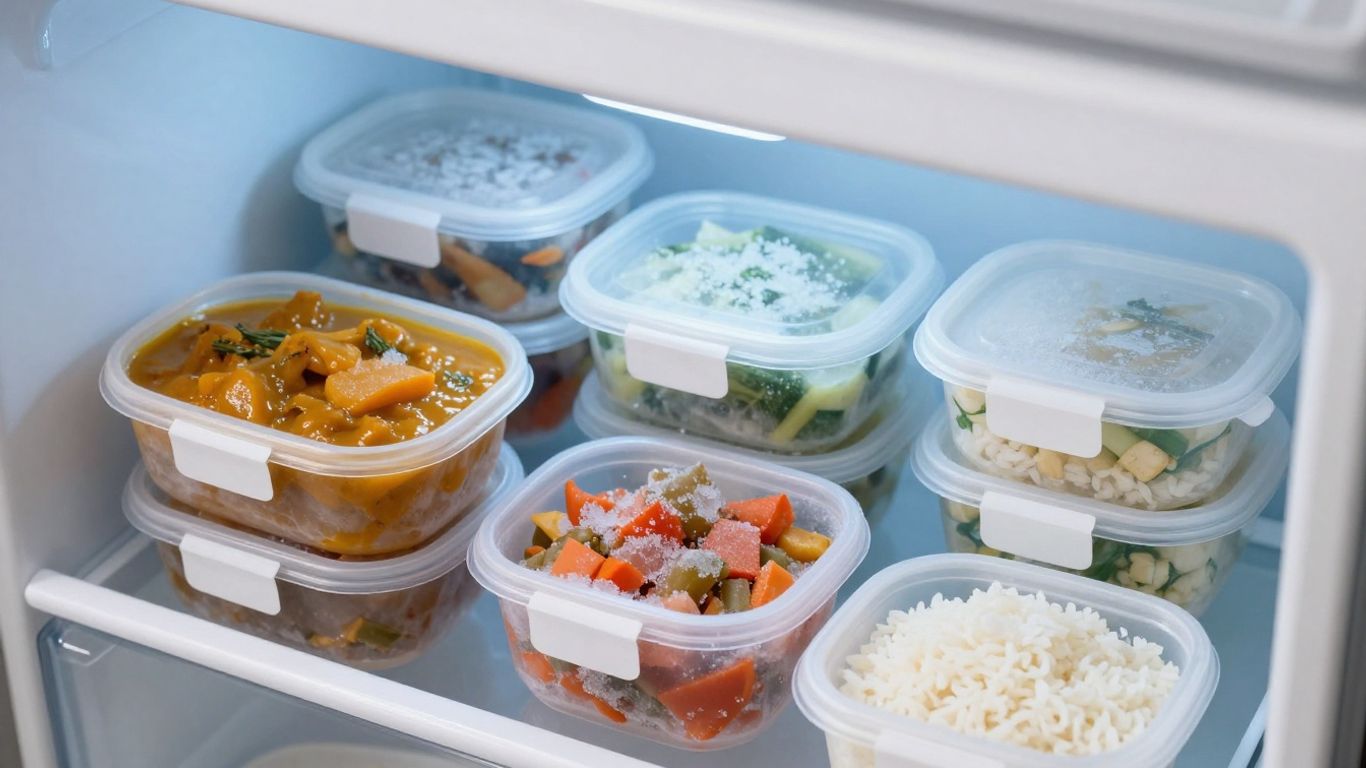
Dividing portions for the fridge and freezer
Use shallow containers where possible so portions cool more evenly, and leave room for expansion when freezing liquids. Keep the amount you will eat soon in the fridge and freeze the rest once it has cooled appropriately. Do not overload the freezer with hot containers, as this can affect nearby food.
Portioning also helps with reheating. One serving is easier to heat through than a large block, and you avoid repeatedly warming food you do not plan to eat.
Labelling meals with dates and reheating instructions
Write the dish name, date and any useful instruction on every container. “Rajma, Tuesday, add a splash of water” is much more helpful than an anonymous plastic tub. If a meal needs to be defrosted first or reheated in stages, record that too.
A basic list keeps the freezer usable:
- Dish name and date
- Number of portions
- Defrosting method
- Reheating time or setting
- Toppings to add after heating
Once labelled, arrange older portions where you can see them first. For extra guidance on product information, packaging and privacy when ordering online, see this practical ordering information guide; the same habit of checking details applies to meal containers.
Defrosting meals safely before reheating
Move a frozen portion to the fridge in advance when the instructions call for defrosting. Avoid leaving food on the worktop for long periods, and do not refreeze a meal simply because you changed your mind after it had thawed. If the packaging gives different instructions, follow those instructions.
Some meals can be reheated from frozen, while others need time to thaw. Knowing which is which makes the evening easier and avoids forcing the microwave to heat a dense centre while the edges become dry.
Checking that food is piping hot throughout
Reheat until the centre is piping hot, not merely warm around the edges. Stir food partway through when appropriate, allow standing time, and check more than one spot in a thick portion. Microwaves can leave cold pockets, particularly in rice dishes and dense sauces.
Use the equipment instructions and the meal's own guidance, then serve promptly. If the texture or temperature seems uncertain, continue heating in short intervals and check again rather than relying on appearance alone.
How to make meal prep work in halls and shared kitchens
Shared kitchens reward courtesy and a little preparation. Counter space disappears quickly, fridge shelves are communal and somebody always needs the hob just when your onions are softening. A calm routine matters as much as the recipe.
Keep your own equipment compact and your ingredients clearly contained. That makes it easier to cook around other people and reduces the chance of a forgotten pan becoming everyone's problem.
Useful equipment for a small student kitchen
Start with containers that stack, a chopping board, one medium saucepan, one frying pan, a knife, foil or reusable covers and a marker for labelling. If you have room, a colander and measuring jug are useful additions. You can find more ideas for books for different ages, but remember that a student kitchen needs tools before it needs extras.
Choose equipment that does more than one job. A lidded saucepan can cook rice, warm a sauce and hold food briefly while you clear the worktop.
Keeping ingredients organised in shared storage
Use a labelled box for cupboard ingredients and a sealable bag or tray for your fridge items. Keep raw ingredients away from ready-to-eat food, and check communal shelves before assuming something is yours. A quick photograph of your shelf can help you remember what you have when you are shopping.
If space is especially tight, plan smaller, more frequent batches. It is better to have three clearly managed portions than a large collection that blocks everybody else's food.
Managing cooking time around housemates
Tell housemates roughly when you will need the kitchen, particularly if you are using the oven or cooking several portions. Prep ingredients in your room only where food-safety and accommodation rules allow, then use the kitchen efficiently. Keep one back-up meal for evenings when the kitchen is busy.
Do not treat the shared kitchen as a private restaurant pass. Working in a clear sequence, wiping spills as you go and leaving the hob available between stages will make the routine easier for everyone.
Cleaning worktops, utensils and appliances
Clean as you cook, then finish with the surfaces, handles and hob. Wash utensils that touched raw meat separately from items used for serving, and follow the accommodation's instructions for shared appliances. Empty food scraps rather than leaving them in the sink.
For housing maintenance questions unrelated to cooking, a gutter and downspout service guide may be useful; keep that separate from your food routine and focus your own cleaning on the surfaces and equipment you have used.
How to choose a halal meal delivery option
Cooking from scratch is not the only way to plan meals. A frozen delivered meal can fill the gap during exams, placements or long shifts, provided it fits your dietary requirements, freezer space and budget. Compare the full arrangement: portion size, delivery area, storage instructions, reheating method and how often you want to order.
Read the menu and packaging details before paying. You should know what the meal is, how it is stored and what the provider says about halal meat. A student-friendly option is one that works with your routine rather than demanding a rigid schedule.
Checking how halal meat is described
Look for a clear statement rather than assuming that a dish name tells you everything. Check the ingredient list, allergen information and preparation details, and contact the provider if anything is unclear. Saakshi's Kitchen states that its kitchen-cooked meats are halal, while its meals are prepared as home-cooked Indian food in a FSA 5-star kitchen and delivered frozen, ready to reheat.
The halal student meal delivery guide is a useful checklist for comparing preparation information, portion sizes, frozen formats and delivery practicalities. Those details matter when your kitchen access is limited.
Comparing delivered meals with cooking from scratch
Cooking can be cheaper per portion when you have time, storage and ingredients already available. Delivery can be worthwhile when it prevents unused shopping, late-night takeaway spending or a missed meal during a demanding week. Make the comparison using the portions you will actually eat, not an ideal plan.
Saakshi's Kitchen offers home-cooked Indian meals delivered frozen, so a student can keep portions available and reheat them when needed. That is a different rhythm from cooking a complete batch every week, and it may suit students with irregular timetables.
Choosing frozen meals for flexible mealtimes
Check that your freezer has room before ordering and read the storage and reheating instructions as soon as the box arrives. Arrange meals by dish or date, and avoid stacking so tightly that you cannot see what you have. Frozen meals work best when they are part of a plan, not an emergency pile.
For more ideas about fitting home-cooked meals around university life, this student meal planning guide covers portions, ordering flexibility and cost comparisons. Use those questions to decide how many meals you really need.
Finding home-cooked Indian meals for student routines
Look for familiar dishes that can stand as a complete meal: dal with rice, rajma chawal, chole, kadhi or a vegetable dish with roti. Saakshi's Kitchen describes its food as home-cooked Indian meals prepared in a FSA 5-star kitchen and delivered frozen for reheating. Its kitchen-cooked meats are halal, which is a useful detail for students checking their options.
The best choice will depend on your freezer, budget and taste. You can also explore frozen Indian meal options for questions to ask about portions, labelling, reheating and freezer organisation, then make your own comparison without rushing.
Conclusion
The most successful halal meal prep for students is simple, repeatable and suited to real university days. Cook a modest batch when it helps, keep staples adaptable, label everything and use frozen meals or delivery when they make the routine easier. With a little planning, dinner can feel like one less decision after lectures, work or revision.
Frequently Asked Questions
How many meals should a student prep at once?
Start with three to five portions, depending on your fridge and freezer space. Increase the amount only when you know the meals will be eaten within the recommended storage period.
Which halal meals are easiest to reheat?
Saucy dishes such as dal, bean curries, stews and chicken curries generally reheat more evenly than dry foods. Keep toppings and crisp elements separate where possible.
Can I freeze cooked rice with a meal?
You can freeze rice as part of a prepared meal if it is handled promptly and stored according to reliable food-safety guidance. Portion it, label it and reheat it until piping hot throughout.
How should I label meal-prep containers?
Write the dish name, preparation date, portion count and reheating instructions. Add a note about whether the meal should be defrosted first.
What equipment does a student really need?
A saucepan, frying pan, chopping board, knife, storage containers and a marker cover most basic meal prep. Add equipment only when it solves a problem you regularly have.
How can I meal prep in a shared kitchen?
Choose a quieter cooking period, keep ingredients together, work in stages and clean surfaces as you go. Let housemates know when you need the oven or several hob rings.
Is meal delivery worth it for students?
It can be worthwhile when it fits your budget, dietary requirements, freezer space and timetable. Compare the cost per portion with the food you would otherwise buy and the ingredients you would genuinely use.
Order home-cooked Indian meals from Saakshi's Kitchen · UK delivery locations.
Students: 15% off every order over £40
Verify once with Student Beans and 15% comes off every one-off order over £40 at checkout, for as long as you are studying. First order? Use FIRST20 for 20% off instead. One code per order, so the two do not stack.
Get the student discount → · Student meal boxes for halal student meals