

Food for students moving into halls: the practical guide to shopping, cooking and eating well
Saakshi's Kitchen EditorialKey Takeaways
Food for students moving into halls works best when it is simple, flexible and easy to store. Start small, learn how your kitchen works, and build a routine you can actually keep.
- Plan a few adaptable meals around lectures and kitchen access.
- Buy cupboard staples, freezer items and quality ingredients in sensible quantities.
- Keep shared fridges, cupboards and worktops labelled and organised.
- Prepare quick meals and reheatable portions for busy days.
- Leave room for changing routines, dietary needs and occasional meals with friends.
Start with the essentials for your first week
The first week is not the time to recreate the family kitchen. You are learning where the shops are, meeting flatmates and working out how long it takes to get to lectures. A modest food shop gives you room to adjust rather than leaving you with cupboards full of things you do not use. The best food for students moving into halls is practical before it is ambitious.
Plan meals around your timetable and kitchen access
Look at your first week’s timetable and mark the meals you will probably eat in your room, on campus or in the shared kitchen. A late seminar might call for something that can be reheated, while a free morning gives you time for toast, eggs or porridge. Also notice whether the kitchen is busy at the times you usually eat; a five-minute meal is much easier when every hob is occupied.
Make a short plan rather than a strict menu. Three evening meals, two easy lunches and a few breakfast options are enough to begin. A student meal prep guide can help you think through shopping, storage and reheating without turning your week into a rigid schedule.
Buy versatile ingredients that work across several meals
Choose ingredients that can move between meals. Rice might accompany a curry, become a quick fried rice or sit alongside beans; wraps can hold leftover chicken, roasted vegetables or scrambled eggs. Tinned tomatoes, onions, garlic, stock cubes, pasta, oats and a few favourite spices give you plenty of directions without taking over a small cupboard.
It helps to write meals in combinations rather than recipes. For example, a grain, a vegetable and a sauce can become lunch or dinner depending on the portion. Keep one or two familiar staples from home too, since a recognisable flavour can make an unfamiliar room feel more settled.
Decide what to bring from home and what to buy locally
Bring the small things that are genuinely useful and difficult to replace, such as a favourite spice blend, a lunchbox or a family recipe written down. Buy bulky basics locally once you know how much storage you have. A university packing checklist is useful for deciding what belongs in your luggage, although food needs its own reality check.
Do not fill a suitcase with tins, appliances or large bags of rice before you see the kitchen. If relatives are sending boxes later, confirm the hall’s delivery arrangements first; even a car shipping guide is a reminder that transport plans need addresses, timing and a little forward planning.
Build a useful halls food shop on a budget
A budget shop is less about buying the cheapest item every time and more about avoiding waste. Start with food you know you will eat, then add variety gradually. Own-brand basics, frozen ingredients and meals that stretch across two servings can make a noticeable difference. A repeatable routine saves money because it reduces the number of rushed decisions made when you are hungry.
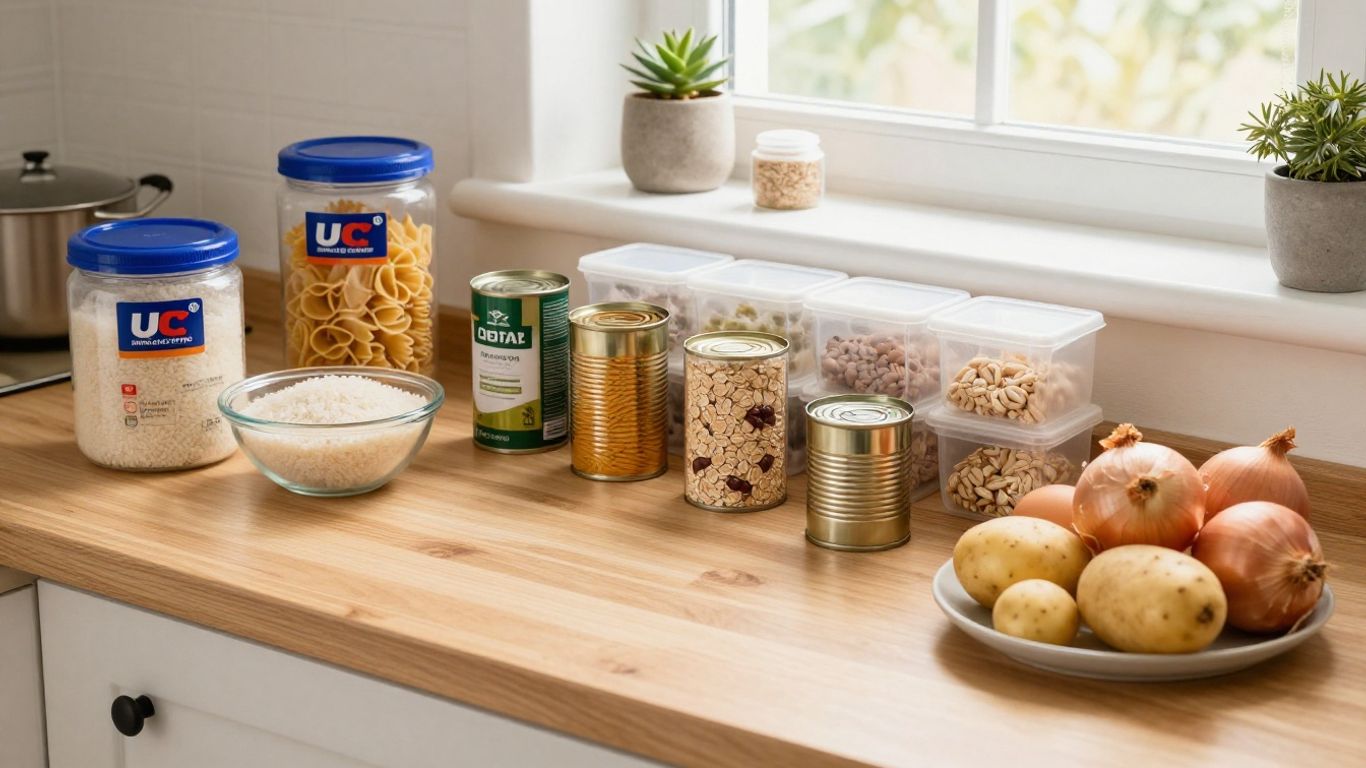
Prioritise cupboard staples, freezer items and quality ingredients
A useful first shop has three layers: cupboard staples for structure, freezer items for back-up and quality ingredients for meals you plan to cook soon. Do not buy a week’s worth of delicate produce if you will be away for a weekend. Choose smaller quantities until you understand your appetite, timetable and storage.
A practical starting point might include rice or pasta, oats, tinned beans, tomatoes, onions, potatoes, eggs, frozen vegetables and one or two sauces. If you enjoy Punjabi home cooking, dishes such as dal tadka, rajma chawal and chole can also be part of a freezer plan: dal tadka is lentils finished with a spiced tempering, while rajma chawal is kidney beans with rice.
Compare supermarket prices, own-brand options and multi-buys
Compare the price per 100g or per litre rather than judging only by the large number on the packet. Multi-buys are worthwhile only when you have room and will use everything before it deteriorates. Check the reduced section, but buy with a plan instead of treating every bargain as a reason to cook something different.
Use a simple comparison table when you are choosing between options. It keeps the decision tied to how the food will actually fit into your week.
| Food type | Useful first choice | Why it helps |
|---|---|---|
| Cupboard staple | Rice, pasta or oats | Forms the base of several quick meals |
| Freezer item | Mixed vegetables or portions of cooked food | Provides back-up with little preparation |
| Quality ingredient | Onions, potatoes or eggs | Works across breakfasts and main meals |
| Flavour builder | Stock, herbs or spices | Makes basic ingredients less repetitive |
After a couple of shops, you will see which categories disappear quickly and which linger. Adjust quantities before changing the whole menu; a smaller bag bought regularly is often better value than a large one that is forgotten at the back of a cupboard.
Set a weekly food budget without relying on takeaway meals
Choose a weekly figure that includes food for cooking, snacks and a little flexibility. Divide it between a main shop and a small midweek top-up, then keep takeaway spending separate so it does not quietly consume the money intended for groceries. Your budget should be a guide, not a punishment for having an unexpectedly social week.
The easiest saving is usually one planned batch meal. If you cook four portions, refrigerate or freeze them promptly and use them on the evenings when cooking feels least appealing. Saakshi's Kitchen offers home-cooked Indian meals delivered frozen and ready to reheat, which some students may use alongside their ordinary grocery shop rather than treating every busy evening as a takeaway occasion.
Choose food that suits shared student kitchens
Shared kitchens reward courtesy and low-maintenance cooking. You may have one shelf in the fridge, limited freezer space and several people wanting the hob at once. Meals that use one pan, create little washing-up and store neatly are easier for everyone. Before buying specialist ingredients, learn the habits of the people you live with.
Select meals that need minimal equipment and preparation
One-pot pasta, baked potatoes, rice bowls, omelettes and simple soups can all work with basic equipment. Keep a few meals that can be assembled without cooking as well, such as yoghurt with oats, sandwiches or wraps. The aim is not to avoid cooking; it is to have a reliable option when the kitchen is crowded or your concentration is elsewhere.
When choosing recipes, look at the full process rather than the cooking time alone. Chopping, soaking, washing up and finding a clean worktop all count. A short meal preparation guide is helpful when you want to make a realistic plan for shared accommodation.
Work around limited fridge and freezer space
Ask how many shelves or drawers you can use before you shop for large containers. Flat, stackable boxes make better use of a small freezer than tall mismatched tubs, and a marker pen helps you identify food at a glance. Keep one emergency meal available, but avoid turning the freezer into a second cupboard.
If your fridge is not holding temperature or the door seal looks damaged, tell accommodation staff rather than guessing. General refrigerator repair advice may explain common faults, but student halls normally have their own reporting process and residents should not attempt repairs themselves.
Label, organise and store food in shared areas
Write your name and the date on anything that is likely to be mistaken for communal food. Use one basket for opened packets and keep raw ingredients separate from ready-to-eat items. A quick weekly check prevents forgotten containers from becoming someone else’s unpleasant surprise.
Be clear about what is shared and what is not. A note in the flat group chat can settle questions about milk, oil or spices without making the kitchen feel formal. Good labelling is a small habit that protects food and relationships at the same time.
Stock up on quick meals for busy university days
University days rarely follow the neat rhythm you imagine before term begins. Lectures run late, societies meet over dinner and a supposedly short library visit can take an evening. Keep food that can be eaten quickly without becoming an afterthought. Variety matters here, but reliability matters more.
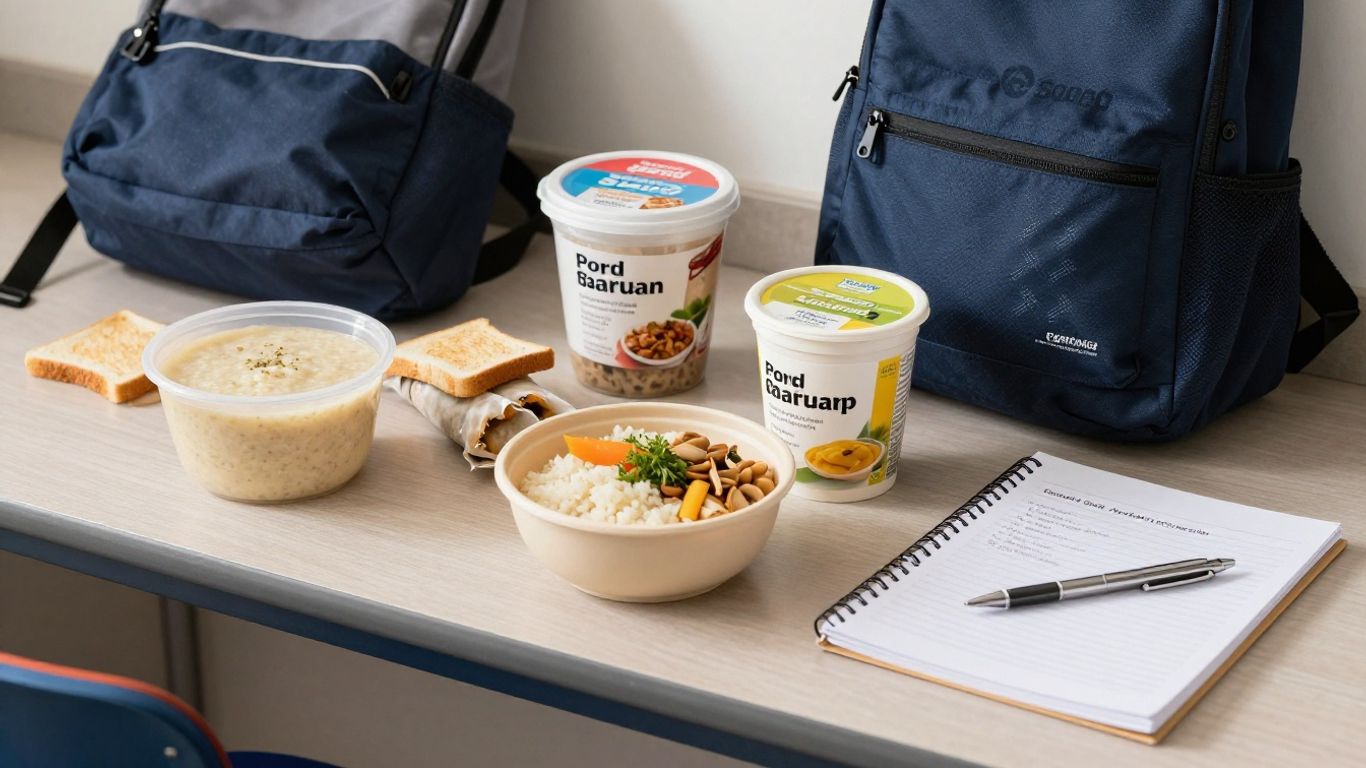
Put together breakfasts you can make in minutes
Keep breakfast ingredients in one place so you do not have to search before an early lecture. Oats, cereal, fruit, toast, yoghurt and eggs cover several styles of morning without requiring much planning. If you dislike eating early, pack something small for later rather than buying food automatically on campus.
Prepare overnight oats or boiled eggs when you have time, but do not build a routine that collapses if you miss one Sunday. A few dependable choices are enough. The point is to leave the room with something suitable, not to win a breakfast competition.
Keep simple lunches ready between lectures
Lunches should travel well and survive a few hours in a bag. Wraps, pasta salads, rice dishes, soup in a leakproof flask and leftovers in a sturdy box are useful choices. Keep sauces separate where possible, and use an ice pack if the food needs to stay cold until lunchtime.
A small list can stop you buying the same expensive sandwich every day:
- One packed lunch from leftovers.
- One wrap or sandwich filling.
- One soup, rice or pasta option.
- One snack that will not be crushed in your bag.
Rotate the list according to your timetable. If a day has back-to-back lectures, choose the option that can be eaten neatly and quickly rather than the meal that needs a knife, fork and a quiet table.
Prepare filling evening meals after a long day
Evening food should require as few decisions as possible. Batch-cook a sauce, keep cooked grains in sensible portions and store ingredients where you can see them. A meal such as dal, rice and a vegetable dish can feel substantial without demanding an elaborate session at the hob.
Saakshi's Kitchen prepares home-cooked Indian meals in a FSA 5-star kitchen, delivered frozen and ready to reheat. Its kitchen-cooked meats are halal, so students who need that option can check the menu and ingredient information before ordering. Whether you cook everything yourself or keep a few ready-to-reheat meals available, the useful measure is whether dinner fits the night you are actually having.
Make cooking easier with basic halls equipment
You rarely need every gadget advertised for student life. A small, dependable kit is easier to wash, store and replace than a drawer full of single-purpose tools. Check the accommodation inventory before buying anything, because halls vary considerably. The same rule applies to appliances: convenience is not worth breaching a residence rule.
Use a small set of pans, utensils and storage containers
Start with one medium saucepan, one frying pan, a baking tray if ovens are available, a sharp knife, a chopping board, a wooden spoon, a spatula and two or three storage boxes. Add a colander and a tin opener if the kitchen does not provide them. Choose containers that stack and have secure lids; they will earn their space quickly.
Avoid buying a complete set before move-in. You may discover that the kitchen already has pans, or that your room has nowhere safe to keep them. A smaller kit also makes it easier to clear the worktop when another flatmate needs it.
Check what your accommodation already provides
Read the inventory and accommodation guidance carefully. Some halls provide ovens, hobs, microwaves and kettles, while others may include only the larger fixtures. Photograph the condition of shared equipment when you arrive and report missing or damaged items through the proper channel.
If a communal fridge has a problem, report it to the accommodation team rather than arranging a private visit. For context, London fridge repair information describes local appliance issues, but it is not a substitute for following your hall’s maintenance process.
Choose appliances carefully and follow accommodation rules
Before bringing a rice cooker, air fryer or sandwich press, check the permitted-appliance list. Some residences restrict high-wattage equipment or ban appliances in bedrooms for fire-safety reasons. Store and use anything allowed only in the kitchen, away from water and unattended cooking.
A good appliance is one you will use often and can clean properly. If it takes longer to assemble than the meal takes to cook, it may not deserve precious cupboard space. Keep the instruction leaflet and unplug equipment after use.
Include freezer-friendly and ready-to-reheat options
The freezer can make halls life calmer, but only when it is organised. It gives you a way to preserve cooked portions and keep dependable meals for awkward days. It does not remove the need for labels, safe storage or sensible portioning. Think of it as a small reserve rather than a place to hide every failed experiment.
Understand which meals are practical to freeze
Sauces, curries, stews, cooked beans and many pasta dishes usually freeze more conveniently than meals with delicate raw leaves or crisp toppings. Cool cooked food promptly, pack it in suitable containers and leave room for expansion. If you are unsure, freeze one portion first and see how the texture works after reheating.
Home-cooked Indian dishes can be particularly practical for this routine. Saakshi's Kitchen meals are delivered frozen and ready to reheat, so students can keep a few portions available without planning every dish from scratch. Check the specific packaging instructions rather than assuming every meal behaves in the same way.
Portion food so you only reheat what you need
Freeze single servings or clearly marked two-person portions. Flat bags or shallow boxes thaw more evenly and take up less space than one huge container. Write the dish, portion size and date on the label before it disappears into the freezer.
Think about the moment you will eat it. A single serving is useful after a late seminar, while a larger portion may suit a shared dinner. Portioning also makes it easier to notice what is being used and what is repeatedly ignored.
Follow storage, reheating and use-by guidance
Follow the packet or recipe guidance for storage and reheating, and do not rely on smell alone to judge whether food is safe. Reheat until piping hot throughout, stir where appropriate and avoid repeatedly cooling and reheating the same portion. When food has been thawed, use it according to the instructions rather than putting it back in the freezer.
Keep a short note of what entered the freezer each week. That simple record helps you use older portions first and keeps the drawer from becoming an archaeological dig. If an instruction is unclear, ask the manufacturer or accommodation food-safety contact.
Make your food plan work with different routines and preferences
A shared flat may contain early risers, night owls, keen cooks and people who regard the hob with suspicion. Your food plan should leave space for all of them. It also needs to work when money, study pressure or travel changes your usual pattern. Flexibility is not a lack of organisation; it is what makes organisation last.
Coordinate shared meals without putting pressure on flatmates
Suggest shared meals as invitations, not obligations. Agree on the dish, cost and washing-up before anyone starts, and keep a solo option available for people who are busy or simply want their own food. A shared shelf or labelled basket can prevent confusion about ingredients.
Cooking together can be a lovely way to settle into halls, especially when everyone contributes something small. But a flatmate declining dinner is not a rejection of the group. Leave the door open for another day.
Account for dietary requirements and ingredient checks
Read ingredient labels carefully and ask questions when you are eating food prepared by someone else. Keep separate utensils where needed, avoid guessing about allergens and tell flatmates clearly about any serious dietary requirement. Vegetarian and halal choices should be discussed in practical terms rather than assumed from a dish’s name.
If you are ordering prepared food, check the menu, ingredients, allergen information, portion size and storage instructions before paying. A student meal delivery guide can help you compare those details with your available freezer space and routine.
Create a flexible plan for exam periods, weekends and holidays
Keep a basic exam-period menu that needs little chopping and creates predictable washing-up. Before a weekend away, reduce your quality shop and freeze or use anything that will not wait. During holidays, check whether your halls kitchen remains accessible and avoid leaving food behind for weeks.
One useful approach is to keep three levels of effort: a meal you can cook properly, a meal you can assemble quickly and a meal you can reheat. That structure gives you a fallback without making every busy day feel like a crisis. For parents planning to send familiar food, university food delivery advice covers practical details such as addresses, parcel rooms and freezer space.
Conclusion
The best food for students moving into halls is not an impressive collection of recipes; it is a small, adaptable system that fits your kitchen, budget and changing timetable. Start with a few reliable ingredients, label what you store, keep quick meals nearby and add more variety as the term settles. You can cook from scratch, share meals with flatmates or keep frozen ready-to-reheat options on hand—the routine should make student life easier, not give you another assignment.
Frequently Asked Questions
What food should I buy first when moving into halls?
Start with a few cupboard staples, freezer items, breakfast foods and ingredients for two or three simple meals. Buy modest quantities until you know your storage space, timetable and eating habits.
How can I save money on food at university?
Plan several meals before shopping, compare price per unit, use own-brand basics and cook portions that can become another meal. Keep takeaway spending separate from your grocery budget.
What meals work well in a shared student kitchen?
One-pot pasta, rice bowls, omelettes, soups, baked potatoes and simple traybakes are practical because they use limited equipment and create manageable washing-up.
How much freezer food should I keep in halls?
Keep enough for a few awkward evenings rather than filling the entire freezer. Label single portions with the dish and date so you can see what you have and use older food first.
What kitchen equipment do students usually need?
A saucepan, frying pan, knife, chopping board, spatula, wooden spoon, tin opener and stackable storage boxes are a useful starting point. Check the accommodation inventory before buying more.
Can I share food with flatmates?
Yes, but agree clearly what is communal and what belongs to an individual. Shared meals work best when costs, ingredients, timing and washing-up are discussed beforehand.
How do I plan food during exams?
Keep a short list of meals that can be cooked, assembled or reheated with little effort. Stock a few dependable options, reduce unnecessary decisions and make enough room for changing study and social plans.
Order home-cooked Indian meals from Saakshi's Kitchen · UK delivery locations.
Students: 15% off every order over £40
Verify once with Student Beans and 15% comes off every one-off order over £40 at checkout, for as long as you are studying. First order? Use FIRST20 for 20% off instead. One code per order, so the two do not stack.
Get the student discount → · Student meal boxes for students moving into halls