

Halal food delivery Birmingham students: a guide to ordering home-cooked Indian meals
Saakshi's Kitchen EditorialKey Takeaways
A good student meal plan starts with clear halal information, realistic storage arrangements and an honest look at the weekly budget.
- Check how halal meat, vegetarian dishes and allergens are described before ordering.
- Choose frozen meals that fit your freezer space, timetable and appetite.
- Compare the full cost of delivery, bundles and takeaway habits rather than one meal alone.
- Use postcode checks and accurate hall or house details to avoid delivery problems.
- Build a flexible routine that can change around exams, placements and university holidays.
Understanding halal food delivery for students in Birmingham
For students, halal food delivery is as much about confidence and routine as it is about finding a dish you fancy. A meal may need to fit between lectures, arrive at a hall reception and live in a shared freezer for several days. Clear information about preparation, ingredients and reheating makes that arrangement easier to manage. If you are searching for halal food delivery birmingham students, start with the practical details rather than the photographs.
What to check before placing an order
Look first for a plain explanation of what halal means on that particular menu. Saakshi's Kitchen states that its kitchen-cooked meats are halal, while vegetarian options should be identified separately rather than assumed. It is also sensible to look for ingredient and allergen information, serving guidance, the delivery format and instructions for keeping meals frozen.
A postcode check matters in Birmingham because students may be in halls, a shared house or a family home outside the central student areas. Check whether the provider serves your address before spending time building a box. If you have a particular requirement around ingredients, spice or preparation, ask before payment rather than relying on a general halal label.
How halal menu information is presented
Good menu information does not need to be complicated. It should help you distinguish meat dishes from vegetarian or pure-veg choices, understand whether meals arrive frozen, and see what is included in a portion or box. Dish names can also tell you something useful: rajma is kidney-bean curry, kadhi is a yoghurt-based preparation, and dal tadka is lentils finished with a spiced tempering.
For a wider look at finding halal places and checking how listings describe meat preparation, halal food listings can be a useful background reference. It is separate from choosing a home meal delivery service, but it reinforces the habit of checking the detail behind a label instead of making assumptions.
When to contact the provider with questions
Contact the provider if a menu description leaves you unsure about meat, vegetarian preparation, allergens, delivery to halls or the condition in which food arrives. Keep the question specific: ask whether a named dish contains meat, whether a box can be delivered on a certain day, or whether the instructions require reheating from frozen. A short message before ordering can prevent an awkward meal decision later.
Parents ordering for a student should involve the student in these questions. They know the kitchen, timetable and food preferences on the ground, including whether there is room for a larger box. That small conversation often makes the difference between a useful delivery and food that sits untouched.
Choosing meals around student life and budget
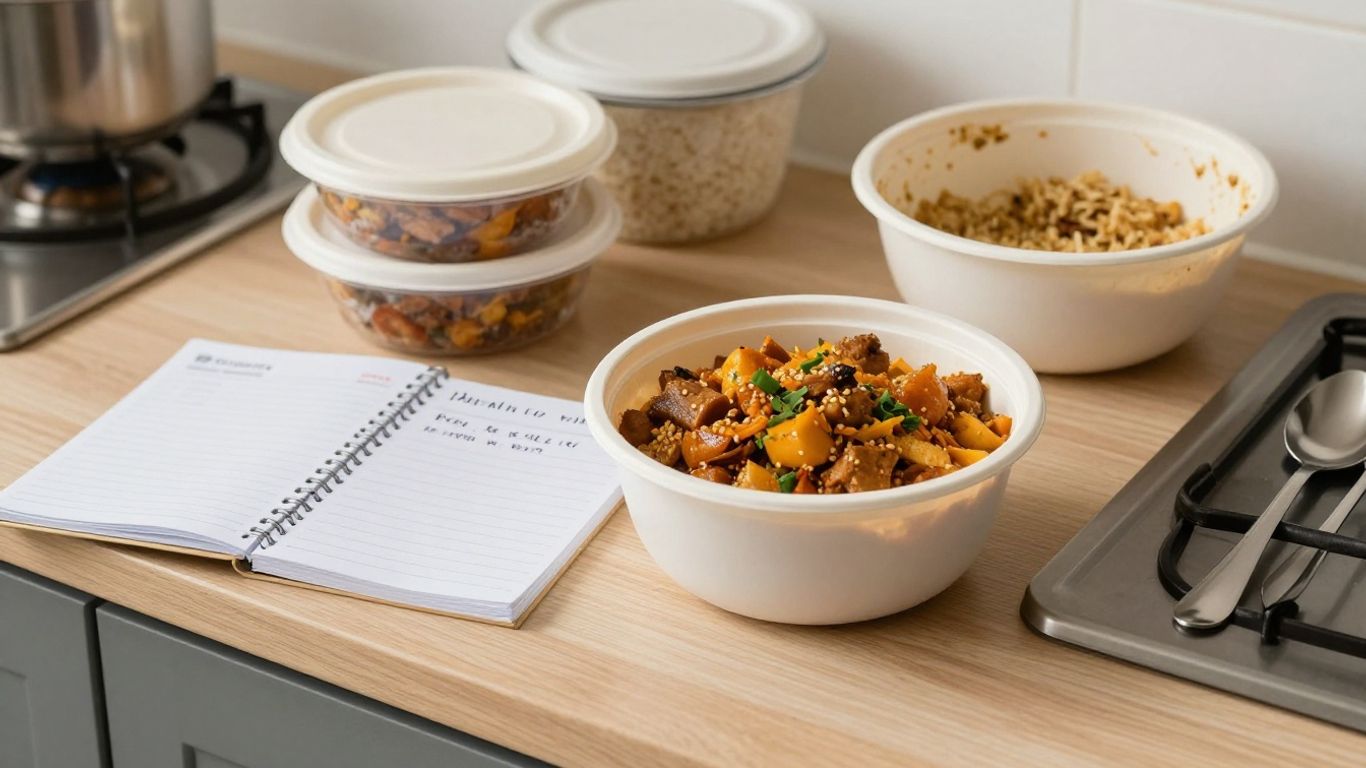
Student budgets rarely behave neatly from one week to the next. Rent, travel, society fees and an unexpected trip to the supermarket can all change what feels affordable. A meal box works best when it is treated as part of a routine, not as an automatic replacement for every meal. Planning around the week also helps preserve the familiar feeling of a home kitchen without creating another job.
Planning orders around lectures and term-time routines
Start with the days when cooking is least likely to happen. A long laboratory session, an evening seminar or a shift at work may be a better anchor for a delivered meal than an arbitrary Monday-to-Friday pattern. Allow time for the parcel to arrive, be put away and reheated; do not plan around a narrow gap between two classes.
Frozen meals can be useful here because they do not have to be eaten on the day they arrive. You can place one aside for a late library evening and use another when you return from campus. The main requirement is knowing your own timetable well enough to avoid ordering more food than the week can accommodate.
Comparing portions, bundles and delivery costs
A fair comparison looks beyond the price printed beside one dish. Count how many complete meals a box provides, how much freezer space it uses and whether delivery is included or charged separately. The table below gives a simple way to compare options without pretending that every student has the same appetite or schedule.
| Option | Useful question | Best fit |
|---|---|---|
| Individual meals | Can you mix dishes and test portions? | First order or changing timetable |
| Small bundle | Does the total reduce the cost per meal? | A student with limited freezer space |
| Larger box | Will the household eat it before travelling? | Shared ordering or a settled routine |
| Planned subscription | Can you pause or change it when needed? | Regular term-time meals |
After comparing the total, include the cost of a supermarket side, rice or bread if those are not in the box. A cheaper-looking meal can become less useful if it creates extra errands, while a larger order is poor value if it is forgotten in the freezer. For more ideas on comparing delivery coverage, portions and storage, see this student meal budget guide.
Balancing variety with familiar home-cooked flavours
Variety matters, but a student does not need a different style of food every night to avoid boredom. A rotation of dal, rajma, chole, kadhi and seasonal sabzi can feel reassuring because it resembles the weekly rhythm of a family kitchen. Add one or two dishes with a different texture or spice level, then keep a dependable favourite for the nights when decision-making is already tiring.
Punjabi home cooking is often milder than a restaurant curry: spiced, but not built around heat. That can make a box easier to fit into ordinary Tuesday meals, especially when paired with rice, roti or a simple salad from the supermarket. The point is not to make every meal elaborate; it is to make the choice feel familiar enough that you will actually eat it.
How Saakshi’s Kitchen works for Birmingham students
Saakshi's Kitchen is a home-cooked Indian meal service rather than a takeaway marketplace. Its meals are prepared in a FSA 5-star kitchen and delivered frozen, ready to reheat. For a Birmingham student, that means the useful questions are about the menu, the freezer and the postcode, not about waiting for a restaurant order at dinner time. The arrangement suits people who want Punjabi home cooking in a weekly rhythm while living away from their own family kitchen.
Home-cooked Indian meals prepared in a FSA 5-star kitchen
The meals are home-cooked Indian food prepared in the FSA 5-star kitchen, with a regional Punjabi approach behind the weekly dishes. The method is familiar: onion, tomato, ginger and garlic form the base, spices are ground and blended in the kitchen, and dal can be finished with a tadka. A meal may include a sabzi, dal, roti or rice, portioned as a meal rather than presented as a sharing platter.
The Birmingham meal collection is the natural place to begin when you want to see what is currently relevant to the city. Menu choices can change, so read the individual dish details and decide how they fit your own storage and timetable rather than ordering by description alone.
Understanding frozen delivery and reheating
The meals arrive frozen and are intended to be kept frozen until you are ready to reheat them. That format gives a student some breathing room: delivery day does not have to become dinner day. It also means the freezer needs to be organised before the parcel arrives, and the reheating instructions need to be followed for each meal.
Do not treat every container as interchangeable. Note whether the meal is designed to be reheated from frozen, whether it needs a particular appliance and when it should be heated through. The frozen tiffin guide covers the sort of questions worth asking about format, portions, menu variety and storage before you commit to a regular order.
Checking Birmingham postcode and student delivery availability
Availability depends on the address entered at checkout, so use the postcode tool before choosing a plan. Students in halls should confirm the building name, room or flat details and the procedure for parcels at reception. Those in shared houses should agree who will receive the delivery and where frozen food can be stored immediately.
Do not assume that a city name alone settles the question. University accommodation can have different access arrangements, and students may move between Edgbaston, Selly Oak, central Birmingham or a placement address during the year. If the checkout result is unclear, contact the provider with the exact postcode and delivery situation.
Ordering halal meals online in Birmingham
Online ordering is straightforward when the information is ready before you open the checkout. Have the complete address, a mobile number and any building instructions to hand. It is worth treating the order review as a final practical check, not a formality. A few minutes spent reading it can save a missed parcel or an unsuitable box.
Finding the relevant student collection
Begin with the Birmingham or student-facing collection rather than browsing a general menu and guessing whether it applies to you. Read the delivery notes, available meal formats and any postcode guidance first. If a parent is placing the order, send them the student's exact address and preferred contact details before they start.
A collection page should help you move from broad choice to a workable order. Look for dishes you will eat on ordinary evenings, not only special cravings. If you are comparing services more generally, university meal delivery advice offers a useful checklist for delivery timing, hall coordination and planning larger orders.
Entering delivery and contact details accurately
Halls can be surprisingly difficult for couriers, especially when several buildings share one postcode. Include the university accommodation name, block, room or flat number where appropriate, plus any reception instructions that are permitted. Use a phone number you will answer on delivery day, and tell housemates who may need to bring the parcel inside.
Before submitting, read the address aloud as if you were a courier seeing it for the first time. Remove old addresses saved in autofill and check the postcode character by character. If you are ordering from overseas for a student, ask them to confirm the final details rather than relying on an address copied from an earlier term.
Reviewing meal choices, timings and order totals
The final screen should answer three questions: what is in the box, when is it due and what is the complete amount being paid? Check the number of meat and vegetarian meals, any selected bundle, delivery charges and the chosen date. Also check whether you have ordered a one-off box or a repeating plan, as those are different commitments.
A sensible final review is quiet and unglamorous, but it protects the budget. Save the confirmation and make a note of the delivery window somewhere you will see it. If the order includes unfamiliar dishes, keep a simple plan for which meals you expect to use first so the box does not disappear behind bags of peas.
Storing and reheating delivered meals
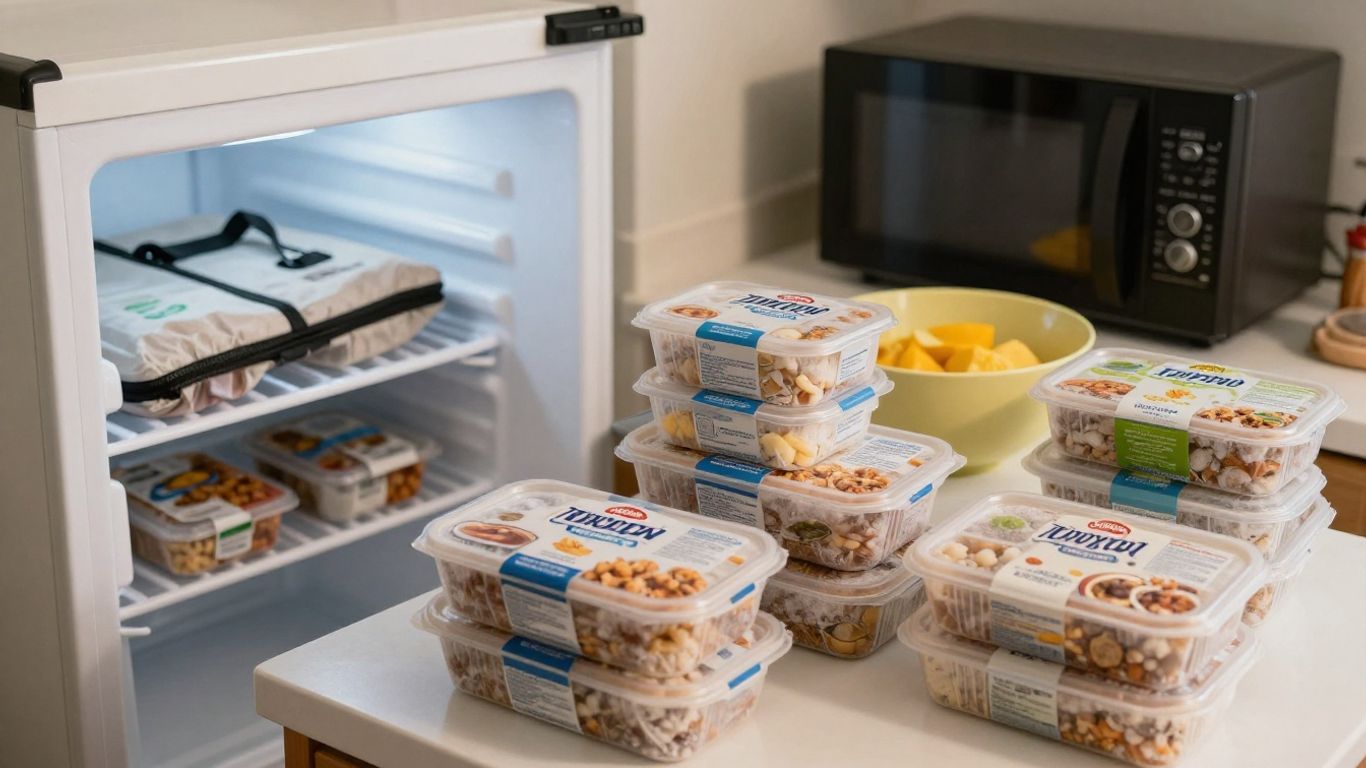
Storage is where a good delivery becomes either genuinely helpful or inconvenient. Student kitchens often have a narrow freezer drawer, several flatmates and very little spare surface space. Make a plan before the courier arrives, especially if the box is being sent during a busy week. The aim is simple: get the meals safely put away and make the next few dinners easy to find.
Making space in a shared student freezer
Measure the available space rather than estimating it. Ask flatmates whether they have anything that can be moved, and keep your meals together in one labelled area if possible. If the freezer is already full, a smaller box or a different delivery date may make more sense than forcing food into an unsafe or confusing arrangement.
Put the meals away promptly and keep the packaging with the relevant instructions. A quick photograph of the box contents can help when several similar containers are stacked together. This is especially useful in halls, where personal freezer space can be limited and food may otherwise be mistaken for somebody else’s.
Following the instructions on each meal
Use the reheating method and time supplied with the meal, because containers and recipes can vary. If a dish is meant to be reheated from frozen, follow that instruction rather than leaving it out casually. Heat the centre thoroughly, allow for standing time where specified and use suitable cookware for your appliance.
A few everyday kitchen tools can make this less fiddly. A microwave-safe plate, a covered bowl and a reliable spatula are usually more useful than a cupboard full of specialist equipment; readers looking to organise a compact kitchen can browse practical cooking tools for general ideas. Equipment does not replace the instructions, though, so keep those as the main reference.
Planning meals after delivery day
Once the food is stored, mark out a loose order for the week. Put the meals you are most likely to forget somewhere visible in the freezer and leave dependable favourites for the evenings when plans change. You can also keep rice, roti, yoghurt or salad ingredients available so a reheated main becomes a complete plate without another trip across town.
Try not to thaw several meals simply because they are in the same box. Use only what you need, return unopened meals to the freezer as directed and keep an eye on dates and instructions. That small amount of organisation protects both the food and the money you have spent on it.
Comparing meal delivery with Birmingham takeaways
Takeaway food and planned meal delivery solve different problems. A takeaway is useful when you want something immediately and do not want to think about tomorrow. Frozen home-cooked meals are more about having an option waiting when the day runs late. Comparing them fairly means considering timing, portion, leftovers, delivery charges and how often the order becomes part of your week.
Evaluating convenience during busy weeks
During an ordinary busy week, convenience is not only the speed from checkout to front door. It includes the time spent choosing, waiting, receiving and deciding what to eat next. A meal already stored at home can remove one decision, while a takeaway may be the better fit for an unplanned evening with friends.
The useful question is whether the option matches the kind of busy you have. A student with back-to-back lectures may value a meal that can be reheated later; someone returning from a society event may prefer to eat with others nearby. Neither choice needs to win every time.
Considering repeat orders and overall value
Repeat value depends on use, not just price. If a student eats most of the box and enjoys the rotation, the order may reduce last-minute spending. If half the meals remain untouched because the timetable changes, even a well-priced bundle is not good value.
Keep a note for two or three weeks of what you ordered, what you ate and what you bought separately. That gives you a more honest picture than judging one expensive Friday or one unusually quiet week. It can also show whether smaller, more frequent orders suit your freezer better than a large delivery.
Choosing between individual meals and planned deliveries
Individual meals offer control and are useful while you learn your portion preferences. A planned delivery can make sense once you know which dishes suit your schedule and how much room you have. Some students may also share an order with a flatmate, provided the cost, storage and food preferences are agreed beforehand.
Use these questions to keep the decision grounded:
- Will I be in Birmingham for the whole delivery period?
- Do I have enough freezer space for the chosen box?
- Which meals will I actually want after a long day?
- Is the total cost clear after delivery charges?
The answers are more useful than a blanket rule about whether takeaway or delivery is best. Restaurant Indian is celebration food; ghar ka khana is Tuesday night. A planned meal has a different role, and that is precisely why it can earn a place in a student routine.
Building a practical student meal routine
The most workable routine is usually modest. It leaves room for supermarket food, meals with friends, late changes and the occasional takeaway without turning any one order into a commitment. Think in terms of a few reliable anchors rather than a rigid menu for every day. That approach also makes it easier to adjust when term dates stop behaving like a normal week.
Combining delivered meals with everyday essentials
A delivered meal can sit alongside rice, roti, yoghurt, fruit, salad ingredients and quick breakfast foods. Students do not need to build an elaborate kitchen around it. Keep a few basics that can fill out a meal, then choose dishes that already make sense with what you normally buy.
This is also where familiar flavours matter. Dal tadka with rice, rajma with chapati or kadhi alongside a simple salad can feel like a proper evening meal without requiring several pans. If a housemate cooks something different, the freezer meal remains an option rather than a rule.
Creating a simple weekly order plan
Choose one delivery day, two or three likely meal occasions and a backup option for a timetable that shifts. Write the plan somewhere visible, then review it after the week rather than trying to perfect it in advance. The following sequence is enough for many students:
- Check the calendar for lectures, shifts and evening commitments.
- Count freezer space and meals already at home.
- Pick familiar dishes first, then add variety.
- Confirm the postcode, delivery details and total cost.
After the order arrives, make a note of what worked. Perhaps you needed more vegetarian dishes, fewer portions, or meals that pair easily with supermarket rice. The next order can be shaped by that experience instead of by guesswork.
Adjusting orders for holidays, placements and exam periods
University life comes in waves. During exams, a few dependable freezer meals may be useful, but a long holiday can make a regular order unnecessary. Placements may move you to another postcode, while a visit home can leave the freezer untouched for weeks.
Review the plan before each major change in term. Check whether the provider allows a pause or cancellation, confirm the next address if you are moving and avoid ordering around a date when nobody can receive the parcel. For students and parents, a short calendar reminder is often enough to prevent an automatic delivery arriving at the wrong moment.
When discussing performance tools for a sports placement, a student might separately encounter Hudl Sense, but that is not a food service and has no bearing on meal planning. Likewise, broader household research such as Mental Health First Aid, Cysticure or seamless gutter installation belongs to entirely different subjects; keeping those distinctions clear is part of reading online information carefully.
Conclusion
For Birmingham students, a dependable halal meal routine comes down to clear preparation information, a realistic budget, enough freezer space and delivery details that match university life. Choose meals you will genuinely eat, keep the plan flexible and let home-cooked Indian flavours provide an easy Tuesday option when the day has run long.
Frequently Asked Questions
What should students check before ordering halal meals?
Check how the provider describes halal meat, vegetarian choices, ingredients, allergens, delivery format and reheating. Confirm the postcode and make sure the address can receive a frozen parcel.
Are frozen meals practical for university accommodation?
They can be practical when the freezer has enough space and the meals stay together and clearly labelled. Shared kitchens need a little extra planning around storage and parcel collection.
How can students compare meal delivery with takeaway prices?
Compare the complete cost per usable meal, including delivery and any sides you normally buy. Also consider how much food is eaten, how often you order and whether leftovers or unused meals are likely.
What address details matter for halls of residence?
Include the accommodation name, building or block, room or flat number where relevant, postcode and reception instructions. Use a phone number that will be answered on the delivery day.
How many meals should a student order at once?
That depends on appetite, freezer space, timetable and how often the student eats elsewhere. A smaller first order can help establish portions and preferences before choosing a larger box.
Can a meal routine change during university holidays?
Yes. Review orders before holidays, placements and exam periods, and check whether a delivery can be paused or changed. Avoid scheduling a parcel for a period when nobody can receive it.
What makes home-cooked Indian meals different from takeaway food?
Home-cooked meals are generally planned for ordinary household eating, with dishes such as dal, rajma, kadhi and sabzi arranged as meals. Takeaway food is often chosen for immediate eating, so the two options serve different routines.
Order home-cooked Indian meals from Saakshi's Kitchen · UK delivery locations.
Students: 15% off every order over £40
Verify once with Student Beans and 15% comes off every one-off order over £40 at checkout, for as long as you are studying. First order? Use FIRST20 for 20% off instead. One code per order, so the two do not stack.
Get the student discount → · Student meal boxes for halal meals in Birmingham