

Boxing Day dinner ideas Indian families can enjoy at home
Saakshi's Kitchen EditorialKey Takeaways
Boxing Day is a lovely moment for a relaxed Indian meal: generous, sociable and flexible enough to welcome everyone back to the table.
- Choose one memorable centrepiece, then build around it with rice, breads and cooling sides.
- Use leftovers thoughtfully, adding gentle spice without hiding the flavour of the roast.
- Check portions, ingredients and allergens before shopping or ordering.
- Prepare in stages so the host is not tied to the hob when guests arrive.
- Frozen, ready-to-reheat meals can make a family gathering simpler when time is short.
Plan an Indian Boxing Day menu that feels festive
The best Boxing Day dinner ideas Indian families enjoy at home do not need to copy Christmas dinner or become a restaurant-style spread. Think of a table with one generous main, a dependable rice or bread option, and small bowls of bright, cooling accompaniments. That combination feels celebratory while still carrying the comfort of home cooking. For more ideas on bringing Indian flavours into a festive gathering, explore this guide to an Indian Christmas feast.
Choose a centrepiece dish for the table
Start with the dish that will give the meal its character. A slow-cooked chicken or lamb curry works well for a smaller gathering, while biryani gives a larger table something substantial to share. If the family enjoys a particular regional recipe, this is the moment to bring it out rather than trying to please every taste with six different mains.
A good centrepiece should also be manageable. Choose something that can sit comfortably for a short while and still taste inviting when served, rather than a dish that demands last-minute attention every few minutes.
Balance rich curries with rice, breads and sides
Rich sauces become easier to enjoy when the rest of the plate brings contrast. Pair a curry with basmati rice or pulao, then add roti or naan if guests like to scoop up the sauce. Raita, a sharp pickle and a quality-tasting chutney can provide coolness, acidity and crunch without adding another complicated cooking project.
Keep the menu to a few well-chosen elements. One curry, one rice or bread, one vegetable dish and two accompaniments will usually feel more abundant than a crowded table where every dish competes for attention.
Plan portions around guests and leftovers
Boxing Day often includes a mixture of appetites: people who had a large Christmas lunch, relatives arriving unexpectedly and family members hoping for a container to take home. Estimate the main dish by the number of adults, then add a little extra if you want leftovers rather than doubling everything automatically.
A simple planning table can make the quantities easier to judge:
| Part of the meal | Smaller gathering | Larger family table | Leftover-friendly choice |
|---|---|---|---|
| Main curry | 1 dish | 2 dishes | Chicken, lamb or chickpeas |
| Rice or pulao | 1 pot | 2 pots | Basmati rice or biryani |
| Vegetable dish | 1 bowl | 2 bowls | Seasonal sabzi |
| Breads | 1 per guest | 1–2 per guest | Roti or naan |
Use the table as a starting point, not a rule. Children, older relatives and guests who prefer lighter plates may all eat differently, so serving dishes separately gives everyone room to choose.
Check ingredients and allergen information in advance
Before buying ingredients, ask guests about allergies, vegetarian preferences and spice tolerance. Read labels on shop-bought chutneys, breads, spice blends and stock, since these can contain ingredients that are easy to overlook. Keep serving spoons separate where possible, particularly when a pure-vegetarian dish is sharing the table with meat dishes.
If you are ordering food, check the menu and allergen information before confirming the meal. It is much easier to adjust the plan on Christmas Eve than when everyone is already sitting down.
Choose Indian main-course ideas for Boxing Day
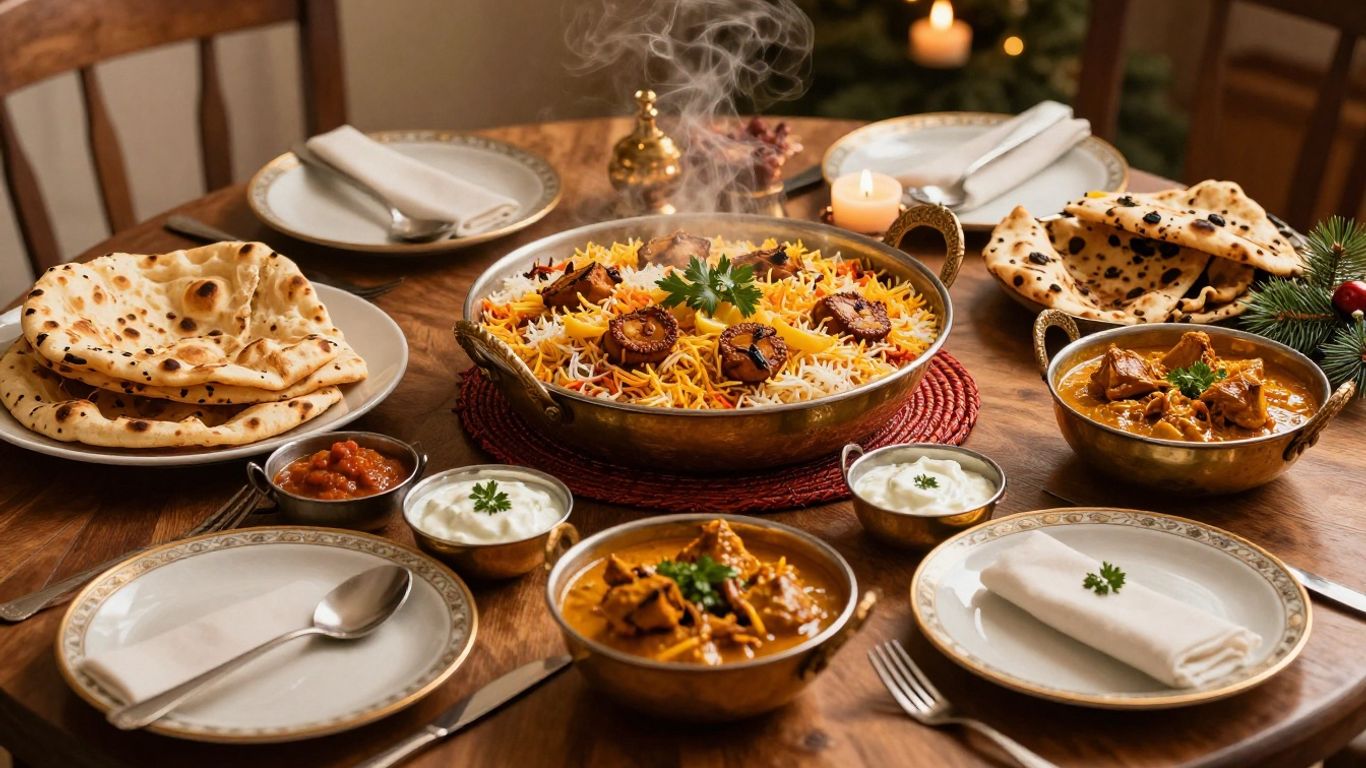
The main course does not have to be elaborate to feel festive. Punjabi home cooking offers plenty of comforting options, from a masala-led curry to a rice dish that carries the meal in one pot. Choose flavours your family already likes, then add one unfamiliar side if you want a small sense of occasion. A mix of textures and heat levels will make the meal feel generous without making it unwieldy.
Try a comforting chicken or lamb curry
Chicken curry is a reliable choice when guests want something familiar, while lamb brings a slower, deeper character to the table. Build the meal around a properly cooked onion, tomato, ginger and garlic base, then let the spices settle into the sauce. Keep the heat moderate if people are eating after a large Christmas meal, and offer chilli pickle separately for those who want more fire.
Serve the curry with rice or roti rather than several competing starches. That keeps the plate straightforward and lets the sauce remain the star.
Serve biryani as an all-in-one centrepiece
Biryani is useful when you want a dramatic centre dish without coordinating several pans at the last minute. Layer fragrant rice with chicken, lamb, vegetables or paneer, depending on the group, and serve it with raita and a sharp pickle. The rice provides structure, while the accompaniments bring the contrast a festive meal needs.
For further inspiration, browse these festive Indian recipes, including ideas such as saffron pulao and a sharing-style thali.
Once the biryani is on the table, keep the supporting dishes uncomplicated. A cucumber raita and a simple salad are enough to make the platter feel complete.
Add a paneer or vegetable dish for variety
A paneer dish, dal or seasonal sabzi gives the table another direction and means vegetarian guests are not left assembling a meal from side dishes. Matar paneer, chana masala, baingan bharta and dal tadka each bring a different texture, so choose one rather than serving several versions of the same soft, saucy dish.
A vegetable main can also make leftovers more useful the next day. Spoon it over rice, fold it into a roti or serve it alongside eggs for an easy lunch.
Include a milder option for mixed tastes
Not every guest wants a hot curry, particularly when several generations are eating together. A mildly spiced chicken curry, dal or paneer dish can anchor the meal, with chilli sauce and pickles on the side for those who prefer more heat. Keep the description clear when serving so guests know which dishes are gentle and which have a stronger kick.
The aim is not to remove flavour. Ginger, cumin, coriander, cardamom and garam masala can make a dish aromatic and full without making it fiery.
Turn Christmas leftovers into Indian-inspired dishes
Leftover turkey and roast vegetables can take on a new character with an Indian-style sauce. The trick is to add the cooked ingredients towards the end, so they absorb the masala without being simmered until dry. This is also a good way to make a smaller quantity of meat stretch across lunch and dinner. Treat the leftovers as ingredients, not as a second Christmas dinner in disguise.
Use leftover turkey in a gently spiced curry
Shred the turkey and warm it in a sauce made with onion, tomato, ginger, garlic and spices. Add a splash of stock or water if the meat needs moisture, then fold it through the sauce just long enough to heat it thoroughly. A little kasuri methi or coriander at the end can give the curry a familiar home-cooked finish.
Serve it with rice, roti or even the remaining roast potatoes if you like the idea of a slightly untidy Boxing Day plate. That contrast is part of the fun.
Add roast vegetables to a masala or biryani
Roast potatoes, carrots, parsnips and cauliflower can all work in a masala, although softer vegetables should be added carefully so they do not break apart. Toss them through a tomato-based sauce, or layer them into a vegetable biryani with rice and fried onions. Keep the seasoning measured because many roast vegetables will already have been salted.
This approach is especially useful when there is not enough of any single vegetable to serve on its own. A handful of peas or spinach can add another layer, provided the flavours suit the original roast.
Pair leftover meats with warming sauces
Turkey, chicken or lamb can be matched with different sauces depending on what remains. A tomato masala is lively and versatile, a yoghurt-based sauce is gentler, and a dark onion gravy suits richer meat. Cut or shred everything into similar-sized pieces so each serving feels considered rather than like a collection of scraps.
Make only as much sauce as the leftovers require. That keeps the dish from becoming watery and gives you a better idea of how many portions are actually available.
Follow safe storage and reheating guidance
Cool and store leftovers promptly, use clean containers, and follow current Food Standards Agency guidance for storage and reheating. Reheat only the amount you plan to serve, making sure it is hot throughout, and avoid repeatedly cooling and reheating the same dish.
Write the date on containers before they go into the fridge or freezer. A small label prevents guesswork when the kitchen is busy and makes it easier to use the oldest portions first.
Organise the cooking and reheating schedule
A calm Boxing Day meal usually comes from sequencing rather than heroic cooking. Decide which dishes can be prepared the day before, which need finishing on the day and what can be reheated while the table is being set. Keep the serving time visible on a note by the cooker. This prevents one dish being ready far too early while another is still in progress.
Prepare sauces, rice and accompaniments in stages
Make the curry base, chop garnishes and portion the accompaniments before guests arrive. Rice can be cooked in a planned window, while breads are best warmed nearer to serving. Put each finished component in a labelled container or bowl so nobody has to ask which dish is which when the kitchen fills up.
Keep the final jobs small: stir the curry, warm the breads, loosen the rice and spoon the raita into its bowl. That leaves more time for family conversation.
Reheat frozen meals according to the pack instructions
If you choose delivered frozen meals, follow the pack instructions rather than applying one method to every dish. Timing can vary with portion size, packaging and whether the food is reheated from frozen or thawed as directed. Use a clean utensil to stir and check the centre before serving.
Saakshi’s Kitchen prepares home-cooked Indian meals in a Brighton kitchen and delivers them frozen, ready to reheat. That makes it possible to plan the freezer space and serving order well before Boxing Day.
Keep different dishes warm without drying them out
Cover dishes that are waiting, and use low heat only where it is appropriate for the cookware and the food. Rice benefits from being covered so it does not lose moisture, while a curry may need a small splash of water or stock when stirred. Do not leave everything on the hob for an hour; stagger the reheating instead.
The table should be ready before the final dishes arrive. Once the food is served, turn off the heat and let everyone help themselves.
Set a serving timetable for a relaxed meal
Work backwards from the time you want to eat. Allow space for reheating, warming breads, dressing the table and dealing with late arrivals. A short timetable keeps the meal moving without making it feel formal:
- Two hours before: check containers, serving dishes and fridge space.
- Ninety minutes before: begin any longer reheating or finish a curry sauce.
- Thirty minutes before: cook or warm rice, breads and vegetable dishes.
- Ten minutes before: add garnishes, set out accompaniments and call everyone in.
The timetable is there to protect your afternoon, not to create another source of pressure. Leave a little room for the unexpected, which is often where the nicest family moments happen.
Add festive Indian sides and table touches
Sides can make a familiar curry feel like a proper occasion. Use small bowls and serving spoons so guests can build their own plates, and bring colour through herbs, pickles, yoghurt and vegetables rather than adding another elaborate dish. A few deliberate touches will make the table inviting without taking over the day.
Serve chutneys, raita and pickles in small bowls
A cooling raita can soften a spicy mouthful, while mango chutney brings sweetness and lime pickle adds sharpness. Put them around the table rather than grouping them at one end, especially if the meal is being served family-style. Small bowls also help guests take only what they want and keep the table looking neat.
If the menu already contains a rich sauce, choose a bright chutney and a simple raita rather than three heavy accompaniments.
Choose breads and rice that complement the main dishes
Basmati rice suits saucy curries and can be flavoured with cumin, cardamom or saffron. Roti is lovely with dal and drier sabzis, while naan works with richer gravies. Choose one rice and one bread unless the gathering is particularly large; too many starches can leave the table crowded and the cook overworked.
Warm breads in batches and keep them covered in a clean cloth. They will be easier to pass around and less likely to become the last-minute task nobody wants.
Use garnishes to add colour and contrast
Coriander, sliced ginger, fried onions, pomegranate seeds or a few lemon wedges can change the appearance of a dish in minutes. Choose garnishes that match the flavour, and add them just before serving so they remain distinct. Do not garnish every bowl identically; variation makes the spread look more natural.
A plain tablecloth, brass-toned serving spoons or colourful napkins can carry the festive mood without requiring a themed decoration scheme.
Create a sharing-style table for family and friends
Place the main dishes in the centre and leave enough room for people to pass bowls comfortably. Put rice and breads close to the curries, with raita and pickles slightly apart so spoons do not get mixed. If there are young children or guests with specific preferences, keep a couple of familiar items within easy reach.
A sharing table encourages conversation and lets everyone compose a plate at their own pace. That unhurried feeling is exactly what Boxing Day calls for.
Make Boxing Day dinner easier with delivered Indian meals
Cooking from scratch can be part of the celebration, but it is not the only way to host a meaningful meal. After Christmas preparations, a freezer option can take pressure off without turning dinner into an afterthought. Compare the work involved, the number of guests and the freezer space available before deciding. The right plan may be a fully cooked spread, a few supporting dishes or a mixture of home cooking and delivered meals.
Compare cooking from scratch with ready-to-reheat options
Cooking everything yourself gives you control over the menu and lets you use ingredients already in the house. Ready-to-reheat meals reduce chopping, washing up and timing, particularly when family members are arriving at different times. Consider which dishes genuinely benefit from being cooked on the day and which can be reheated without losing their appeal.
A mixed approach often works well: make the rice or salad yourself, then use prepared curries or dals for the parts that would otherwise occupy the cooker.
Order home-cooked meals from Saakshi’s Kitchen
Saakshi’s Kitchen offers home-cooked Indian meals prepared in a Brighton kitchen and delivered frozen across the UK mainland, ready to reheat. The menu can suit a Punjabi home-cooking-style table with dishes such as dals, sabzis, roti and rice. Kitchen-cooked meats are halal, so check the dish details and allergen information when selecting food for the group.
For families who want the flavour and familiarity of ghar ka khana without spending the whole day cooking, this can be a practical Boxing Day route. It is still worth ordering early, particularly around the Christmas and New Year period.
Choose dishes that suit the number of guests
For two or three people, a curry with rice and one accompaniment may be enough. A larger group might need two mains, a vegetable dish, rice, breads and something cooling. Saakshi’s Kitchen also has guidance on choosing food boxes, portion sizes, ingredients, allergens and freezer space, which can help when you are buying for more than one household.
Ask whether guests prefer chicken, lamb, vegetarian dishes or milder spice before ordering. A little information at the planning stage prevents a great deal of rearranging later.
Plan delivery, freezer space and reheating time
Check the delivery window, clear a shelf before the food arrives and keep the packaging so the reheating instructions are close at hand. Count backwards from your chosen mealtime, allowing extra time if several dishes need to be heated in sequence. If food is being sent to a relative, confirm that someone will be available to receive and store it.
The meal should make the day feel easier, not add another parcel to worry about. Once the practical details are settled, you can focus on laying the table and welcoming everyone home.
Conclusion
A memorable Boxing Day dinner can be a fragrant curry, a generous biryani, a clever use of Christmas leftovers or a carefully chosen collection of frozen meals. Keep the menu focused, offer a range of tastes and plan the timing before the cooking begins. The most successful table is the one that leaves room for seconds, stories and the simple question, “khaana khaya?”
Frequently Asked Questions
What are good Boxing Day dinner ideas Indian families can make at home?
A curry with rice, breads, raita and chutneys is a dependable starting point. You could also serve biryani with a vegetable dish, or turn leftover turkey and roast vegetables into a gently spiced meal.
Is biryani suitable for a Boxing Day gathering?
Yes. Biryani works well as a centrepiece because it brings rice and its main ingredients together in one dish. Serve it with raita, pickle and a simple salad so the table does not become too complicated.
How can I use leftover turkey in an Indian-inspired dish?
Warm shredded turkey in an onion, tomato, ginger, garlic and spice sauce, adding the meat near the end. Serve it with rice or roti, and avoid simmering it for so long that it becomes dry.
What sides go well with an Indian Boxing Day meal?
Raita, chutney, pickle, basmati rice, roti, naan and a simple vegetable dish all work well. Choose sides with different textures and flavours rather than offering several versions of the same thing.
How do I cater for guests who prefer mild spice?
Make one main dish gently spiced and serve hotter chilli accompaniments separately. Clear labels or a quick explanation at the table can help guests choose confidently.
How should I reheat frozen Indian meals?
Follow the instructions on the packaging, since timings vary by dish and portion. Check that the centre is hot throughout before serving, and reheat only the quantity you plan to eat.
How much Indian food should I order for Boxing Day?
Start with the number of guests, their appetites and whether you want leftovers. Allow for one or two mains, a rice or bread option, a vegetable dish and accompaniments, then check the stated portion information before confirming your order.
Order home-cooked Indian meals from Saakshi's Kitchen · UK delivery locations.