

Indian food for Christmas: How to plan a memorable festive feast
Saakshi's Kitchen EditorialKey Takeaways
Indian food for Christmas can be generous, personal and easy to share without abandoning familiar festive customs.
- Choose a regional, curry-led, blended or buffet-style menu.
- Pair rich mains with rice, breads, cooling accompaniments and sweets.
- Plan spice levels, portions and dietary information around your guests.
- Prepare sauces and sides ahead, leaving breads and garnishes until serving.
- Order frozen, ready-to-reheat meals when you want more time with family.
What makes Indian food work for Christmas
Christmas is already a celebration built around gathering, passing dishes and eating slowly. Indian food fits that rhythm naturally, bringing colour, fragrance and plenty of choice to the table. It can feel traditional without looking predictable, especially when familiar roast-dinner habits meet the warmth of Punjabi home cooking.
Bring warmth and spice to the festive table
Spices make a Christmas room feel welcoming before anyone sits down. Cardamom, cinnamon, cumin, cloves and garam masala bring depth, while ginger, garlic and a little chilli add warmth rather than an assault of heat. The best spread has layers: one gently spiced curry, one more aromatic dish and cooling accompaniments for contrast.
You do not need every dish to be fiery. A considered spice range lets guests try something new while still having food they can comfortably enjoy. Put extra chilli, lime and quality coriander on the table so people can adjust their own plates.
Combine familiar traditions with new flavours
There is no rule that says Christmas dinner must be one particular cuisine. A platter of roast potatoes can sit comfortably beside a bowl of dal tadka, while cranberry chutney works with a spiced roast or a crisp papad. You might also serve a turkey or chicken centrepiece with a Punjabi-style gravy, or replace it entirely with a celebratory biryani.
For readers looking beyond the usual menu, this collection of Indian Christmas recipes offers ideas for bringing Indian spices into appetisers, mains, drinks and desserts. Choose only two or three twists, though. A coherent table is more enjoyable than a dozen unrelated experiments.
Create a meal that suits sharing and celebration
Indian meals are at their most sociable when dishes arrive in the middle of the table. Guests can take a spoonful of curry, a little rice, half a naan and as much chutney as they like. That format also gives the cook a little breathing space, because nobody expects every plate to be assembled separately.
Think about texture as well as flavour. Soft dal, saucy curries, fluffy rice, crisp appetisers and something cool or crunchy make the meal feel abundant without requiring enormous quantities of every dish.
Choose the right Christmas menu style
Before choosing recipes, decide what kind of occasion you are hosting. A small family lunch may suit a regional spread, while a larger gathering often works better with a buffet or a few dependable curries. The style determines how much last-minute cooking is needed and how easily guests can serve themselves.
Plan a regional Indian Christmas spread
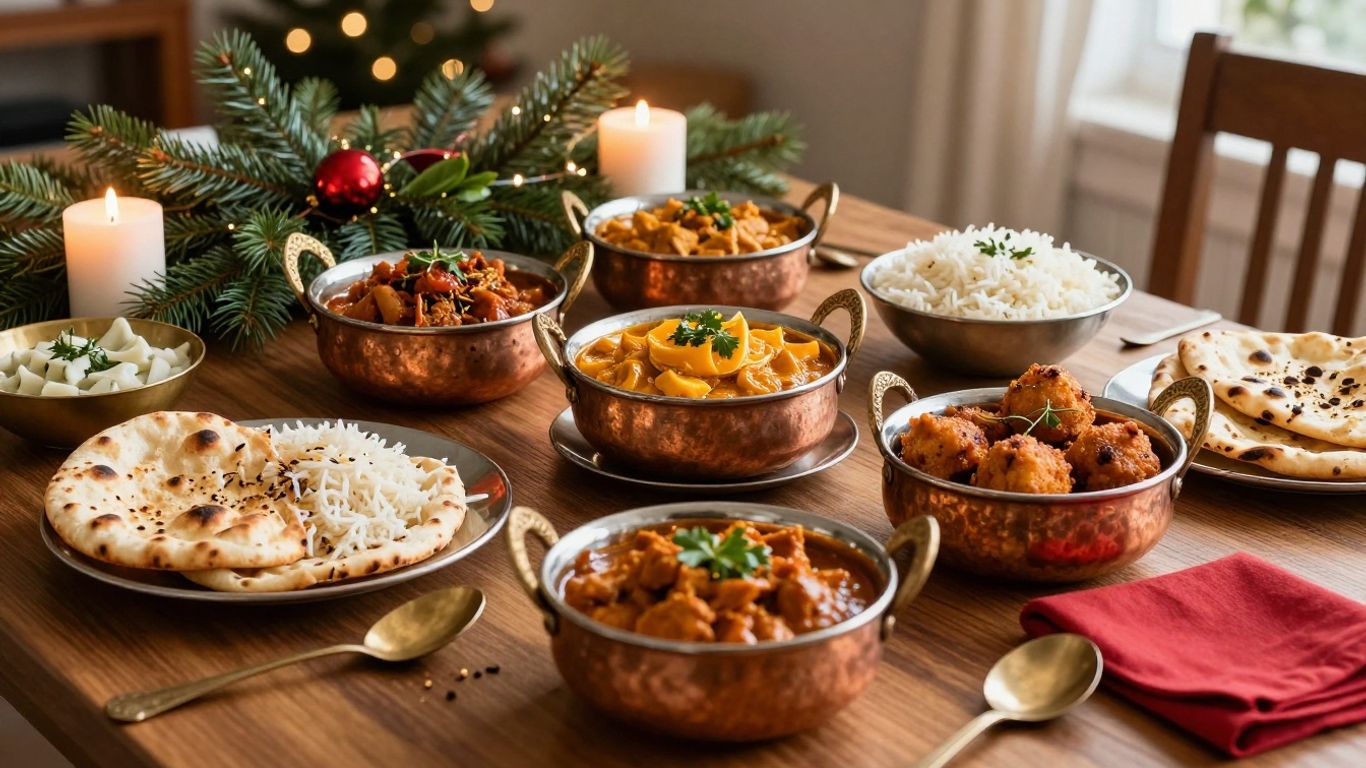
A regional menu gives the meal a clear sense of place. For a Punjabi direction, consider rajma chawal, kidney beans with rice; chole, chickpeas in a spiced gravy; kadhi, yoghurt-based sauce with pakoras; or baingan bharta, smoky mashed aubergine. Add one bread, a rice dish and a sweet rather than trying to cover every part of India.
You can introduce the dishes briefly as they are served. That small detail helps guests understand what they are eating and makes the table feel more like a shared family occasion than a collection of anonymous bowls.
Serve a curry-based festive feast
A curry-led menu is often the simplest route to a generous Christmas table. Select one meat or fish curry, one vegetarian main and one dal, then use rice, breads and accompaniments to complete the meal. Choose different colours and textures so the spread does not become a row of similarly dark sauces.
A festive curry does not have to be complicated. A properly cooked onion, tomato, ginger and garlic base, followed by a final tadka, can give a homely dish plenty of character. Make one dish mild enough for cautious eaters and offer heat separately.
Blend Indian dishes with traditional Christmas favourites
A blended menu works best when the connection between the dishes is clear. Spiced roast potatoes, cumin carrots, cardamom custard or a cranberry-and-chilli relish can bridge the two traditions without making the meal feel confused. Keep the classic elements that matter to your family, then let Indian flavours change one course at a time.
For a relaxed lunch, a tray of roast vegetables can sit alongside dal and rice. For the evening, small samosas or Bombay chilli cheese toasties can take the place of some conventional canapés, followed by a dessert flavoured with saffron or cardamom.
Create a relaxed buffet instead of a formal dinner
A buffet is particularly useful when guests arrive at different times or when the gathering includes children and visiting relatives. Put warm dishes towards the back, breads in covered baskets and sauces or chutneys near the plates. Label anything especially hot, vegetarian or containing common allergens.
Use smaller serving dishes and replenish them when needed rather than putting the entire meal out at once. This keeps the table orderly and helps you judge how much food remains before opening another container.
Build a balanced Indian Christmas menu
A memorable menu needs a sense of proportion. Rich curries become easier to enjoy beside a sharp chutney, a cooling raita and plainly cooked rice. Aim for variety across the table, not a separate dish for every possible preference.
Select the main dishes
Start with the dishes guests will remember. One substantial curry can anchor a small gathering, while a larger table may need two mains with different textures and levels of heat. Punjabi home cooking offers familiar choices such as dal, rajma, chole, kadhi and seasonal sabzis, alongside chicken or meat dishes for those who want them.
If you are ordering, home-cooked Punjabi meals can help shape the menu around everyday dishes rather than restaurant-style sharing plates. Saakshi's Kitchen prepares home-cooked Indian meals in its Brighton kitchen, delivers them frozen and ready to reheat, and its kitchen-cooked meats are halal.
Pair curries with rice, breads and accompaniments
Rice and breads should support the mains rather than compete with them. Basmati rice, saffron pulao, naan, roti or paratha each create a slightly different feel, so choose one rice and one bread for a manageable spread. Add raita or plain yoghurt, sliced onions, lemon and a crisp salad to bring relief between mouthfuls.
The practical question is how guests will eat. If people are standing, naan and rice are easier than a bread that needs careful cutting. If everyone is seated, you have more freedom to include a slower, more leisurely combination.
Add sides, chutneys and festive appetisers
Small dishes give the meal its festive detail. Pakoras, samosas, papad and spiced nuts work well before the main course, while mint chutney, tamarind chutney and a sharp pickle keep the table lively. Do not overdo the appetisers; guests should still have room for the curries.
A useful way to organise the supporting dishes is to assign each one a job:
- One cooling element, such as raita or yoghurt.
- One sharp or sweet chutney for contrast.
- One crisp appetiser or snack.
- One simple vegetable side for colour and texture.
That small framework keeps the menu varied without creating an afternoon of extra cooking. It also makes substitutions easier if a guest has a particular dietary requirement.
Choose Indian-inspired desserts and drinks
Finish with something that feels festive but does not repeat the savoury spices too heavily. Gajar halwa, gulab jamun, kheer, kulfi or cardamom rice pudding can all work, especially when served in modest portions. Chai, masala hot chocolate, mango lassi or a spiced apple drink offer an easy non-alcoholic choice.
Serve dessert after a short pause rather than rushing it onto the table. A little time to clear plates, make tea and talk is part of the pleasure of a Christmas meal.
Plan the menu around your guests
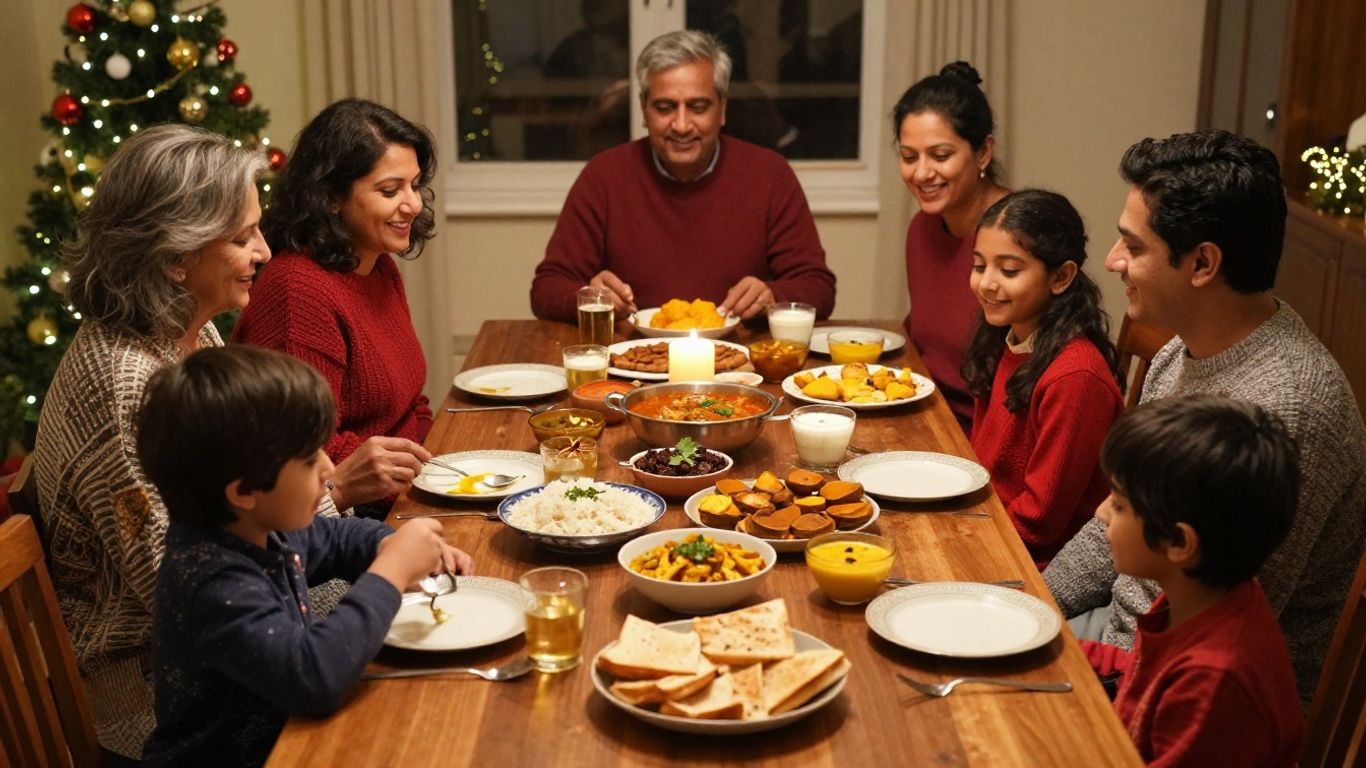
The most impressive menu is the one people can actually enjoy. Ask about vegetarian preferences, allergies, spice tolerance and portion expectations before shopping. A short message to guests can prevent awkward guesses on the day and makes everyone feel considered.
Match spice levels to different preferences
Use chilli as one part of the menu, not the measure of its quality. A mild dal, a gently spiced curry and a hotter condiment give guests choices without forcing the whole table into one heat level. Keep labels clear, particularly if children or guests unfamiliar with Indian food are attending.
Whole spices and aromatic ingredients can provide plenty of flavour without excessive chilli. Put sliced green chilli and chilli oil on the side, where keen heat-seekers can help themselves.
Include vegetarian dishes and clear allergen information
A vegetarian main should feel central, not like an afterthought. Dal, chole, rajma, paneer, kadhi and seasonal vegetable dishes can carry a plate beautifully when paired with rice, bread and chutney. Ask about allergies separately from preferences, and check every bought-in accompaniment rather than assuming it is safe.
Write simple labels for each dish, noting whether it contains dairy, nuts, gluten or other ingredients relevant to your guests. Keep serving spoons separate so a vegetarian dish is not accidentally mixed with a meat curry.
Consider family portions and different appetites
Portion planning is easier when you count the meal as a whole. Guests will take less of each dish when there are several curries, sides and breads, but growing appetites and leftovers still need consideration. For a family gathering, it is usually better to have extra rice or dal than a third elaborate main.
A simple serving plan can look like this:
| Gathering size | Main dishes | Rice and breads | Accompaniments |
|---|---|---|---|
| 4–6 guests | 2 mains | 1 rice, 1 bread | 2–3 small dishes |
| 7–10 guests | 3 mains | 1–2 rice dishes, 1 bread | 3–4 small dishes |
| 11–16 guests | 3–4 mains | 2 rice dishes, 2 breads | 4–5 small dishes |
| 17+ guests | Several batch-friendly mains | Multiple rice and bread options | A well-labelled buffet |
Treat those figures as a starting point rather than a strict formula. The number of appetisers, the length of the meal and whether other Christmas food is being served will all change the final quantities.
Make room for children, older guests and visiting relatives
A family table often includes people with very different appetites. Offer softer textures, mild dal, plain rice and familiar breads alongside the more strongly seasoned dishes. Older guests may appreciate food that is easy to spoon, while children often prefer being able to assemble a small plate from separate components.
Visiting relatives may also be looking for a taste of home. A dish linked to family memories can matter more than an elaborate centrepiece, so ask what people would genuinely like to see on the table.
Organise cooking, reheating and serving
The calmest Christmas meals are usually planned rather than improvised. Write down what can be done the day before, what needs oven space and what must be served immediately. If you are using delivered meals, read the storage and reheating instructions before the holiday rather than on a crowded kitchen counter.
Create a preparation schedule for Christmas Eve
Begin with the jobs that improve after resting: chutneys, marinades, dessert, spice mixes and any sauces that can be stored safely. Wash and prepare vegetables, count serving dishes and put labels with the relevant containers. Keep the Christmas Day schedule visible so another family member can take over a task if needed.
Leave a realistic margin for delays. Guests rarely arrive exactly on time, and a menu that can wait ten minutes is much kinder to the cook than one that depends on perfect timing.
Decide what to cook in batches and what to prepare last
Batch-friendly dishes include dal, rajma, chole and many curries. Rice can be timed close to serving, while breads, fried appetisers, garnishes and raita are usually best dealt with nearer the meal. Avoid filling every hob and oven at once; a smaller number of dishes served confidently will feel more generous than a chaotic table.
Make one person responsible for finishing touches and another for serving if possible. That keeps the cook from having to answer questions, carry hot dishes and search for the right spoon simultaneously.
Reheat frozen Indian meals safely and consistently
Saakshi's Kitchen meals are delivered frozen and ready to reheat, which can remove several cooking jobs from a busy Christmas schedule. Follow the package instructions, allow enough time for the food to heat evenly and check that the centre is hot before serving. Keep portions in suitable containers and do not guess at reheating times when dishes vary in size.
The useful principle is simple: plan the thawing or heating stage, avoid overcrowding the microwave or oven and serve promptly once the food is ready. The festive Indian tiffin service is another place to review when considering a delivered Christmas spread in the UK.
Arrange the buffet or dining table for easy serving
Put plates, cutlery and napkins at the beginning of the buffet, followed by rice and breads, then the main dishes and finally chutneys or pickles. This creates a natural flow and stops guests reaching over hot containers. Use labels that are large enough to read from standing height.
Keep spare serving spoons nearby and put a trivet under anything hot. A clear table gives everyone more time to talk, which is exactly what the meal is there to encourage.
Decide whether to cook or order Indian food for Christmas
Cooking everything yourself can be deeply satisfying, but it also means managing shopping, preparation, oven space and washing-up during a busy holiday. Ordering can provide a different kind of hospitality: you still choose the menu and set the table, but you are not tied to the kitchen for the whole day. The right answer depends on whether cooking is part of your Christmas pleasure or one more obligation.
Compare homemade cooking with prepared meal delivery
Homemade food gives you complete control over seasoning, quantities and family recipes. Prepared meals offer consistency and reduce the number of dishes competing for your attention. A mixed approach often works well: make the chutneys, dessert and one special side yourself, then order the main dishes.
Saakshi's Kitchen focuses on home-cooked Indian meals prepared in a Brighton kitchen, delivered frozen and reheated to serve. The kitchen has an FSA 5-star rating, and the meals are designed around the familiar rhythm of home cooking rather than a restaurant-style sharing platter.
Check delivery dates, storage requirements and reheating instructions
Christmas delivery needs more planning than an ordinary weekly order. Check the available delivery date, make sure there is enough freezer space and read the instructions for each dish. Leave a little time between delivery and serving so you are not relying on a parcel arriving on the same day as your gathering.
It is also worth checking labels and allergen information before ordering. Store the meals as directed, keep the packaging until everything has been served and decide in advance which dishes will be heated first.
Estimate portions for a Christmas gathering
Start with the guest list, then account for appetisers, sides and any traditional Christmas food being served alongside the Indian dishes. If the meal is buffet-style, people may sample several mains rather than taking a full portion of each. A little extra dal, rice or bread is often more useful than another rich curry.
For larger gatherings, write the number of expected adults and children separately, then mark guests who are likely to prefer mild, vegetarian or meat dishes. This makes ordering more deliberate and reduces waste.
Choose home-cooked Indian meals for a simpler festive occasion
Ordering is especially appealing when the gathering is about being together rather than proving how many hours you can spend cooking. You can still decant dishes into serving bowls, warm breads, add a homemade chutney and set the table with care. The result feels personal because the hosting details are yours, even when the main cooking has been taken care of.
For families who want a dependable meal between visits, Saakshi's Kitchen offers a useful example of how prepared home cooking can fit around a celebration. Choose dishes your guests already enjoy, add one or two festive extras and protect your time for the people who have come to share Christmas with you.
Conclusion
Indian food for Christmas works best when it feels generous rather than overcomplicated: choose a clear menu style, give guests useful choices, prepare the right dishes ahead and leave room for conversation. Whether you cook a regional spread or reheat home-cooked meals, a thoughtful table will make the celebration feel distinctly yours.
Frequently Asked Questions
What Indian dishes work well for Christmas?
Dal, rajma, chole, kadhi, biryani, mild chicken curries, paneer dishes, rice, naan, pakoras and festive sweets are all practical choices. Select a few that offer different textures and levels of spice rather than serving too many similar dishes.
How can I make Indian food suitable for guests who dislike spicy food?
Choose aromatic dishes with little chilli, keep hotter chutneys on the side and label the spicier dishes clearly. Plain rice, yoghurt, breads and a mild dal can make the meal more comfortable for cautious eaters.
Can Indian food be combined with a traditional Christmas dinner?
Yes. Try serving an Indian side, chutney, spiced roast vegetable or dessert alongside familiar dishes. Keep a few traditional favourites if they matter to your family, then use Indian flavours to add variety rather than replacing everything at once.
How far ahead can I prepare an Indian Christmas menu?
Many curries, dals, chutneys and desserts can be prepared ahead if stored safely according to the recipe or packaging instructions. Rice, breads, fried appetisers and garnishes are often best finished nearer serving time.
How much Indian food should I order for Christmas?
Estimate portions across the entire meal, including appetisers, rice, breads and sides. Guests usually take smaller amounts of each dish when several choices are available, while children and lighter eaters may need different quantities.
What should I serve with Indian curries?
Rice and breads provide the base, while raita, yoghurt, chutneys, pickle, lemon and a crisp salad add contrast. One rice, one bread and two or three accompaniments are usually enough for a modest gathering.
What is a good Indian Christmas dessert?
Gajar halwa, kheer, gulab jamun, kulfi and cardamom rice pudding all make suitable finishes. Serve smaller portions with chai or coffee so dessert feels festive without becoming too heavy after a generous meal.
Order home-cooked Indian meals from Saakshi's Kitchen · UK delivery locations.