

Office Christmas party Indian catering: a practical guide to planning a memorable work celebration
Saakshi's Kitchen EditorialKey Takeaways
A well-planned office Christmas party Indian catering menu can feel generous, festive and easy to manage. Start with the practical details, then build a spread that gives everyone something appealing to eat.
- Confirm numbers, budget and the role food will play in the event.
- Offer a thoughtful mix of curries, rice, breads and sharing sides.
- Collect dietary and allergen information before placing the order.
- Check storage, reheating, delivery and serving arrangements in advance.
- Use simple festive touches to make the buffet feel special.
Set the catering brief before choosing the menu
Before choosing dishes, work out what the event needs to achieve. Is it a full evening meal, a relaxed lunch or food served alongside drinks and nibbles? A short, written brief keeps decisions sensible and gives the caterer the information needed to advise you properly.
The most memorable parties are not necessarily the most elaborate. They are the ones where food arrives at the right time, portions are comfortable and guests can see what they are choosing.
Estimate guest numbers and attendance
Begin with the invitation list, then make a realistic allowance for attendance. Office parties often include people who work remotely, travel between sites or have another Christmas commitment, so ask for replies by a clear deadline rather than guessing from the full team size.
Separate confirmed guests from tentative replies and keep a note of children or external guests if they are attending. It is also useful to identify people who may arrive later, as their portions can be held back rather than leaving the whole buffet exposed from the start.
Set a realistic budget per person
Set the food budget before browsing menus. Include delivery or collection, serving equipment, drinks, dessert and any staffing, because a low headline price can change once all the practical extras are included. A clear per-person figure makes it easier to compare like with like.
A simple planning table can help the organiser explain where the money is going:
| Cost area | What to check | Why it matters |
|---|---|---|
| Main food | Number of mains and portion size | Determines whether guests have a complete meal |
| Sides | Rice, breads, chutneys and salads | Makes the buffet feel generous |
| Service | Staff, set-up and clearing | Changes the workload on the day |
| Logistics | Delivery, collection and storage | Prevents last-minute surprises |
Once these figures are visible, you can decide whether to add a dessert course or put more of the budget into a wider selection of mains.
Decide whether food will be the main meal or part of a wider spread
If the buffet is the main meal, plan for substantial portions with at least two mains, a vegetarian dish, rice, breads and accompaniments. If colleagues will already have canapés, mince pies or a drinks reception, a smaller selection may be enough, particularly if the party is in the afternoon.
Think about how people will eat, too. A standing event calls for food that can be served neatly and comfortably, while a seated meal allows for larger portions and more tableware. For ideas on combining familiar festive customs with Indian dishes, see these Indian Christmas feast ideas as a useful starting point.
Account for office facilities, serving space and reheating
Walk through the venue before ordering. Count the sockets, check the fridge and freezer capacity, and measure the available buffet table. Find out whether there is an oven, microwave, hob or only a kettle and small appliances; this will influence the sort of delivery and serving plan that is practical.
Leave room for labels, serving spoons and plates rather than filling every inch with dishes. If the kitchen is shared, agree who can use it and when. A few minutes spent checking the space can prevent a queue around one microwave when everyone is ready to eat.
Build an Indian Christmas party menu
Indian food works particularly well for an office celebration because a buffet can offer variety without asking every guest to eat the same plate. Punjabi home cooking brings familiar, comforting dishes to the table: dal, rajma, chole, kadhi and seasonal sabzi, alongside rice and breads.
Build the menu in layers. Choose a couple of centrepiece dishes first, then add the items that make them easier to enjoy. The aim is a spread with different textures and heat levels, rather than six dishes that all compete for attention.
Choose crowd-pleasing mains and curries
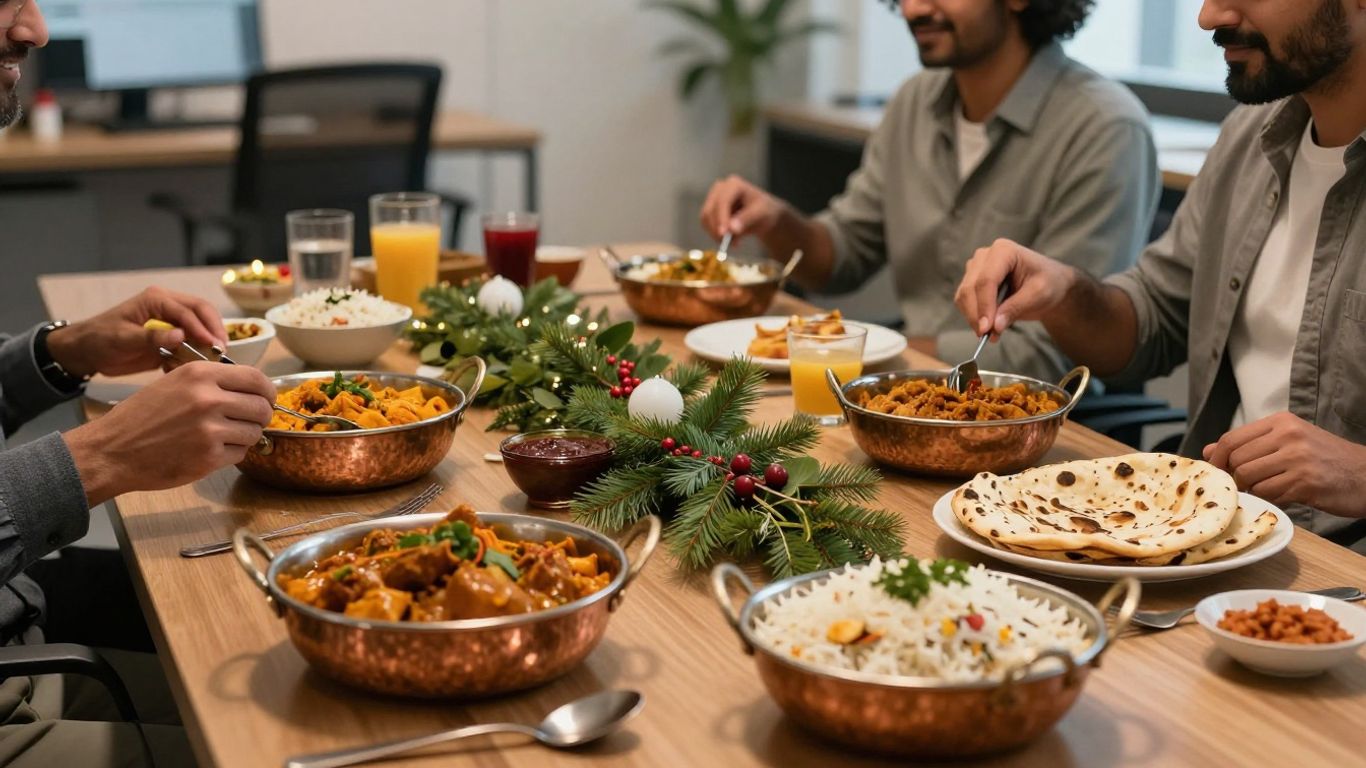
Select two or three mains with clear differences. A gently spiced chicken curry can sit alongside rajma, a red kidney bean curry with a rich tomato and spice base, or chole, a hearty chickpea dish. If you include a richer or more adventurous curry, pair it with something familiar and mild.
Home cooking has a different rhythm from restaurant food. Saakshi's Kitchen prepares Punjabi home-cooked Indian meals in a Brighton kitchen, with masala built from onion, tomato, ginger and garlic and spices ground and blended in the kitchen. That kind of menu can give the party a more homely feel without turning the buffet into a tasting exercise.
Add rice, breads and sharing sides
Rice and breads make the mains feel complete and give guests a straightforward way to build their plate. Consider basmati rice or biryani, naan or roti, then add cooling and crunchy accompaniments such as raita, salad, chutney and pickles where they suit the group.
Keep the bread covered until serving and provide separate utensils for wet dishes and dry sides. A small bowl of each accompaniment is often better than one oversized dish, since it keeps the table tidy and makes replenishing easier.
Include vegetarian dishes and clearly labelled options
Make the vegetarian choice a proper part of the menu, not an afterthought. Dal tadka, matar paneer or a seasonal vegetable curry can be substantial and appealing to everyone, not only those who avoid meat. Mark dishes clearly and use labels that state the main ingredients in plain language.
If you are serving a mixed group, put vegetarian dishes at one end of the buffet with their own serving utensils. This makes the choice obvious and reduces the chance of spoons moving between dishes.
Balance mild, medium and more adventurous flavours
Ask colleagues what they actually enjoy rather than assuming that everyone wants maximum heat. A mild curry, a medium option and one dish with a more pronounced spice profile gives people room to choose. Remember that spicing is about aroma and depth as well as heat.
Keep chilli sauces and extra pickles on the side. This lets confident spice-lovers add more while guests who prefer gentler flavours can enjoy the main dishes as served.
Plan for dietary requirements and allergens
Dietary planning should happen before the menu is finalised, not when guests are already reaching for a serving spoon. Ask for information privately and give people a clear way to describe allergies, religious requirements and foods they avoid.
Do not rely on a dish name alone. Recipes and supplier practices vary, so the organiser should confirm the details with the caterer and pass the information to the person laying out the buffet.
Gather requirements from guests in advance
Add a short question to the RSVP form and provide a confidential route for more detailed information. Ask whether a requirement is an allergy, an intolerance, a religious preference or a personal choice, since each may need a different response.
Set a deadline that gives you time to check the menu. A final guest list with dietary notes should be available to the organiser, caterer and buffet lead before the event begins.
Request clear ingredient and allergen information
Ask for written ingredient and allergen information for every dish, including sauces, breads and desserts. Keep the information with the food on the day, and avoid making promises about a dish unless the caterer has confirmed them.
When a guest has a serious allergy, speak directly with the caterer about preparation and handling. A label is helpful, but it does not replace a proper conversation about what can and cannot be served safely.
Keep meat and vegetarian dishes clearly separated
Use separate serving spoons, place the vegetarian dishes first or in a distinct area, and label them in large, readable type. Avoid placing naan, rice or shared garnishes across the boundary between meat and vegetarian dishes if cross-contact is a concern.
Brief the person serving the buffet before guests arrive. They should know which dishes have separate utensils and where the ingredient information is kept, so answers do not depend on guesswork.
Explain what halal meat options are available
Ask exactly which meat dishes meet the requirement and how they will be identified. Saakshi's Kitchen states that its kitchen-cooked meats are halal; that wording is more useful than making a broad assumption about every item on a mixed menu.
Keep labels specific and check whether vegetarian dishes are prepared separately where that matters to your guests. Clear explanations build trust and make the buffet more comfortable for everyone.
Choose between delivered meals and traditional catering
There is no single right format for an office party. Staffed catering can provide a sense of occasion and take care of service, while drop-off food can suit a smaller team that already has people available to organise the room.
The decision depends on the venue, the budget and how much attention the organiser can give the food during the event. Compare the whole experience, not just the menu price.
Compare staffed service with drop-off catering
With staffed service, someone may manage set-up, replenishment and clearing, leaving the host free to welcome colleagues. Drop-off catering usually involves more responsibility for receiving, storing, reheating and presenting the food, but can be simpler for a modest office gathering.
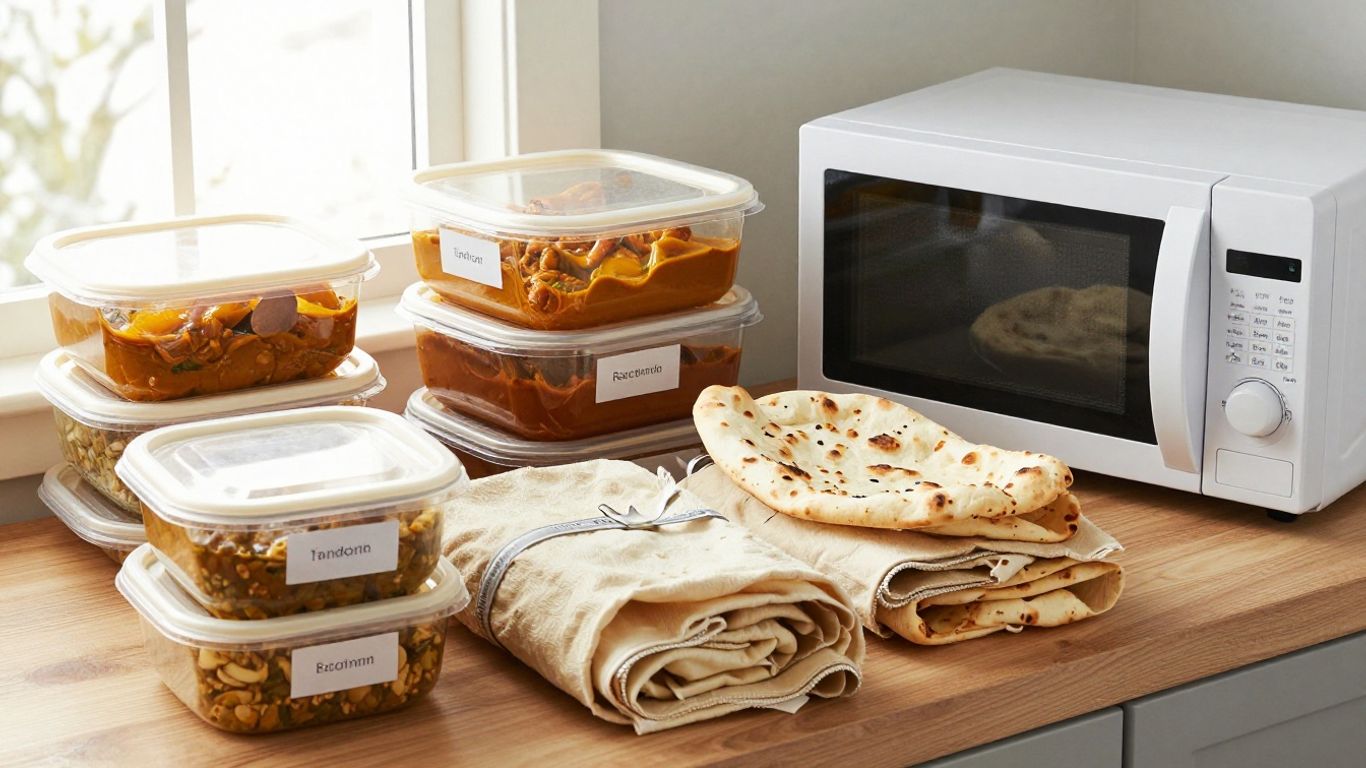
Saakshi's Kitchen provides home-cooked Indian meals delivered frozen and ready to reheat, which can suit organisers who have freezer space and want to manage service themselves. For wider planning ideas, this office party catering ideas guide can help you think through the experience around the food without copying a restaurant-style format.
Understand how frozen meals are stored and reheated
If frozen meals are being delivered, read the storage and reheating instructions before the event. Confirm how much freezer space is required, when the food should be moved for preparation and which containers can go into the available appliance.
Saakshi's Kitchen's meals are delivered frozen and reheated to serve. Keep the original instructions with the order, allow enough time for the full quantity and avoid improvising with containers or timings on the day.
Plan timings for collection, delivery and serving
Work backwards from the moment guests are due to eat. Allow time for the handover, checking the order, storage, reheating, setting out the buffet and dealing with a late arrival. During December, book early and reconfirm the address, access instructions and contact number.
Write one person’s name beside each task. A named handover is much safer than assuming that whoever happens to be near reception will take responsibility for a large food delivery.
Check whether the venue has suitable kitchen equipment
Match the menu to the equipment rather than hoping the equipment will cope. A small microwave may manage a few portions but become impractical for several trays, while limited freezer space may rule out a large order being held on site.
Ask whether extension leads are permitted, whether appliances can run simultaneously and whether there is a suitable surface for hot containers. If the answer is no, choose a format that needs less on-site preparation or arrange an appropriate serving set-up.
Make the office party feel festive
The room does not need an elaborate theme to feel like a celebration. A well-arranged buffet, warm lighting and a few seasonal details can make an ordinary meeting space feel welcoming without distracting from the food.
Indian dishes already bring colour and fragrance to the table, so decorations should support that atmosphere rather than compete with it. Consider the flow of people first, then add the visual touches.
Create a buffet layout that encourages sharing
Place plates and cutlery at the beginning, followed by mains, rice, breads and then accompaniments. Put sauces and napkins where they can be reached without crossing the queue, and leave a clear space at the end for guests to set down their plates.
Use two sides of a long table if the room allows it. This reduces waiting and gives colleagues more opportunity to talk while they serve themselves.
Pair Indian dishes with Christmas drinks and desserts
Offer familiar drinks alongside the food, such as sparkling water, soft drinks, chai or a lightly spiced festive punch. For dessert, Indian sweets can sit comfortably beside mince pies, shortbread or fruit, giving guests the choice of a small sweet finish or a traditional Christmas treat.
Keep dessert separate from the main buffet if space allows. It creates a natural second moment in the meal and prevents sweet dishes from becoming crowded among the curry trays.
Use labels, serving utensils and simple table decorations
Labels should be easy to read from the queue and should identify the dish, whether it contains meat, and any relevant allergen information. Match each tray with its own serving utensil, including the rice and accompaniments.
Add red or deep green napkins, a simple runner and small battery lights. Avoid loose glitter, tall centrepieces or anything that could fall into food or block conversation across the table.
Add a festive theme without overshadowing the food
A subtle theme might be “winter warming buffet”, with natural textures, seasonal greenery and warm colours. You could also place a small card beside each dish describing its name and character, provided the information is accurate and concise.
Keep music low enough for conversation and make sure decorations do not reduce the serving space. The best styling decision is often leaving enough room for people to move comfortably.
Organise the event smoothly on the day
The organiser’s work is mostly finished before guests arrive, but a short run sheet keeps the final hours calm. Treat receiving, storage, reheating and service as separate jobs, even if one person eventually handles more than one of them.
Put the plan somewhere visible to the event team. That way, a change in arrival time or a missing item can be dealt with quickly rather than becoming a problem for the whole room.
Assign responsibility for receiving and storing the food
Name a primary contact and a back-up contact for the delivery or collection. They should know the access arrangements, have the order details to hand and be able to check quantities before the driver or collection party leaves.
After the handover, move the food to the agreed storage area promptly. Record any missing or damaged items and contact the caterer while there is still time to find a practical solution.
Create a reheating and serving schedule
Make a simple schedule based on appliance capacity and the order in which dishes will be served. Reheat the items that take longest first, then work through the remaining dishes so the buffet opens together rather than in scattered stages.
A useful run sheet might include:
- Handover and order check
- Storage and equipment check
- Reheating by dish and appliance
- Buffet set-up and labelling
- Final temperature and utensil check
Once the schedule is written down, assign each line to a person and include a little contingency time. The host should not be the only person who knows when the food needs attention.
Keep hot food safe during the party
Follow the caterer’s instructions and your venue’s food-safety procedures. Keep hot dishes covered when possible, use suitable serving equipment and avoid leaving trays sitting at room temperature for longer than necessary.
Replace smaller dishes from the kitchen rather than putting one large tray out for the entire event. This helps the buffet stay orderly and means food is not repeatedly exposed while guests come and go.
Plan portions, leftovers and post-event clean-up
Decide before serving how leftovers will be handled. Some food may be kept according to the caterer’s instructions, while other items may need to be discarded; do not assume that everything can safely be packed up for people to take home.
Provide containers only if they are suitable and the venue permits them. Finally, assign people to clear plates, wipe the buffet, return equipment and check the kitchen, so the person who arranged the party is not left with the entire clean-up.
Conclusion
A memorable office Christmas party Indian catering plan comes from matching the menu to the people, the venue and the time available. Choose comforting dishes with clear labels, confirm the practical details early and give the buffet enough space to work; the celebration will then feel generous without becoming difficult to run.
Frequently Asked Questions
How far in advance should office Christmas catering be booked?
Book as soon as the date, venue and approximate numbers are known, particularly for December events. Confirm the final headcount and dietary details closer to the party in line with the caterer’s policy.
How much Indian food should be ordered per guest?
The amount depends on whether the buffet is the main meal, how many mains and sides are offered, and whether drinks or other food are also being served. Use the caterer’s portion guidance and add a modest allowance for late changes.
What dishes work well for an office Christmas buffet?
Choose a mix of familiar curries, one or more vegetarian mains, rice, breads and simple accompaniments. Dishes that can be served neatly and hold their texture during service are usually more practical than delicate plated food.
How can an office buffet cater for vegetarians?
Include substantial vegetarian dishes from the beginning and label them clearly. Use separate serving utensils and keep vegetarian food distinct from meat dishes throughout set-up and service.
How should allergens be communicated at a work party?
Collect requirements privately, request written ingredient information and display clear labels beside each dish. Anyone with a serious allergy should speak directly with the caterer before deciding what to eat.
Is delivered food suitable for an office Christmas party?
It can be, provided the venue has the required storage and reheating equipment and someone is responsible for receiving and serving it. Confirm delivery arrangements and follow the food provider’s storage instructions.
What makes an Indian Christmas buffet feel festive?
A few thoughtful details are enough: seasonal colours, warm lighting, readable labels, attractive serving dishes and a combination of Indian sweets and familiar Christmas desserts. Keep the layout comfortable so the food and conversation remain central.
Order home-cooked Indian meals from Saakshi's Kitchen · UK delivery locations.