

IPL watch party food UK: a practical guide to planning an Indian cricket feast
Saakshi's Kitchen EditorialKey Takeaways
A good IPL spread should keep people fed without pulling attention away from the match. Plan for sharing, varied spice levels, practical serving, and food that can be reheated at the right moments.
- Build the menu around the number of guests and the match timetable.
- Combine curry, rice, breads, snacks, cooling sides and chutneys.
- Use a self-serve arrangement with clear labels and separate utensils.
- Check spice, dietary, allergen and halal requirements before ordering.
- Make the room comfortable, colourful and easy to move around.
Plan the menu around your watch party
The best IPL watch party food UK hosts can offer is food that works around the cricket rather than competing with it. Guests should be able to take a small plate during an over, return for a proper meal at the interval, and keep watching without balancing too many awkward dishes. Start with the room, the guest list and the match time before choosing recipes.
A little planning also makes the evening feel generous rather than hurried. Decide what can sit on the table, what needs reheating and which items are best served in stages. That way, you can enjoy the match too.
Choose dishes that are easy to share
Choose dishes that can be spooned onto plates, passed around or eaten with one hand. Samosas, pakoras, kebabs, wraps and small portions of chaat work well when people are arriving at different times. For the main meal, use one or two curries with rice or breads rather than a long list of dishes that all need attention.
Avoid anything that demands complicated carving or last-minute assembly. A broad serving spoon, sturdy bowls and food that holds its shape will make the table much easier to manage.
Balance mains, sides and snacks
Think in layers: a few nibbles for the first overs, a substantial centrepiece for the interval, and something sweet or savoury for the closing stretch. A curry with rice gives the menu weight, while breads, chutneys, yoghurt-based sides and crunchy snacks add contrast. You do not need six mains to make the table look abundant.
For a Punjabi home-cooking feel, combine a dal or rajma with a seasonal sabzi, rice and roti. The result is closer to a family meal than a collection of restaurant-style sharing platters, and it gives guests different ways to fill a plate.
Match portions to your guest list
Count adults, note whether people are likely to eat a full meal, and allow a little extra for popular snacks. It is usually more useful to add another bowl of rice or a tray of breads than to order a third curry that may go untouched. If children or early arrivals are coming, put a mild, familiar option aside before the table fills.
A simple portion note can prevent waste: estimate one main serving per person, then add shared sides according to appetite and how long the match runs. Portion with the innings in mind rather than treating every item as a full meal.
Plan around the match schedule
Check the start time, likely interval and any travel time for guests. Put snacks out before the first ball, keep the main food ready for the break, and save dessert or tea for a quieter spell. If the match is being watched with a group in another time zone, confirm the local start time before ordering.
The cricket watch party menu is a useful companion when you want to organise snacks in stages and keep the host away from the kitchen. A short written plan on the fridge is enough: what goes out first, what is reheated, and what can wait.
Pick crowd-pleasing Indian dishes
A memorable spread does not need to be elaborate. Choose familiar Punjabi home-cooking flavours, then add one or two dishes that give adventurous guests something to talk about. The aim is a table where everyone can find a comfortable first bite and still discover a new favourite.
Build around dishes that travel, portion and reheat well. Keep sauces thick enough to serve neatly, and provide rice, breads and sides so guests can adjust each plate to their own taste.
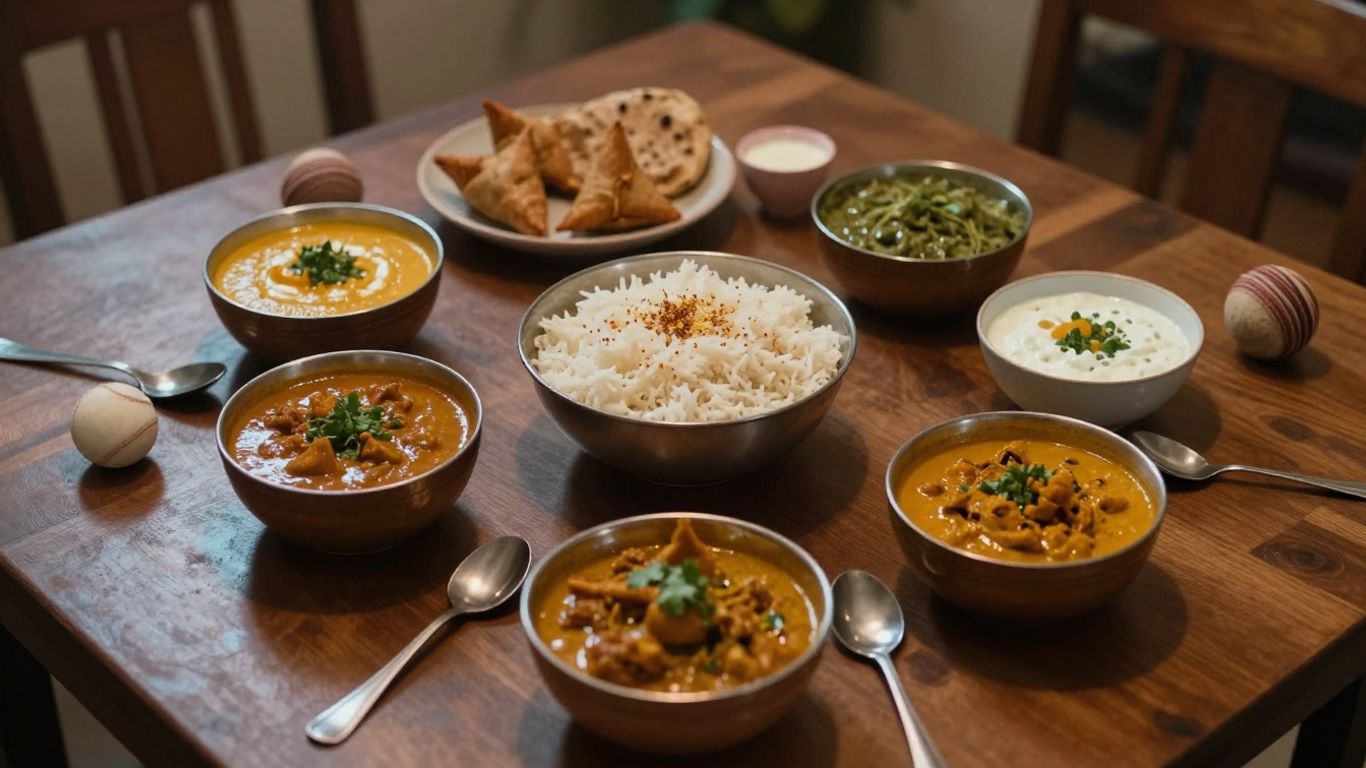
Serve rice and curry combinations
Rice and curry are the dependable centre of an Indian cricket feast. Rajma chawal pairs slow-cooked kidney beans with rice; chole brings chickpeas and warming spices; dal tadka offers lentils finished with a fragrant tempering. Add a chicken curry or a pure-veg dish if the group wants more variety.
Saakshi's Kitchen prepares home-cooked Indian meals in a FSA 5-star kitchen, delivered frozen and ready to reheat. Its home-cooked Indian meals can fit the menu when you want a family-style centrepiece without spending the afternoon cooking.
Add breads, wraps and bite-sized options
Breads make saucy dishes easier to eat and give guests a quick alternative to a full rice plate. Chapatis, naan-style breads, parathas and filled wraps can sit beside the mains, while samosas, paneer bites and pakoras work well for arrivals. Keep finger food on a separate tray so guests are not reaching over serving bowls.
Choose two or three bite-sized options rather than one of everything. A crisp snack, a filled bread and a savoury pastry create enough variety without crowding the table.
Include cooling sides and chutneys
A cooling side gives the menu a softer edge, especially when several dishes use chilli or toasted spices. Raita, cucumber yoghurt, mint chutney, tamarind chutney and sliced salad can all be placed in small bowls around the main dishes. Label the sharper chutneys clearly so guests know what they are reaching for.
Keep extra spoons beside every bowl. It sounds minor, but shared condiments quickly become untidy when people use whatever utensil happens to be nearest.
Offer a mix of familiar and adventurous flavours
Start with dishes most guests recognise, then add a less familiar preparation rather than making the whole menu experimental. For example, pair dal tadka and butter chicken with baingan bharta, a smoky aubergine dish, or kadhi, a gently spiced yoghurt and gram-flour preparation. This gives cautious eaters an easy route in while rewarding curious ones.
Aim for spiced rather than aggressively hot food, and put chilli pickle or a hotter chutney on the side. Guests can then build their own plate without changing the whole meal.
Make serving simple during the match
Serving should be almost invisible once the match begins. Set the food out so guests can help themselves, see what is available and return to their seats quickly. A buffet also keeps the coffee table clear and stops the host becoming the person everyone calls whenever they want more rice.
Use heat-safe dishes, stable surfaces and a separate area for used plates. If the room is small, serve the main meal in one wave and keep only snacks within reach during play.
Prepare a self-serve buffet
Place plates first, then cutlery, rice and breads, followed by curries and sides. Put chutneys, raita and napkins at the end so the queue moves in one direction. Keep drinks on a different surface if possible; it reduces spills around the hot food and prevents people gathering in one place.
A buffet works best when each item has room around it. Three well-spaced serving dishes are easier to use than eight bowls pressed together at the edge of a worktop.
Use labelled dishes and serving utensils
Labels help guests choose confidently, particularly when two curries look similar or when vegetarian food needs its own serving spoon. Write the dish name and a brief note such as “mild”, “contains dairy” or “contains nuts” where relevant. Use a separate utensil for every dish to reduce mix-ups.
The labels do not need to look formal. Small cards, masking tape or a phone note shared with guests can all do the job, provided the information is easy to see.
Keep sauces and sides within easy reach
Put the most-used accompaniments near the plates rather than beside the television. Raita, chutneys, pickles and napkins should be reachable without anyone leaning across a hot dish. Keep spare bowls nearby, and place a small waste bowl on the buffet for used cocktail sticks or lemon wedges.
This is also a good point to separate mild and spicy sauces physically. Guests will appreciate being able to make a quick choice while the bowler is running in.
Plan reheating around innings and breaks
Read the reheating instructions before match day and allow enough time for food to be piping hot throughout. Frozen meals should remain frozen until you are ready to reheat them, and different dishes may need different timings. Reheat the main course before the interval, then bring out breads and sides just before guests sit down.
Saakshi's Kitchen meals arrive frozen and ready to reheat, so they can be planned around the match rather than prepared from scratch during it. Keep the packaging or instructions until everything has been served, then clear the kitchen before the next innings begins.
The calmest host is usually the one who decided the serving order before the first ball.
That simple order matters more than elaborate presentation. Once the food is safe, labelled and easy to reach, you can return to the sofa with everyone else.
Order Indian food for an IPL watch party
Ordering can be a practical choice when the guest list is larger than your kitchen, or when the match starts after a busy working day. Compare the work involved, the space in your fridge or freezer and the amount of reheating you can comfortably do. The right option is the one that leaves enough attention for your guests.
For a UK gathering, also check delivery coverage and the time needed to store meals before the event. Do this a few days ahead, not when the opening ceremony is already on screen.
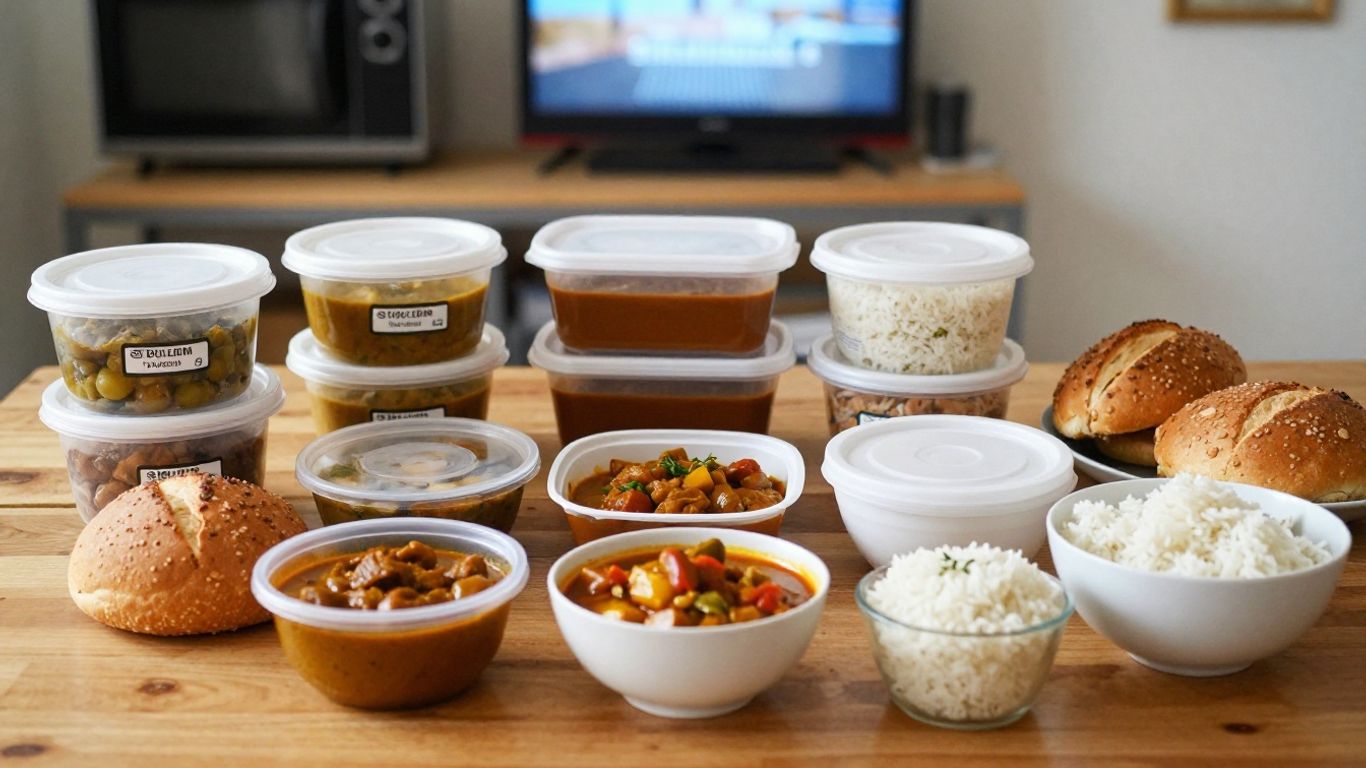
Compare home-cooked meals with takeaway options
Restaurant takeaway is often designed for immediate eating, while a home-cooked meal delivery can be planned around your own timetable. Consider whether you want food arriving in one narrow window or meals that can be stored and reheated in stages. Also think about the style of meal: individual portions may be easier to manage than large containers when guests have different preferences.
Saakshi's Kitchen is a home-cooked Indian meal service, not a takeaway aggregator. Its meals are prepared in a FSA 5-star kitchen and delivered frozen, which makes them useful for hosts who want to organise the menu before match day.
Understand frozen delivery and reheating
Frozen delivery needs freezer space and a little forward planning. Check the box as soon as it arrives, store meals according to the supplied instructions and allow time for reheating on the day. Do not assume every dish uses the same method or takes the same length of time.
If you are ordering several boxes, group dishes by when they will be served. Keep the main meal together, and reserve snacks or desserts for later so the freezer remains organised.
Order the right quantity for your group
Use the guest list, the match length and the rest of the menu to decide quantity. A group eating snacks throughout the evening may need more small items but fewer full mains; guests arriving for the interval will need the reverse. Ask whether anyone is likely to take leftovers home before adding extra portions.
Write down the menu beside the number of people. This makes it easier to spot a gap, such as plenty of curry but not enough rice, breads or cooling sides.
Check delivery timing for your postcode
Confirm whether your postcode is covered, the available delivery days and how much freezer space the order needs. Choose a delivery date before the match rather than relying on a same-day arrival. This gives you time to check the contents and resolve any issue while there is still room to adjust the menu.
For hosts ordering across mainland UK mainland, the IPL Special 6 Meals Plan may be worth reviewing as one possible way to plan several ready-to-heat meals. Check the current details and suitability for your group before placing an order.
Cater for different guest preferences
A watch party is easier when guests do not have to guess what is in each dish. Ask a few simple questions when invitations go out, then build the menu around the answers. You do not need a separate meal for everyone, but you should make sure nobody is left with only crisps and chutney.
A clear menu also helps guests serve themselves without repeatedly interrupting the match. Keep the tone relaxed: preferences are useful planning information, not a test of anyone's spice tolerance.
Ask about spice preferences in advance
Ask whether guests prefer mild, medium or hot food, and whether anyone dislikes particular spices. Keep the core dishes moderate if the group is mixed, then offer chilli pickle, hot chutney or sliced chillies separately. This gives confident chilli eaters an option without making the main dishes difficult for everyone else.
Describe dishes by flavour as well as heat. “Smoky aubergine” or “cumin-scented lentils” tells guests more than a vague label such as “special curry”.
Include meat and vegetarian choices
Plan at least one substantial vegetarian dish rather than treating vegetables as a side. Dal, rajma, chole, paneer and seasonal sabzi can all anchor a plate, while chicken or other meat dishes can sit alongside them for guests who want them. Keep vegetarian serving utensils separate and place those dishes where they are easy to identify.
The menu will feel more complete when both groups have rice, breads and sides to choose from. It is better to serve two well-chosen mains that cover the table than to provide token portions of many dishes.
Check allergen information before ordering
Ask about allergens before you buy, and keep the packaging or product information available on the day. Mark dishes that contain dairy, nuts, sesame or other relevant ingredients, and avoid guessing from appearance. If a guest has a serious allergy, discuss the details directly with the supplier before ordering.
Do not rely on a label such as “vegetarian” to answer every dietary question. It covers one preference, not the full ingredient list or preparation conditions.
Consider halal meat options
If guests eat halal meat, confirm the position before ordering rather than making assumptions. Saakshi's Kitchen states that its kitchen-cooked meats are halal. Offer a clear vegetarian alternative as well, so everyone can choose comfortably from the same table.
Keep meat dishes labelled and use separate utensils where practical. That small amount of care helps the whole gathering feel considered.
Create the right cricket-night atmosphere
Food sets the tone, but the room determines how comfortably the evening runs. Make the screen easy to see, leave a clear route to the buffet and give guests somewhere to put plates down. A few team-colour details can make the gathering feel special without turning the house into a themed venue.
Keep decoration away from hot dishes and cables. The best atmosphere is lively during the big moments, but still practical enough for people to eat, talk and move around.
Coordinate food with team colours
Use napkins, serving bowls or paper plates in colours associated with the teams your guests support. Keep the food itself natural and let the accessories do the visual work. If supporters are split, use a neutral base and add small accents for both sides rather than choosing one team for the whole room.
Colourful chutneys, rice dishes and garnishes already bring plenty of variation to the table. Avoid placing coloured decorations directly beside anything that can spill.
Set up drinks and snacks around the room
Put water, soft drinks and cups on a separate station from the main buffet. A small snack bowl near the seating area can cover the first part of the match, while the larger spread remains protected until the interval. Use coasters and a tray for drinks, especially around sofas and electrical equipment.
Guests should be able to reach something to eat without blocking the screen. A side table often works better than the coffee table in front of the television.
Add simple IPL-themed table details
A fixture printout, team-colour napkins or a small cricket-ball decoration can bring the theme together. For more activity ideas, these IPL-themed party ideas include options such as trivia and simple creative projects that can fill a quieter spell.
Keep the details light and reusable. The food, conversation and match will carry most of the evening, so decoration should support the mood rather than take over the room.
Keep the seating and serving areas practical
Arrange chairs so everyone has a clear view and leave one route open to the buffet. Put extra plates, napkins and cutlery where guests can find them without asking. If people are eating from laps, choose sturdy plates and dishes that are not overly messy.
Before guests arrive, sit in each main seat and check the view. Then walk from the seating area to the food station with a full plate in hand; that quick test often reveals a table corner or cable that needs moving.
Conclusion
An IPL watch party works best when the food is generous, varied and easy to manage between overs. Plan the menu around your guests, use dishes that reheat well, label the important details and keep the room practical. With those decisions made early, you can spend the evening watching the cricket instead of running back and forth to the kitchen.
Frequently Asked Questions
What food is best for an IPL watch party?
Choose a mixture of shareable snacks, one or two substantial curries, rice, breads, cooling sides and chutneys. Include mild and more strongly spiced elements so guests can build plates that suit them.
How much food should I order for a cricket watch party?
Start with the number of guests, then consider whether they will eat a full meal or graze throughout the match. Add enough rice, breads and sides to support the mains, and allow a modest amount extra for popular snacks.
When should I serve the main meal?
Put small snacks out before the match, then serve the main meal during the interval or another natural break. This keeps the buffet orderly and means guests are not trying to eat a full plate while watching a tense over.
How can I keep Indian food warm during the match?
Reheat food close to the planned serving time and use suitable covered dishes. Follow the instructions supplied with the meal, keep hot food away from the edge of the table, and avoid repeatedly reheating the same dish.
What should I serve guests who prefer mild food?
Choose moderate-spice main dishes and place hotter chutneys, pickles and chillies separately. Label the dishes clearly so guests can choose by both flavour and heat.
How do I include vegetarian guests?
Make at least one vegetarian dish substantial enough to form the centre of a plate, such as dal, rajma, chole, paneer or a seasonal sabzi. Provide rice, breads and sides that can be enjoyed with it, using separate serving utensils.
What should I check before ordering for guests?
Confirm spice preferences, dietary choices, allergens, halal requirements, delivery coverage, storage needs and reheating instructions. Checking these details before match day leaves you free to host when the game begins.
Order home-cooked Indian meals from Saakshi's Kitchen · UK delivery locations.