

Food for cricket watch party: an easy Indian-inspired menu for every over
Saakshi's Kitchen EditorialKey Takeaways
A good cricket gathering needs food that can be enjoyed without anyone missing the action. Plan in waves, keep serving simple and give guests clear choices.
- Match the menu to the length and timing of the game.
- Combine easy snacks with filling, shareable mains.
- Use chutneys, dips and crunchy sides to add variety.
- Check ingredients and label dishes before guests arrive.
- Prepare ahead so the host can watch the match too.
Plan the menu around your match and guests
The best food for cricket watch party gatherings arrives in stages rather than all at once. Consider whether you are hosting a short T20, a longer one-day match or a full day of Test cricket, then work out when people are likely to eat. A little planning means the television remains the centre of attention, not the kitchen.
Match format, kick-off time and serving windows
Start with the match schedule and count backwards from the first ball. For an evening T20, put snacks out before play and aim to serve the main meal during a natural break; for a longer match, divide the food into an opening spread, a proper meal and a later top-up. A cricket match day guide can help you think about mains, sides and between-overs food as one flowing plan.
Guests rarely eat at exactly the same time during a match. Put out anything that can sit comfortably for a while, and keep the dishes needing heat for a planned serving window rather than trying to manage every plate at once.
How to balance snacks, mains and puddings
Think of the menu as three layers. Snacks create interest as people arrive, a curry or one-pot dish gives the gathering substance, and a small pudding brings the meal to a gentle close. Keep the flavours varied: one mild dish, one more warmly spiced option, something crisp, and a cooling accompaniment.
You do not need a huge number of recipes. A smaller, thoughtful spread is easier to replenish and lets each dish have a place on the table. Two snacks, two mains, rice or flatbreads, a dip and one dessert will usually feel generous without becoming unwieldy.
Estimating portions for different group sizes
Portion planning is easier when you decide whether guests are grazing or sitting down for a meal. For a snack-led gathering, allow a few small bites per person in the first hour, then add enough main food for those who want a proper plate. Children and late arrivals can make exact calculations difficult, so a little flexibility is useful.
| Guest count | Snack selection | Main dish guide | Rice or flatbread |
|---|---|---|---|
| 4–6 people | 2 small plates | 2 medium dishes | 1 large serving |
| 8–12 people | 3–4 small plates | 3 dishes | 2 large servings |
| 14–20 people | 4–5 small plates | 4 dishes | 3 large servings |
These are starting points rather than strict rules. If the match begins near dinner, increase the main dishes; if it starts mid-afternoon, let the snack table do more of the work.
Choose shareable mains that are easy to reheat
Mains should be comforting, straightforward to portion and forgiving when guests eat in waves. Curries, rice dishes and dal work particularly well because they can be served from larger bowls and paired in different ways. Choose dishes with different textures and spice levels so the meal feels varied without requiring a restaurant-style production line.
Curry, rice and flatbread combinations
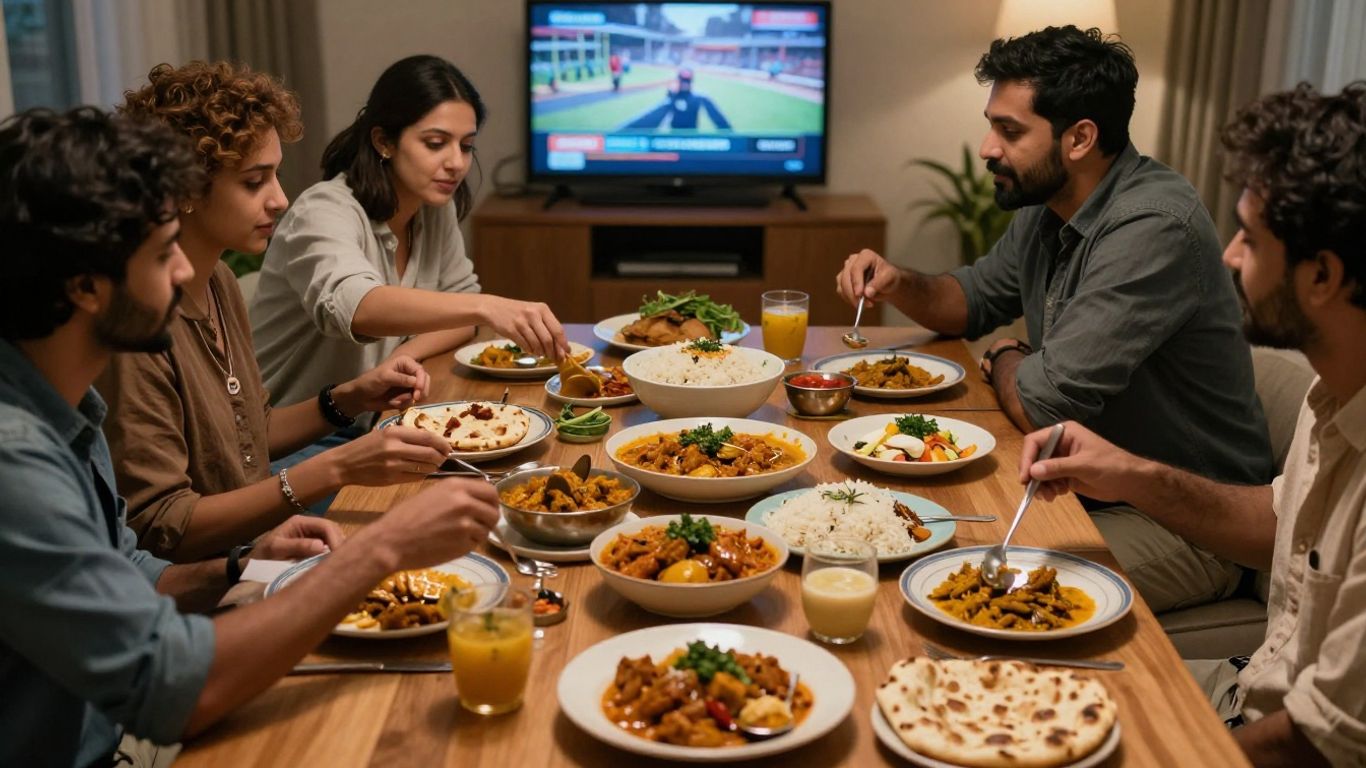
A simple combination might include rajma chawal, kidney beans with rice, alongside chole and flatbreads. Dal tadka brings a softer, gently spiced option, while a vegetable dish adds colour and another texture. Put rice and breads in separate serving dishes so guests can build a plate in the way they prefer.
When using Saakshi's Kitchen for the main spread, the meals are home-cooked Indian food delivered frozen and ready to reheat. That makes it possible to plan the menu ahead, then heat dishes in stages instead of cooking every curry while the match is under way.
One-pot dishes for relaxed serving
One-pot dishes keep washing-up and serving decisions under control. A fragrant rice dish, dal or a thick curry can sit in one serving vessel, with yoghurt, chopped herbs and pickles offered separately. Use sturdy ladles and wide bowls; they are easier to handle when everyone is glancing towards the screen.
Choose one or two substantial dishes rather than filling the table with near-duplicates. A tomato-based curry beside a bean dish and a vegetable preparation gives guests meaningful choice, while the host only needs to keep a few pans or containers warm.
Using frozen, ready-to-reheat meals for less kitchen time
Frozen, ready-to-reheat meals are useful when the gathering matters more than a long cooking session. Follow the package instructions, allow enough time for thorough heating, and transfer the food to serving bowls only when you are ready. Keep a second batch aside if you expect people to arrive late.
The trick is to make reheating part of the schedule, not an interruption. Set alarms for the innings break or another natural pause, and keep breads for the final few minutes so they reach the table at their best.
Build a snack table for between overs
Snacks should be visible, portable and easy to eat with one hand. A low table or sideboard near the viewing area works better than a crowded coffee table, especially when guests are moving in and out. Aim for contrast: crisp bites, soft fillings, tangy dips and something that is not heavily spiced.
Samosas, pakoras and spiced bites
Samosas and pakoras are familiar crowd-pleasers, but you can vary the table with spiced potatoes, paneer pieces or roasted savoury mixes. Keep portions small enough for one or two bites, and use shallow bowls so guests do not have to dig around while the next over begins.
A mixture of shapes makes the spread look abundant without adding many recipes. Cut larger items into manageable pieces, place napkins beside the food and replenish in small batches rather than putting every portion out at once.
Dips, chutneys and crunchy accompaniments
Chutneys give the snacks their lift. Offer one quality-tasting coriander and mint chutney, a sweet-sour tamarind option and perhaps a cooling yoghurt dip, each in a labelled bowl with its own spoon. Add sliced onions, cucumber, pickles or crunchy sev for guests who like to customise.
The snack table becomes easier to understand when wet and dry accompaniments are separated. A tray for fried or baked bites, a second for dips and a small basket for napkins keeps hands, spoons and serving dishes from competing for space.
Keeping finger food easy to grab and serve
Use cocktail sticks for anything that might crumble, and choose plates with a slight rim. Put rubbish bowls close by, not hidden beneath the table, and keep a spare stack of napkins within reach. These small details matter when people are watching a tense final over.
For more inspiration, browse these cricket snack recipes and adapt the ideas to your group. The strongest options are the ones guests can identify immediately, pick up cleanly and return to without needing a knife and fork.
Add options for different dietary requirements
A generous host makes choices clear before anyone starts serving. Ask about vegetarian preferences, allergies and spice tolerance when people accept the invitation, then check the actual ingredients rather than relying on memory. A separate spoon for each dish is just as useful as a separate recipe.
Checking ingredients and allergens before the match
Read labels on bought snacks, sauces, breads and desserts, including anything used as a garnish. Consider nuts, dairy, sesame and wheat where relevant, and do not assume that a dish is suitable simply because it contains vegetables. If you are unsure, keep the item packaged and tell guests what you know.
For meat dishes from Saakshi's Kitchen, the kitchen-cooked meats are halal. Guests with other requirements should still be given the dish and ingredient information they need, since halal status does not answer every dietary question.
Including vegetarian dishes without duplicating the menu
Vegetarian choices can share the same structure as the rest of the meal rather than becoming an afterthought. Pair rajma, chole, dal, paneer or a seasonal sabzi with the same rice, breads and chutneys served to everyone. This keeps the menu cohesive and avoids making one guest assemble a meal from side dishes.
Choose dishes with distinct character. A creamy-textured dal, a tangy chickpea curry and a roasted vegetable preparation will feel like three proper choices, even when the accompaniments are shared.
Labelling dishes clearly for guests
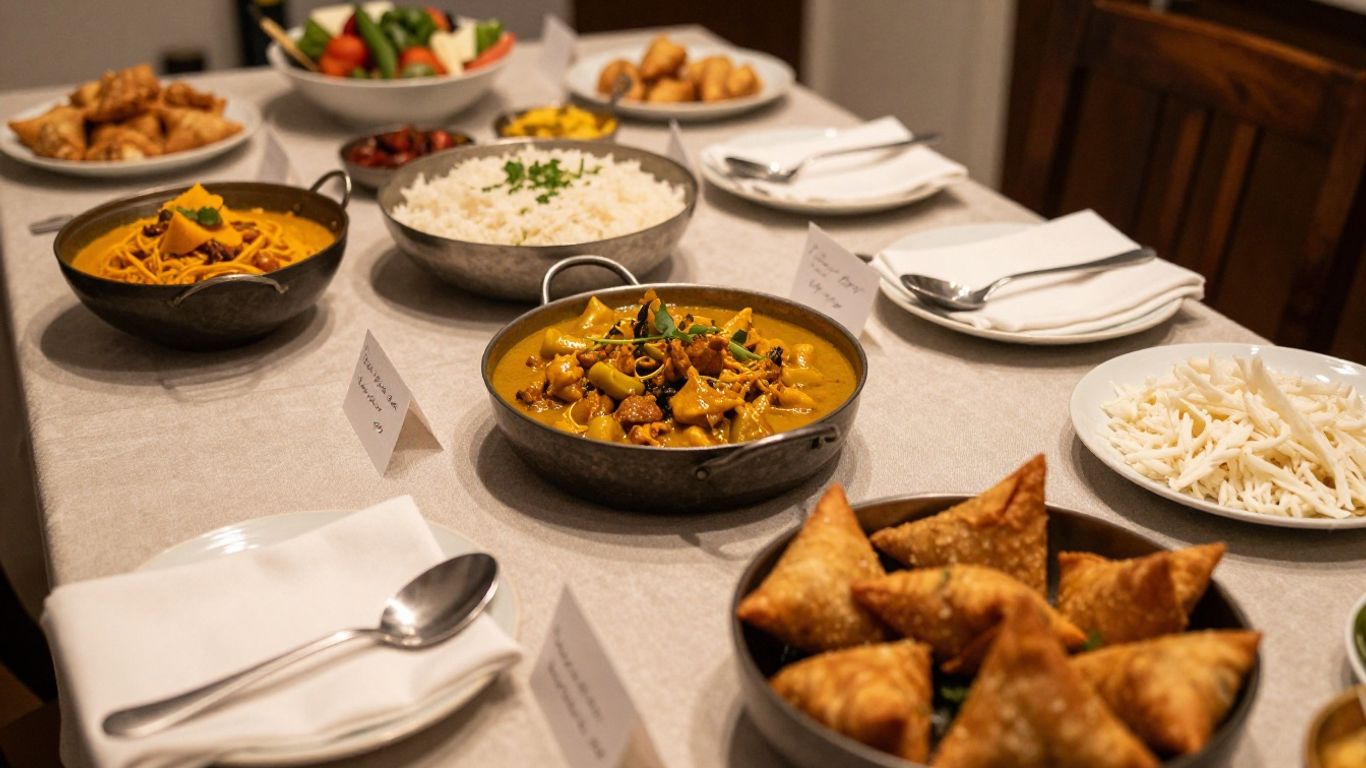
Use simple cards with the dish name and useful notes such as vegetarian, contains dairy or contains nuts. Place the label directly beside the serving bowl, not at the far end of the table. If spice varies, describe it plainly as mild, medium or hot.
Clear labels also help the host answer questions quickly. Keep packaging or a written ingredient list nearby, and replace a label if a dish is moved so there is no uncertainty halfway through the match.
Pair drinks and desserts with the food
Drinks and puddings should support the menu rather than add another job during every over. Offer a mix of cold soft drinks, water, tea and something lightly spiced, with glasses placed away from the busiest food area. Desserts can be modest: the aim is a pleasant final note, not another elaborate course.
Choosing soft drinks, tea and match-friendly refreshments
Sparkling water, lemonade, mango drinks and salted lassi can cover a range of preferences, while tea suits guests who want something warm after the meal. Keep bottles and jugs in one place so people can help themselves without crossing in front of the screen.
If serving tea, prepare the equipment before the match and use a flask or insulated pot for the first round. Avoid overcomplicating the drinks list; two or three choices plus water are usually enough for a home gathering.
Desserts that can be prepared ahead
Choose puddings that portion neatly and can be made the day before. Rice pudding, gulab jamun, fruit with yoghurt or small pieces of barfi can all be served without last-minute decoration. Individual bowls or paper cases make dessert easier to pass around.
Keep the final course visually distinct from the savoury table. A separate tray, small spoons and a few toppings placed on the side let guests take only what they fancy and reduce unnecessary handling.
Balancing spicy, savoury and sweet flavours
A sweet pudding is especially welcome after salty snacks and strongly seasoned mains. If the savoury dishes are hot, choose a cooling accompaniment and a gentle dessert; if the meal is mild, a sharper chutney or spiced tea can add interest.
Taste the menu as a whole rather than judging every dish alone. Repetition is less noticeable when textures, colours and serving temperatures change from one part of the table to the next.
Organise the cooking and serving schedule
A relaxed match day is usually won before the guests arrive. Write down what needs preparing, what needs heating and what can wait, then assign one person to drinks or clearing if possible. The host should be able to sit down for a spell, even if the score becomes unexpectedly close.
What to prepare the day before
The day before, check serving dishes, label containers and make any chutneys or desserts that hold well. Count plates, glasses and cutlery, and clear a shelf in the fridge for items that need to stay cold. If using frozen meals, confirm the reheating instructions and plan where each dish will be served.
You can also set up the snack table without the food, placing bowls, spoons and napkins in position. That removes a surprising amount of fuss when the first guests knock at the door.
A practical timeline for match day
Work in three stages: set out drinks and dry snacks before play, heat the main dishes before a planned break, and bring out dessert after the meal. If you order from Saakshi's Kitchen, its frozen, ready-to-reheat meals can be fitted into this timetable without requiring the host to build every dish from scratch.
A simple sequence keeps the day moving:
- Two hours before: arrange the table, drinks and serving equipment.
- One hour before: prepare dips, desserts and any garnishes.
- Thirty minutes before: begin reheating the main dishes.
- At the planned break: serve rice, curries and flatbreads together.
After each stage, return to the match rather than starting another kitchen project. The schedule is there to protect your attention, not to make the gathering feel formal.
Keeping hot food, frozen items and leftovers organised
Keep hot dishes covered until serving and put cold items out in smaller quantities, replacing them as needed. Use separate utensils for every bowl, and mark leftovers with the dish name and time packed. Once food has cooled appropriately, store it promptly according to the relevant food-safety guidance.
Do not leave the whole buffet out simply because the match is still running. Smaller top-ups keep the table tidy and make it easier to see what remains, while containers ready for leftovers prevent the final clean-up from becoming a late-night scramble.
Conclusion
With a little forethought, a cricket watch party can feel generous without turning the host into kitchen staff. Build the menu around the match, combine familiar Indian flavours with easy serving, and prepare enough in advance to enjoy the innings alongside everyone else.
Frequently Asked Questions
What is the best food for cricket watch party guests?
Choose a mix of hand-held snacks, one or two filling mains, rice or flatbreads, dips and a make-ahead dessert. The best spread is easy to identify, portion and eat while watching the match.
How much food should I prepare for a cricket gathering?
Base quantities on match timing and whether guests will eat a full meal. Allow more main food for an evening match and more snacks for an afternoon gathering, with a small margin for late arrivals.
Which Indian snacks are easiest to serve?
Samosas, pakoras, spiced potatoes, paneer bites and savoury mixes work well because they can be portioned in advance. Put chutneys in separate bowls with serving spoons.
How can I feed guests without missing the match?
Prepare dips and desserts ahead, arrange the table before play, and reheat mains for a planned interval. Small batches are easier to manage than one large buffet put out at the start.
What vegetarian dishes work for a cricket watch party?
Rajma, chole, dal, paneer and vegetable curries provide proper main-course choices. Serve them with the same rice, breads and accompaniments offered to the rest of the group.
How should I handle food allergies at a watch party?
Ask guests in advance, check every packaged ingredient and label dishes clearly. Keep serving spoons separate and retain packaging or ingredient notes so questions can be answered accurately.
What desserts pair well with Indian food?
Rice pudding, gulab jamun, barfi, fruit with yoghurt and other small, make-ahead portions work nicely. Pick a dessert whose sweetness suits the spice level of the savoury dishes.
Order home-cooked Indian meals from Saakshi's Kitchen · UK delivery locations.