

Cricket match day food at home: a simple guide to feeding every fan
Saakshi's Kitchen EditorialKey Takeaways
A good cricket match day menu should keep people fed without pulling the host away from the screen every few minutes.
- Plan around the toss, innings and likely serving breaks.
- Combine filling mains with easy-to-share rice, breads and snacks.
- Keep mild, vegetarian and halal choices clearly available.
- Prepare and reheat dishes in stages rather than all at once.
- Use simple serving equipment so the kitchen stays manageable.
Plan your cricket match day menu
Cricket match day food at home works best when the menu follows the rhythm of the game. You want something substantial for the long stretches, smaller bites for the quieter moments and enough flexibility for guests who eat at different times. Start by checking the match duration, then work backwards from the first ball. A little planning means nobody has to miss a wicket while looking for a saucepan.
Match timings and serving windows
A short T20 match calls for a compact spread, while a Test match or a long one-day fixture needs food that can return to the table several times. Put the main meal near a natural interval, and keep snacks ready before play begins. If guests are arriving early, serve a small nibble first rather than putting every dish out at once.
The toss is a useful anchor. Aim to have drinks and small snacks available before it, a more filling plate during the first innings, and a second serving window around the interval. This keeps the food moving without making the host cook continuously.
How much food to prepare per guest
Portions depend on whether the match is the whole occasion or simply playing in the background. For a three- or four-hour game, allow one proper plate per adult, with extra rice or bread for those who prefer a larger meal. Children often eat smaller amounts but may return for another helping, so a little flexibility is more useful than strict counting.
A simple guide can help you make decisions without turning the afternoon into a catering exercise:
| Guest or item | Practical starting point | Allow extra for |
|---|---|---|
| Adult main | 1 generous serving | Longer matches |
| Child main | ½ to ¾ serving | Familiar favourites |
| Rice or bread | 1 serving per person | Sauce-heavy dishes |
| Snack | 2–3 pieces per guest | Early arrivals |
Treat these figures as a starting point, not a rule. Put one or two extra portions aside before serving, especially when the group includes hungry teenagers or guests staying for the full match.
Balancing mains, sides and snacks
A relaxed menu usually needs two mains, one starch and a few supporting dishes rather than a dozen different recipes. Pair a saucy dish with rice or roti, then add something crisp or tangy to change the texture. Snacks should be easy to pick up between overs, while the main plate can wait for a break in play.
Think in layers: a filling centre, something to scoop it up with, a quality-tasting chutney or pickle, and one sweet finish. Keep the menu focused so every dish has a job and the table does not become crowded with half-finished bowls.
Creating a menu with different preferences in mind
Before shopping, ask about spice preferences, vegetarian requirements and allergies. A mild dal or rajma can give less adventurous guests a dependable option, while a hotter chutney or pickle can sit separately for those who want more intensity. Label dishes plainly, particularly when meat and vegetarian food are being served together.
For a mixed group, make the shared base broad and let people customise at the table. That approach feels generous without requiring a separate meal for every guest.
Choose crowd-pleasing Indian dishes
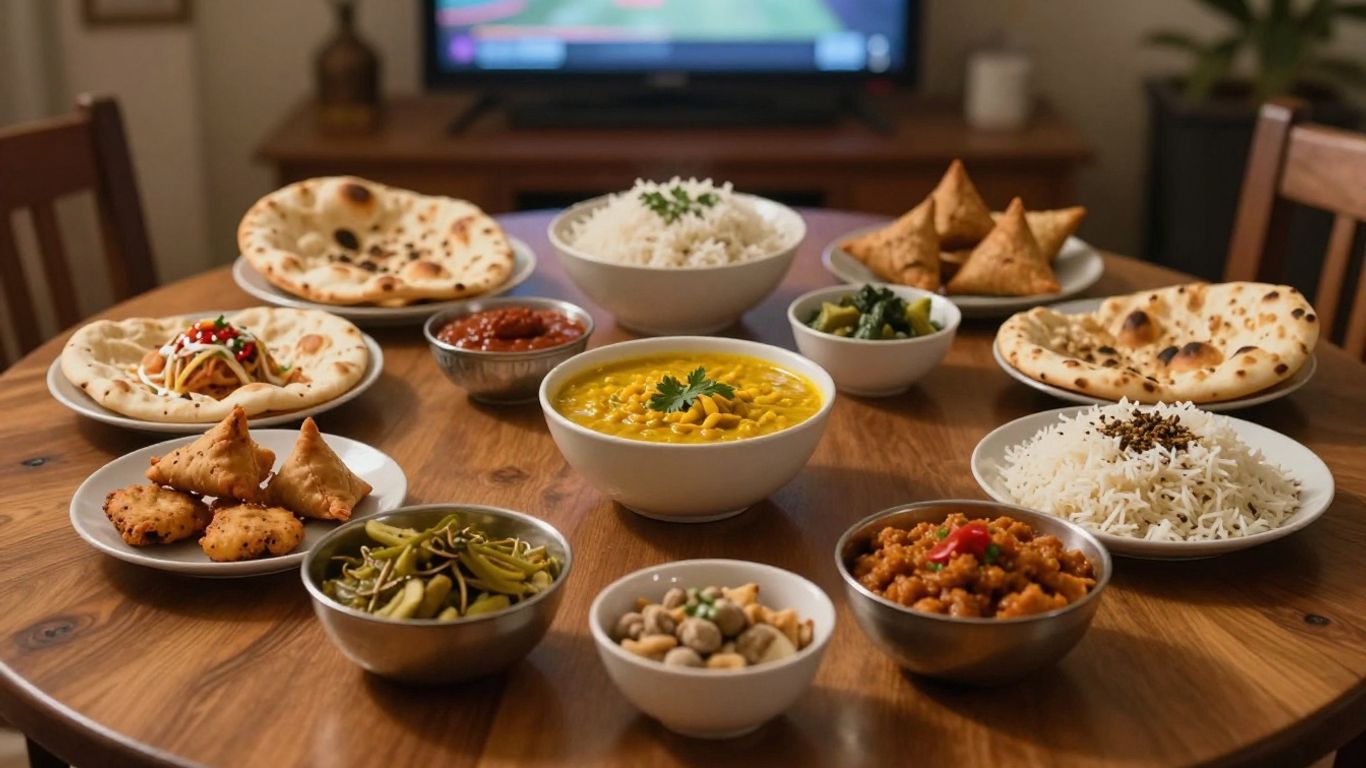
Indian home cooking gives a match day table plenty of variety without relying on complicated presentation. Choose dishes that hold well, can be served with a spoon and taste good in a modest portion. Punjabi favourites such as dal, rajma, chole and kadhi bring the feeling of an everyday family meal, while pakoras or samosas make natural between-over bites.
The aim is comfort and ease. A buffet-style table lets guests build a plate when they are ready, leaving the host free to watch the game too.
Filling mains for a longer match
For a longer fixture, choose mains with enough sauce to work with rice or bread. Rajma, the gently spiced kidney bean dish often served with rice, is satisfying and easy to portion. Chole brings chickpeas and warming spices, while a chicken curry gives meat-eating guests a familiar centrepiece.
Dal tadka is another useful anchor: a lentil dish finished with a spiced tadka, or tempering, at the end. Keep the flavours distinct rather than serving three similar gravies, and let one mild option make the spread welcoming to a broad group.
Easy-to-share rice and bread options
Rice is simple to portion and can stay covered until the main serving window. Plain basmati lets the curries lead, while vegetable biryani can act as a more complete centrepiece. For bread, naan, roti or paratha can be stacked in a lined basket and replenished in small batches.
Avoid putting every bread out at the beginning. Smaller batches retain their texture better, and the basket is easier to carry from the kitchen when play is underway.
Snacks for between overs
Choose snacks that can be eaten with one hand or lifted from a small plate. Samosas, pakoras, spiced nuts and roasted chana all work well when guests want only a bite. A one-handed match day snack guide offers another way to think about food that does not demand a knife and fork.
Keep napkins beside the snack plate and use a bowl with a broad rim. That small detail prevents crumbs and sauces from travelling onto the sofa, especially when the match becomes tense.
Chutneys, pickles and sauces to complete the spread
Small bowls of mint chutney, tamarind chutney, mango pickle and yoghurt-based raita can change the character of a plate without adding another main dish. Put the sharper flavours at one end of the table and a mild chutney near the rice and breads. Serving spoons are worth adding, even for small bowls.
The same principle applies to sauces: offer choice, but keep the range manageable. Two or three carefully selected accompaniments usually feel more inviting than a crowded row of jars.
Prepare food around the match schedule
The easiest cricket match day food at home is food that has already been assigned a moment. Decide what can be prepared ahead, what needs reheating and what should be served last. This is less about cooking for hours and more about avoiding one large rush just before the first ball. Write the serving order on a note near the fridge if several people are helping.
What to make the day before
The day before, prepare chutneys, pickle bowls and any chopped garnishes. You can also count plates, wash serving spoons and clear a shelf in the fridge for dishes that need to be kept covered. If you are cooking, choose one or two mains that improve after resting and leave bread or crisp snacks for match day.
Freeing up the next morning makes a surprising difference. The host can concentrate on timing, drinks and the room rather than searching for ingredients during the pre-match build-up.
Reheating frozen meals safely
Follow the storage and reheating instructions supplied with any frozen meal, and allow enough time for the centre of the dish to become fully hot. Reheat only what you expect to serve in that window, then transfer it to a clean serving dish. Keep leftovers promptly covered and refrigerated rather than repeatedly warming the same container.
Use separate utensils for serving and tasting. This keeps the process tidy and makes it easier to see which dishes still need attention before the next innings.
Staggering dishes so everything is ready at once
Start with the dish that takes longest to heat, then work towards the items that can wait. Rice and breads can usually be handled near the end, while a curry or dal can sit covered for a short period. Set a timer for each stage so the scorecard does not become the only thing you are watching.
A useful order is mains first, rice second, breads third and snacks last. It creates one clear run into serving time instead of several competing jobs.
Keeping food covered between innings
Use lids, foil or serving dishes with covers whenever food is waiting. Covered dishes hold their heat better and keep the table looking orderly while people return to the sitting room. Put only part of each dish out if the match will continue for several hours, topping up from the kitchen when needed.
A match-day picnic planning guide is also useful inspiration for thinking about containers, drinks and serving order, even when your cricket viewing is at home.
Build a spread for families and groups
A family gathering rarely has one appetite or one preferred spice level. The best spread gives younger guests a familiar starting point, offers a clear vegetarian choice and keeps stronger flavours on the side. It should feel like one meal, not a collection of separate compromises. Simple labels and sensible portioning help everyone serve themselves confidently.
Milder dishes for younger guests
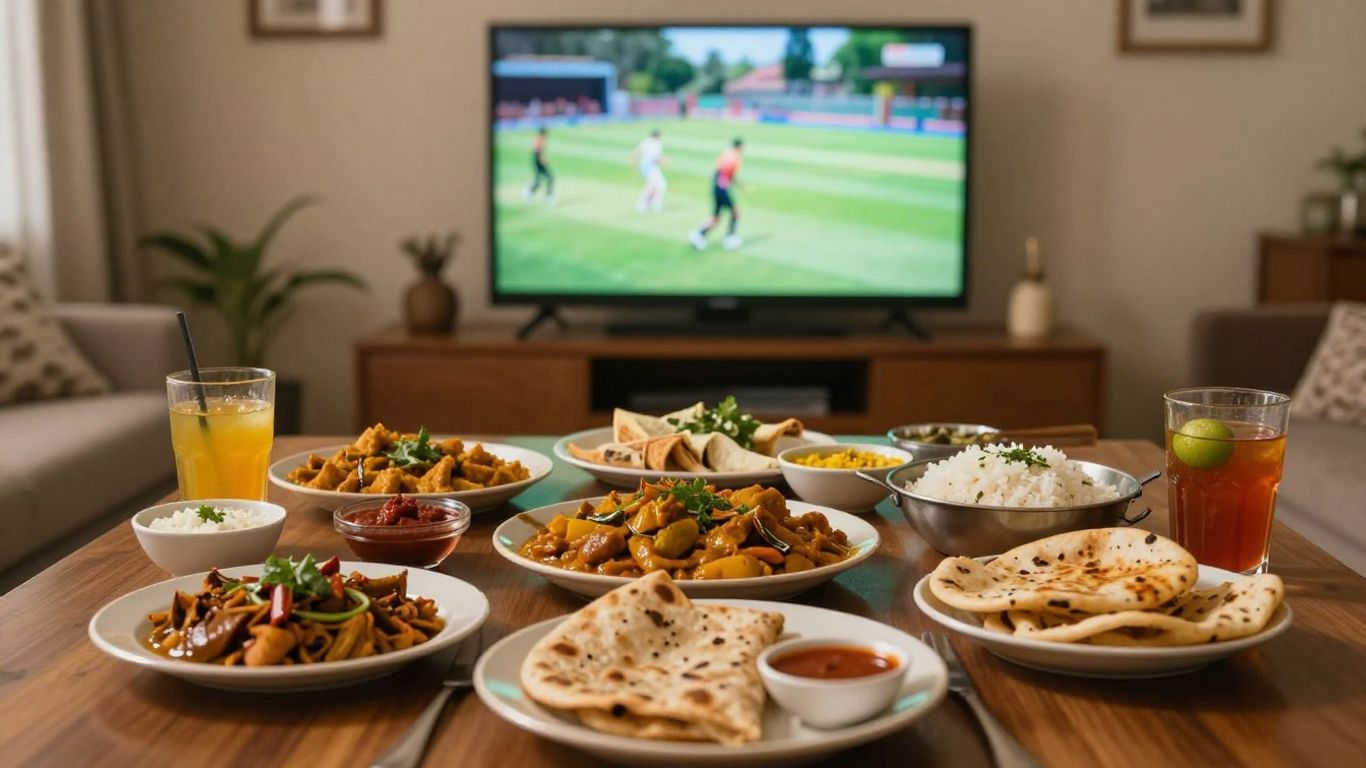
Choose dishes with a gentle level of heat and a soft texture for younger guests, such as dal, mild kadhi or rice with a little yoghurt. Keep chillies and sharper pickles in separate bowls so adults can add them later. Plain roti cut into manageable pieces can be easier for small hands than a heavily filled wrap.
Ask parents what their children already eat rather than guessing. Familiarity is usually more helpful than creating a special dish nobody recognises.
Vegetarian choices alongside meat dishes
A vegetarian main should be substantial enough to form a complete plate, not an afterthought. Rajma, chole, dal, kadhi and a seasonal sabzi can all sit comfortably beside a chicken or lamb dish. Use different serving spoons and place the vegetarian dishes together so guests can find them quickly.
For a larger gathering, offer one vegetarian main with rice and one vegetable side. That gives people a proper choice without multiplying the number of pans.
Halal meat options for a mixed group
If you are serving meat to a mixed group, confirm the requirements before ordering or cooking. Kitchen-cooked meats from Saakshi’s Kitchen are halal, which can make menu planning simpler when the table includes guests with different preferences. Still, keep meat dishes clearly labelled and use separate utensils where appropriate.
The same courtesy applies to sauces, garnishes and shared breads. Ask about allergies separately, since a halal choice does not answer every ingredient question.
Portioning food for adults and children
Serve adults from larger dishes and offer children smaller plates with room for seconds. This reduces waste and lets parents choose a combination their children are likely to eat. For a buffet, place rice and bread first, followed by mains and then condiments, so each plate can be built steadily.
Keep a few spare bowls near the serving area. They are handy for children who prefer foods kept separate and for guests who return during the second innings.
Add drinks and simple match day extras
Drinks and small extras shape the pace of the gathering as much as the food itself. Put water within reach, then add one or two drinks that suit the spices and the season. A small dessert and comfortable serving equipment can make the meal feel finished without creating another project. Keep everything easy to replenish from the kitchen.
Classic drinks to serve with Indian food
Masala chai works well before the match, while salted or sweet lassi suits a more substantial meal. Nimbu pani, sparkling water and still water give guests simple alternatives. In cooler weather, keep chai in a flask rather than asking people to carry hot mugs repeatedly through the sitting room.
If serving alcohol, offer water alongside it and check whether anyone would rather have a non-alcoholic drink. The table should be welcoming before the first over begins.
Easy nibbles for guests who arrive early
Early arrivals need something small while the main dishes are heating. Put out a bowl of roasted chana, spiced nuts, poppadoms or bite-sized samosas with one dip. These can be prepared in advance and do not compete with the main meal.
Keep the first plate deliberately modest. Guests often eat more than expected once the match settles into its rhythm, so replenishing gradually is easier than trying to judge the whole afternoon at once.
Desserts that can be served without fuss
Choose desserts that can be portioned before guests arrive, such as gulab jamun, kheer or shop-bought kulfi. Small bowls or individual portions mean no slicing during a tense over. If the match runs late, dessert can wait in the fridge until people are ready.
A little cardamom, chopped pistachio or a few strands of saffron can make a simple dessert feel special. Keep the garnish optional if guests have ingredient questions.
Plates, cutlery and napkins for sofa-side eating
Use plates with a slight rim and bowls that are stable on a lap. Forks and spoons should be available even if most snacks are finger food, and put napkins in two or three places rather than beside only the main table. A small rubbish bowl near the sofa can prevent wrappers and used napkins collecting on side tables.
Choose sturdy serving dishes that can be carried safely. There is no need to use every decorative piece in the cupboard when practical equipment makes the afternoon calmer.
Make cricket match day food easier to manage
Hosting is easier when the room, kitchen and food station work together. Keep hot dishes close to the serving area, put drinks somewhere guests can reach and leave a clear path between the sofa and the table. The goal is not a restaurant-style presentation; it is a spread that works while attention is on the match.
Using dishes that can be served from one pot
Dal, rajma, chole and curry are naturally suited to one-pot serving. They can move from a cooking or reheating vessel into one sturdy dish, reducing transfers and keeping the table uncluttered. Choose two dishes with different flavours rather than four pots that all need watching.
Use a ladle for saucier mains and a broad spoon for thicker dishes. Matching the utensil to the food makes self-service quicker and less messy.
Setting up a self-serve food station
Arrange plates first, then rice and breads, mains, sides and condiments. Put a serving utensil in every dish and keep labels facing the room. A self-serve station lets guests choose their own timing, which matters when the interval is brief or the game is moving quickly.
A practical station can follow this sequence:
- Plates, bowls and cutlery at the front.
- Rice, breads and other foundations next.
- Main dishes in stable, easy-to-reach containers.
- Chutneys, pickles, raita and napkins at the end.
Once the route is clear, guests can serve themselves without asking where each item belongs. Keep spare portions in the kitchen and refill only when a dish is running low.
Planning around a small kitchen
In a small kitchen, decide which surfaces are for preparation, reheating and finished food. Use stackable containers and avoid heating every dish together if the hob or oven is limited. A written order on the worktop prevents repeated opening of the fridge and keeps the cooking area calm.
Move serving dishes to the table only when they are ready. That leaves valuable counter space for the next task and avoids a traffic jam around the hob.
Reducing washing-up during the match
Line up a small number of serving dishes and reuse them only when they are clean and suitable. Disposable paper napkins can help with snacks, while washable plates and bowls are better for a full meal. Soak pans as soon as they are empty, but leave detailed cleaning until the final whistle.
Ask one guest to keep an eye on rubbish and empty glasses. A tiny amount of shared housekeeping stops the host becoming the only person who leaves the match.
Use home-cooked Indian meals when time is limited
There are days when the match is approaching and a full cooking session simply will not fit. Frozen, ready-to-reheat meals can give you a planned main without requiring several hours in the kitchen. Choose dishes that suit the group, check storage space first and leave enough time for safe reheating. This keeps the focus on feeding people well and enjoying the fixture.
Ordering frozen meals ahead of the match
Order early enough for the delivery window and make sure someone can receive the box. Clear freezer space before it arrives, then read the cooking and storage instructions rather than relying on memory. A small written plan can assign each meal to the first innings, interval or later serving window.
For a wider menu, the home-cooked Indian meal guide can help you think through dishes, portions, storage and delivery coverage before placing an order.
Choosing a mix of individual and sharing portions
Individual portions suit guests with different tastes and make it easier to serve only what is needed. Sharing portions work well for a central dal, rajma or curry that several people will enjoy. Combining the two gives flexibility without making the table feel disjointed.
Count the number of adults and children, then add a small margin for second helpings. It is usually more useful than ordering several unrelated dishes simply to create variety.
Reheating Saakshi’s Kitchen meals for a relaxed spread
Saakshi’s Kitchen provides home-cooked Indian meals prepared in a FSA 5-star kitchen and delivered frozen, ready to reheat. The selection can suit a match day built around everyday dishes such as dal, rajma, chole and seasonal sabzi, with individual or meal-style portions helping you plan the table. Reheat according to the supplied instructions, then serve in labelled dishes so guests know what they are choosing.
Kitchen-cooked meats are halal, and the menu can include vegetarian choices alongside meat dishes. That combination is useful when one group includes several preferences but nobody wants a separate cooking schedule for every plate.
Making a Brighton-delivered meal plan work for match day
If your delivery is coming from Brighton, build the plan around the delivery and freezer arrangements rather than the start of play. Saakshi’s Kitchen offers an IPL-focused six-meal plan for watching cricket, while the wider service delivers frozen home-cooked Indian meals across mainland UK mainland. Check the current menu and delivery details, allow reheating time, and keep a couple of easy snacks ready for guests who arrive before the main food.
That leaves you with a clear sequence: receive and store the meals, reheat the first dishes, set out rice and condiments, then replenish between innings. The kitchen does its part, and you can get back to the match.
Conclusion
A memorable cricket gathering does not need an elaborate buffet. Plan around the match, offer a few generous Indian dishes, keep preferences visible and choose food that can wait safely between serving windows. With the practical jobs handled early, the host gets to enjoy the cheering, conversation and cricket too.
Frequently Asked Questions
What is good cricket match day food at home?
Choose a mixture of filling mains, rice or breads, small snacks and cooling accompaniments. Dishes that can be served in portions and eaten without much fuss are particularly useful during a live match.
How much food should I prepare for a cricket watch party?
Plan one proper serving per adult, smaller portions for children and a modest amount extra for seconds. The length of the match and whether guests are eating a full meal will affect the final quantity.
Which Indian dishes are easiest to serve to a crowd?
Dal, rajma, chole, curry, rice and breads are dependable choices because they can be portioned quickly. Add chutneys, pickles or raita separately so guests can adjust their plates.
How can I feed guests with different spice preferences?
Keep the main dishes mild to medium and serve chilli sauces, pickles and hotter chutneys separately. Clear labels make it easier for guests to choose without repeatedly asking what each dish contains.
What can I prepare before the match starts?
Prepare accompaniments, arrange serving equipment and clear space in the fridge or freezer beforehand. You can also portion snacks and set out drinks so the first serving window is not rushed.
How do I keep food warm during a long match?
Serve food in covered dishes and put out smaller quantities at a time. Follow the storage and reheating instructions for any prepared meal, and avoid repeatedly warming the same leftovers.
What drinks go well with Indian match day food?
Water, masala chai, lassi, nimbu pani and sparkling water all work well. Offer a few choices and keep them within easy reach so guests do not need to interrupt the host during play.
Order home-cooked Indian meals from Saakshi's Kitchen · UK delivery locations.