

How to reheat frozen curry: safe methods for the hob, microwave and oven
Saakshi's Kitchen EditorialKey Takeaways
Reheating frozen curry is straightforward when you use gentle heat and check the centre carefully.
- Read the packet instructions before choosing a method.
- Use the microwave for speed, the hob for control, and the oven for larger portions.
- Cover the curry, stir it during heating, and loosen thick sauce gradually.
- Reheat only the amount you plan to eat whenever possible.
- Make sure the middle is steaming hot before serving.
Choosing the right reheating method
The best method depends on the portion size, the container, the time available and the instructions supplied with the meal. A single serving can be ready quickly in the microwave, while a pan gives you more control over a thick sauce. For a family-sized portion, the oven can warm everything steadily while you get the rest of dinner ready.
When the microwave is the most practical option
The microwave suits a small portion or a busy evening when you want dinner on the table without heating the whole kitchen. Transfer the curry to a microwave-safe dish if necessary, cover it loosely, and use short heating intervals rather than one long blast. This gives the frozen centre time to catch up with the warmer edges.
For meals from Saakshi's Kitchen, follow the instructions on the individual packaging first, as the recommended method can vary by dish and portion. The meals arrive frozen and ready to reheat, so the packet remains the most useful guide for that particular curry.
When to use the hob for better control
The hob is a good choice when the curry is in a solid block, the sauce is particularly thick, or you want to watch its consistency as it warms. A suitable saucepan lets you stir from the bottom and add a small splash of water if needed. It takes a little more attention than the microwave, but the heat is easier to adjust.
Keep the temperature low to medium and avoid a vigorous boil. Gentle heating helps the sauce come together without leaving the edges scorched while the middle is still cold.
When the oven works best for larger portions
The oven is useful for several portions in one dish, especially when you are serving family or arranging several sides at the same time. Use an oven-safe dish with a lid or foil, leaving enough room for the curry to be stirred safely. The slower heat can be forgiving, provided you allow enough time for the centre to warm.
As a quick guide, the methods differ in speed and attention:
| Method | Best for | Main thing to watch |
|---|---|---|
| Microwave | One or two portions | Uneven heating |
| Hob | Thick sauce or close control | Scorching at the base |
| Oven | Larger portions | A cold centre |
These are starting points rather than fixed rules. Portion depth, container shape and the instructions on the packaging all affect the timing.
Why the packaging instructions should come first
Packet instructions are written for the meal, container and portion in front of you, so they should take priority over general advice. Check whether the curry should be defrosted first, whether its tray can go straight into an appliance, and whether the film needs removing or venting. If the packaging gives a different temperature or time, use that information.
If you are comparing frozen meal options, this guide to choosing frozen Indian meals can also help with portion planning, storage and reheating arrangements. It is easier to reheat well when the meal has been stored in a sensible portion from the start.
How to reheat frozen curry in the microwave
The microwave is often the simplest answer to how to reheat frozen curry, but it works best when the curry is given room to heat evenly. Use a microwave-safe dish, cover it without sealing it, and pause to stir as the outside warms. A little patience produces a better result than relying on one high-power cycle.
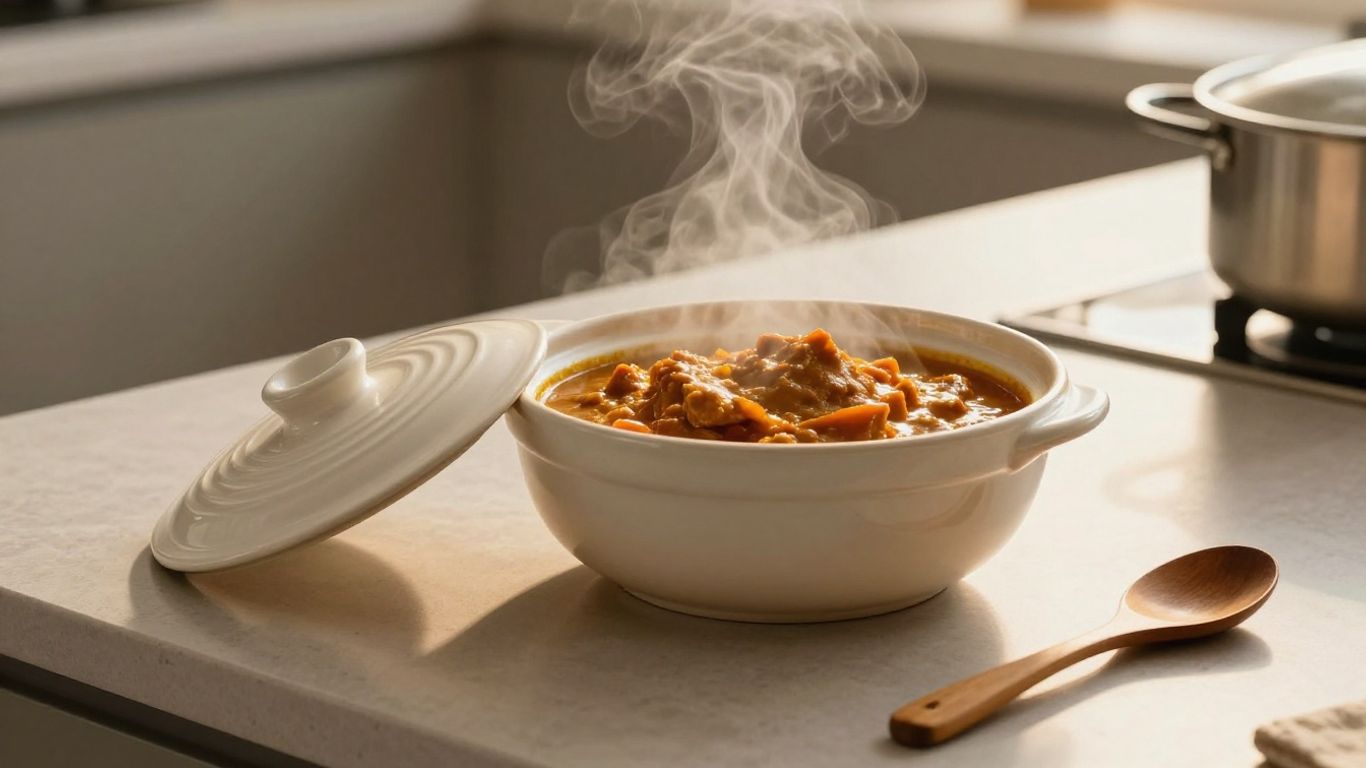
Checking whether the container is microwave-safe
Look at the base of the container or the packet instructions before putting it in the microwave. Some trays are designed for microwave use, while others need to be transferred to glass or ceramic. Remove metal clips, foil and any packaging that is not clearly labelled for microwave heating.
Choose a dish with enough room to stir without spilling. A wide, fairly shallow dish usually heats more evenly than a very deep one, although the instructions for the meal should still come first.
Covering, venting and adding a little water
Cover the dish with a microwave-safe lid or a plate set slightly ajar. This helps reduce splashes and limits the sauce drying around the rim, while the gap allows steam to escape. If the curry looks unusually tight after thawing, add a small splash of water before heating rather than flooding the dish.
The amount needed is modest; you can always add another spoonful later. Stir the liquid through the sauce so it does not sit on top and dilute one area of the curry.
Stirring between heating intervals
Heat the curry in short intervals, then stir from the outside towards the middle. The edges generally warm first, so turning the colder centre into the hotter sauce helps even things out. Scrape gently around the base and corners, where thicker sauce may settle.
A practical sequence is:
- Heat for a short interval according to the packet guidance.
- Stir thoroughly, bringing the centre towards the edges.
- Continue in short intervals until the curry is hot throughout.
- Leave it covered briefly before checking and serving.
The exact interval depends on your microwave and the portion. If the curry is still firm in the middle, keep going gradually rather than increasing the power sharply.
Checking that the centre is steaming hot
Do not judge readiness from the surface alone. Push a spoon into the middle and check that it is steaming hot, with no cold pocket or icy piece remaining. If you have a food thermometer, use it according to the food-safety guidance supplied with the meal.
Once heated, allow the dish to stand briefly so the heat can settle. Stir once more before serving, taking care with trapped steam beneath the cover.
How to reheat frozen curry on the hob
The hob offers a calm, hands-on way to warm curry, particularly when you want to adjust a sauce as it loosens. It is also useful when a portion is too dense to heat evenly in a microwave. Keep the heat modest and stay nearby, because a thick sauce can catch on the base before the centre has warmed.
Transferring the curry to a suitable pan
Use a saucepan or sauté pan with a solid base and enough room for stirring. If the curry is frozen in a container, do not force it out with a sharp utensil or place unsuitable packaging directly on the hob. Transfer it once the instructions allow, adding a small splash of water if the block needs help releasing.
A pan that is too wide can make the sauce spread thinly and catch quickly. A close-fitting lid can help retain moisture, but leave room to stir and keep an eye on the heat.
Using low to medium heat without scorching
Start on low to medium heat and stir as the outside begins to soften. Break up the curry gradually rather than trying to prise apart a hard block in one go. Once it has loosened, keep stirring at intervals so the base does not become hotter than the top.
This is where gentle, steady heat matters most. A rolling boil is not the goal; it can make the sauce split and leave meat or vegetables less pleasant to eat.
Loosening thick sauce as it warms
Frozen curry can seem thicker than it was before storage. Add water a spoonful at a time and stir well before deciding whether more is needed. The sauce will often relax as it warms, so avoid correcting the texture too early.
The colour and aroma should return as the curry heats. If you are unsure about the dish, reheating curry without splitting the sauce offers another useful perspective on keeping the temperature controlled.
Knowing when the curry is ready to serve
The curry is ready when it is hot through the centre, not merely bubbling at the edges. Stir across the bottom and lift a spoonful from the middle to check for a consistent temperature. If the sauce has begun to simmer gently, reduce the heat and give it another careful stir.
Turn off the hob once the curry is fully heated and let it stand for a short moment. This gives the sauce time to settle and makes serving safer, particularly when the pan is very hot.
How to reheat frozen curry in the oven
The oven is a steady option for a deeper dish or several portions, although it generally takes longer than the microwave or hob. It works best when the curry can be spread at an even depth and covered to protect the sauce. Allow extra time if the portion is frozen solid, and always use the packet directions where supplied.
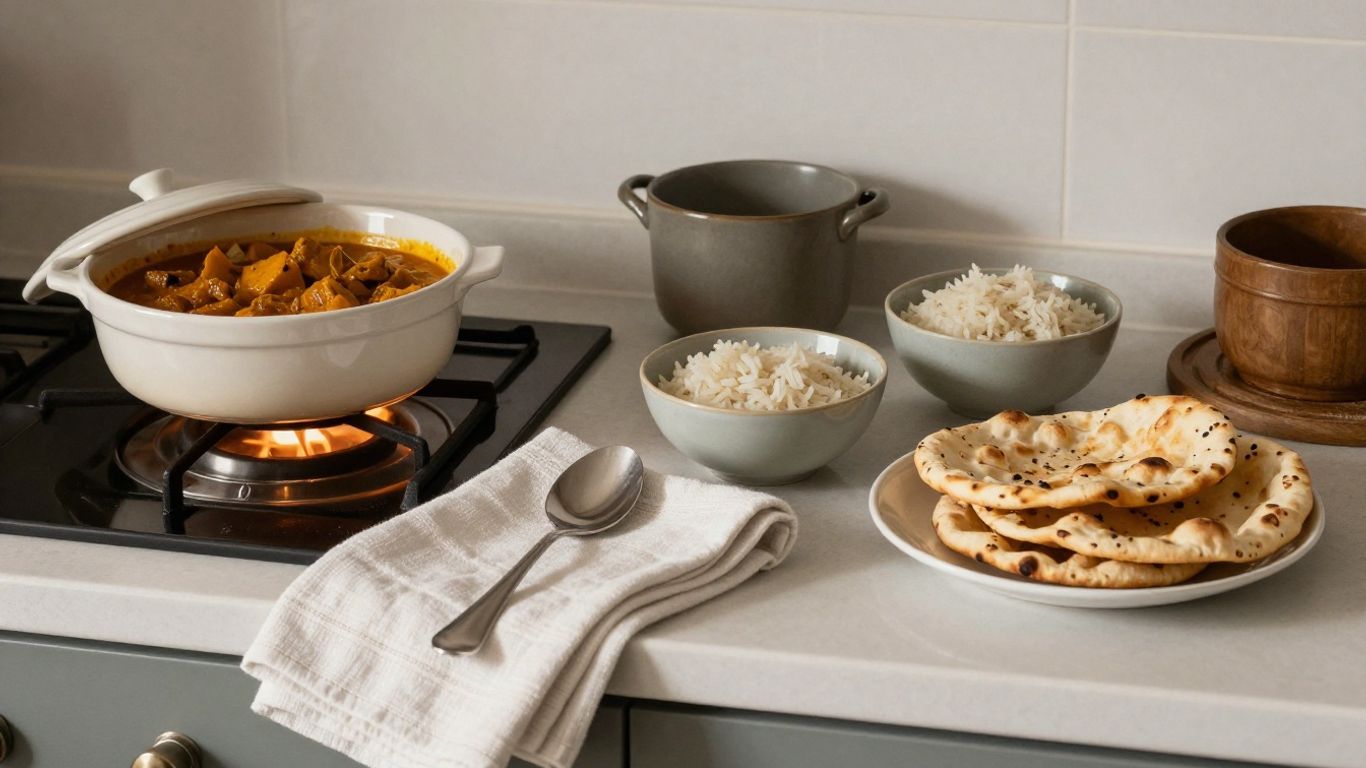
Selecting an oven-safe dish and cover
Transfer the curry to a dish marked as oven-safe if the original container is not suitable. A lid is ideal; otherwise, cover the dish with foil, keeping it secure but not pressed into the sauce. Leave enough space around the curry to stir without scraping against the sides.
Avoid moving a very cold glass dish directly into a hot oven unless it is designed for that use. A sudden temperature change can damage some cookware, so check the dish instructions first.
Setting the temperature and estimating cooking time
Use the temperature and timing printed on the packaging whenever they are available. If you are following general guidance, choose a moderate oven rather than an aggressively hot one, as the outside can dry before the centre is ready. A shallow, covered layer will warm sooner than a deep, tightly packed portion.
Treat any estimate as a guide. Start checking towards the end of the suggested time, especially if your oven runs hot or the dish has already partly thawed.
Stirring or turning the curry during heating
Stir the curry once the edges have softened enough to move safely. Bring the warmer outer sauce into the middle and smooth the surface before covering it again. If the dish is too full to stir comfortably, rotate it instead and allow more time.
Keep the cover on for most of the heating period. Removing it too early lets moisture escape and may leave the top dry while the lower layer is still warming.
Checking the middle before serving
The centre is the final place to check, particularly with a deep oven dish. Insert a spoon into the middle and look for steam and an even temperature throughout. If it is not hot, cover it again and return it to the oven for a little longer.
Once ready, remove the dish carefully and let it stand for a few minutes. Stir before serving, as the outer sauce may be hotter than the middle even after the oven has been switched off.
Avoiding common texture problems
Curry usually reheats well because the sauce surrounds the main ingredients, but it can still change if the heat is too fierce or moisture is lost. Creamy sauces may separate, vegetables can soften further, and meat can become dry around the edges. Most problems are easier to prevent than repair, so warm the dish gradually and keep checking it.
Preventing sauce from splitting
Avoid boiling the curry hard, especially if it contains a rich or creamy sauce. Use low to medium heat on the hob, cover it in the microwave, and keep an oven dish covered for most of the cooking time. Stir gently rather than whisking aggressively.
If the sauce looks slightly separated, reduce the heat and stir in a very small amount of water. It may come back together as it warms, but adding lots of liquid at once can make the flavour thin.
Stopping meat and vegetables from drying out
Dry edges usually point to too much heat or too much time. Cover the dish where possible, stir during reheating, and avoid repeatedly heating the same portion. A little water can help a thick sauce, but the best protection is stopping as soon as the centre is hot.
Tender vegetables may soften further after freezing and reheating, so handle them gently. Use a broad spoon rather than breaking them up with vigorous stirring.
Reheating rice and curry separately when needed
Rice and curry do not always need the same treatment. If they are stored separately, reheat each according to its own instructions and make sure both are hot before serving. Keeping them apart also lets you control the sauce without making the rice wet.
If rice is already mixed into the curry, stir carefully and check the middle particularly well. A shallow dish and a cover can help the rice warm without drying at the edges.
Adjusting thick or frozen-solid portions safely
A solid portion needs time to loosen, not a sudden blast of heat. On the hob, start low and break it apart as the outside softens; in the microwave, use short intervals and stir between them. In the oven, keep the dish covered and allow for a longer warming period.
Never leave a thick frozen block untouched while the outside boils. If the packet says to defrost first, move it to the fridge for the required time rather than improvising with an unsuitable container or appliance.
Food safety after reheating frozen curry
Safe reheating begins before the curry reaches the appliance. Storage conditions, defrosting instructions and portion size all affect how evenly the food warms. When in doubt, follow the packaging and avoid relying on appearance alone, since a steaming surface does not guarantee a hot centre.
Defrosting in the fridge when the instructions require it
Some meals are designed to be defrosted in the fridge before reheating, while others can be heated from frozen. Keep the curry covered and allow enough time for it to thaw safely in the fridge if the instructions require this. Do not leave it sitting out for a prolonged period while waiting for the centre to soften.
A thawed curry will usually heat more evenly, but it still needs to be hot throughout. Defrosting is not the same as reheating, so complete the cooking step afterwards.
Reheating only the portion you plan to eat
Take out only what you expect to serve. Smaller portions heat more evenly, and you avoid warming food that may later be returned to storage. This is particularly useful for households with different appetites or for a single dinner after work.
The same approach fits the everyday planning behind Punjabi home cooking, where a freezer can hold separate meal portions rather than one large dish that must be repeatedly disturbed.
Avoiding repeated reheating
Try to reheat a portion once and serve it straight away. Repeated cycles can affect the texture and make it harder to judge how long the food has spent warm. If you are not sure how much will be eaten, start with less and heat another portion later if needed.
Keep serving spoons clean and do not mix untouched food with food that has already been on the plate. Small habits like these make leftovers easier to manage.
Handling leftovers and returning them to the fridge promptly
Cool leftovers promptly and place them in the fridge in a covered container, following the storage advice on the packaging. Do not leave the serving dish on the table for hours. When you next reheat the leftovers, use the same careful checks for a steaming-hot centre.
If the food has been left out too long, smells unusual or looks unsafe, discard it rather than trying to rescue it with extra heat. When the instructions are unclear, the safest choice is to consult the label or relevant UK food-safety guidance.
Serving reheated curry at its best
A curry can be technically hot and still benefit from a final pause before it reaches the table. Resting lets the temperature even out and gives you a moment to check the sauce, seasoning and portion. This is also when a simple side can turn a reheated meal into a complete dinner.
Letting the curry stand briefly before eating
After heating, leave the curry covered for a short time, then stir gently. The centre will continue settling while the outer edge cools slightly, reducing the chance of an unexpectedly hot spoonful. Take care when removing a lid, as steam can escape quickly.
A brief stand also makes the sauce easier to judge. If it has tightened, one final spoonful of water may be enough to bring it back to a pleasing consistency.
Checking the seasoning and consistency
Taste only once the curry is fully heated and safe to eat. Freezing and reheating can make a sauce seem thicker, so check whether it needs loosening before adjusting anything else. Add seasoning sparingly, since concentrated sauce can already carry plenty of flavour.
For a meal with the character of home cooking, the aim is not maximum heat or heaviness. Punjabi dishes such as rajma chawal, chole and kadhi each have their own texture and spice balance, and gentle reheating helps retain that distinction.
Pairing curry with rice, naan or other sides
Serve curry with rice, naan, roti or another side that suits its sauce. A dal works beautifully with rice, while a thicker curry can be spooned alongside naan or roti. Add only what you are likely to eat so the portions remain manageable.
For family meals, put the curry and sides on the table separately where practical. That lets each person choose a comfortable amount without repeatedly reheating the main dish.
Making portion sizes easier to reheat next time
When storing a batch, divide it into portions that match the people you normally feed. Flat, well-sealed portions thaw and heat more evenly than one very deep container, and labelling the date and contents avoids guesswork later. Leave appropriate space if the food may expand during freezing.
Saakshi's Kitchen also discusses portion planning for busy UK households, which is useful when you are deciding how much freezer space a weekly rotation will need. A little planning makes the next curry night calmer and reduces the temptation to heat more than you need.
Conclusion
Learning how to reheat frozen curry comes down to choosing the right appliance, using moderate heat, stirring where needed and checking the centre before serving. Follow the packet first, reheat only the portion you need, and give the curry a short rest before pairing it with rice, naan or roti.
Frequently Asked Questions
Can you reheat curry straight from frozen?
Some curries can be reheated from frozen, while others need to defrost in the fridge first. Always follow the instructions on the packaging for the particular meal.
Is it better to reheat curry on the hob or in the microwave?
The microwave is convenient for small portions, while the hob gives closer control over a thick sauce. Both can work well when the curry is stirred and heated until hot throughout.
How do you stop curry sauce from splitting?
Use low to medium heat, avoid a hard boil and add liquid gradually if the sauce has thickened. Stir gently rather than heating the curry aggressively.
How long does frozen curry take to reheat?
There is no single reliable time because portion size, appliance power, container shape and the starting temperature all vary. Use the packet guidance and check the centre before serving.
Can you reheat rice with curry?
You can, but rice often reheats more evenly when it is kept separate. Follow its storage and reheating instructions, and make sure it is steaming hot before eating.
Should frozen curry be covered while reheating?
Covering helps retain moisture and reduces splashing in the microwave or oven. Use a loose, vented cover rather than sealing steam inside completely.
Can reheated curry be put back in the fridge?
If there are leftovers, cool them promptly, cover them and return them to the fridge according to the storage guidance. Reheat only once more and discard food that has been left out too long or seems unsafe.
Order home-cooked Indian meals from Saakshi's Kitchen · UK delivery locations.