

Food gift for new parents Indian: thoughtful meal ideas and delivery tips
Saakshi's Kitchen EditorialKey Takeaways
A meal gift can be one of the kindest ways to support parents settling into life with a new baby. Choose food that suits their tastes, household, freezer space and daily rhythm.
- Ready-to-reheat meals remove one practical job from a tiring day.
- Familiar Indian dishes can bring comfort without requiring a special occasion.
- Mild spice, clear labelling and suitable portions make gifting easier.
- Frozen delivery allows the family to eat meals when they need them.
- A personal note and thoughtful timing can make a practical gift feel deeply caring.
Why an Indian meal gift can support new parents
The early weeks with a baby are full of small decisions, interrupted sleep and meals eaten whenever there happens to be a free moment. A food gift meets a real household need rather than adding another item to an already busy home. Indian food can be especially meaningful when it recalls the flavours, routines and family recipes people grew up with.
The value of a ready-to-reheat meal
A meal that can be taken from the freezer, reheated and served gives parents one less task to organise. There is no chopping, shopping or washing up from a long cooking session, and the person giving the gift does not need to visit at exactly the right moment. That practical ease is often more useful than an impressive hamper that needs assembling.
Familiar flavours during a demanding routine
Food does not have to be elaborate to feel special. Dal tadka, rajma chawal or kadhi may be associated with family kitchens, weekday dinners and someone asking, “khaana khaya?” Those associations can make a delivered meal feel personal, particularly when parents are far from relatives or cannot manage a shared family meal yet.
Choosing comfort over complicated presentation
A new-parent gift does not need layers of wrapping or a dramatic centrepiece. It can be a small selection of dishes that work together and can be eaten at different times. Practical care matters most when the recipients can open the freezer and find something they genuinely want to eat.
A useful way to think about the gift is not “What looks most luxurious?” but “What will make Tuesday evening easier?” That question usually leads to sensible portions, familiar seasoning and food that fits the household’s ordinary routine.
When a meal delivery gift is more useful than baby items
Clothes, blankets and toys can be lovely, but new parents may already have received plenty of them. A meal is consumed, useful and easy to share with a partner, visiting relative or older child. For more ideas about gifts that require little effort from the recipient, these hands-off food options offer a helpful starting point.
How to choose the right Indian food gift
The best food gift for new parents is not necessarily the largest one. It is the one that matches their spice preferences, family size and ability to store and reheat meals. Before ordering, think about what they normally enjoy and whether someone can receive the delivery safely at home.
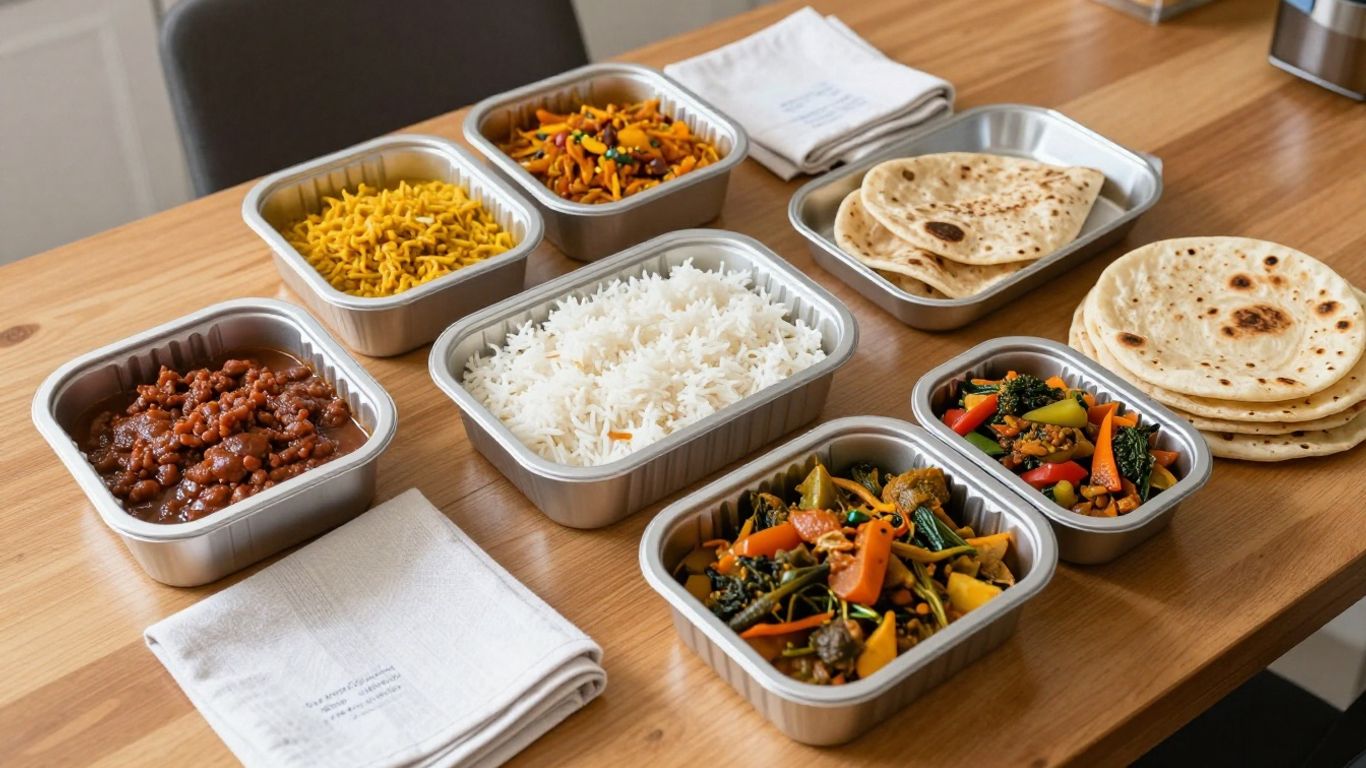
A little information from a partner, sibling or close friend can prevent guesswork. If you are ordering from a distance, ask about freezer space and preferred delivery days as casually as possible.
Consider spice preferences and familiar dishes
Indian food covers a wide range of seasoning, textures and regional styles. Some families prefer gently spiced dal and sabzi, while others enjoy a hotter curry or a dish with a strong chilli finish. If you are unsure, choose recognisable favourites and ask whether the parents prefer mild, medium or hot food rather than assuming.
Punjabi home cooking often works well for this kind of gift because it includes everyday dishes such as chole, rajma and dal, alongside rice, roti or seasonal sabzi. The aim is not to create a restaurant-style feast; it is to give the family food that feels at home in their own kitchen.
Match the gift to the family’s household size
Two parents may want several individual portions rather than one large container. A household with grandparents or older children may appreciate a broader box, but only if there is enough freezer space. It is also worth considering whether the parents are likely to eat together or reheat meals separately around the baby’s routine.
The following simple guide can help when comparing different boxes or combinations:
| Household situation | Useful approach | Why it works |
|---|---|---|
| One parent and baby at home | Individual portions | Meals can be reheated without leftovers piling up |
| Two adults | A mixture of individual and two-person portions | It allows flexible lunches and shared dinners |
| Adults with older children | Several familiar mains with rice or breads | The whole household has something easy to serve |
| Relatives helping for a few days | A larger selection of everyday dishes | Visitors can eat without creating extra cooking work |
Portion guidance is only a starting point. The family’s eating habits, freezer size and visiting arrangements should have more influence than a fixed idea of what a new-parent box ought to contain.
Check ingredients, allergens and dietary requirements
Read the menu and ingredient information before buying, especially if you are not certain about allergies or religious requirements. Ask the parents directly when necessary; a short question is kinder than sending food they cannot eat. Vegetarian choices should be clearly identified, and meat dishes should be checked for the family’s preferences.
Also consider whether the recipient is comfortable with dairy, nuts, gluten or particular spices. Do not rely on broad labels or assumptions. A clear ingredient list and a quick conversation make the gift safer and more considerate.
Decide between a one-off delivery and a meal bundle
A one-off box is a good choice when you want to mark the birth, send congratulations or support the family after a visit. A larger bundle may be more useful when you live far away and want to cover several meals across the first few weeks. If you are comparing gift cards and meal boxes, this guide to choosing an Indian meal gift covers practical questions such as portions, storage and delivery details.
Think about whether the parents would enjoy choosing for themselves. A gift card can give them control over dishes and timing, while a selected box feels more immediately personal. Either can work when the recipient’s preferences remain at the centre.
Indian dishes that work well as new-parent gifts
There is no single correct menu for a new family. The strongest choices are dishes that reheat well, sit comfortably alongside rice or breads and suit the family’s usual way of eating. A mixture of mains and accompaniments gives parents options without turning the present into a complicated catering order.
Comforting curries and rice-based meals
Dal tadka is a dependable choice for many households: lentils finished with a fragrant tadka, ideal with rice or roti. Rajma chawal brings together kidney bean curry and rice in a familiar combination, while chole offers a fuller, spiced chickpea dish that can be served with breads or rice. Kadhi, with its gentle tang and creamy texture, can add variety to a box.
Biryani can be appealing when the family wants one substantial dish, but a selection of everyday curries may offer greater flexibility. Look for meals that can be reheated in the quantity needed, especially when one parent is eating at a different time.
Vegetarian options for flexible gifting
Vegetarian dishes are often useful when you do not know exactly what everyone in the household eats. Dal, rajma, chole, baingan bharta and seasonal sabzi can make a varied box without relying on meat. Include a mix of textures so that the family does not receive several dishes that feel too similar.
Ask whether the household eats eggs or dairy if that is relevant, and check the preparation details rather than guessing from a dish name. Vegetarian gifting is thoughtful when it reflects the family’s actual preferences, not simply the giver’s assumption that it will suit everyone.
Meat dishes and halal considerations
For families who eat meat, chicken curry or another familiar home-style dish can turn a practical box into a very personal one. The seasoning should match what they usually enjoy, with heat treated as a preference rather than a test of bravery. If halal food matters to the household, confirm that the kitchen-cooked meats meet their requirements before ordering.
Do not add meat simply to make a box seem more generous. A smaller selection that everyone can eat is better than a larger one containing dishes that remain untouched.
Side dishes, breads and accompaniments
Rice, roti, paratha, raita and pickle can make the main dishes feel like a complete meal. They also give parents an easy way to stretch a curry across different mealtimes, depending on appetite and available time. Check whether breads arrive frozen or require separate preparation, then make sure the recipient has the instructions needed to serve them.
A small sweet can be a lovely addition for families who enjoy it, though it should complement the meal rather than crowd the freezer. The most useful box usually has enough variety to create several combinations without becoming difficult to organise.
How frozen meal delivery fits into the early weeks
Frozen meals suit the uneven rhythm of life with a newborn because they do not have to be eaten on the day they arrive. Parents can store them, choose a quieter moment and reheat only what they need. That flexibility is valuable when feeding, sleeping and visitors rarely follow the original plan.
Planning deliveries around an unpredictable schedule
Ask the family which days someone is likely to be home, or arrange delivery with a relative who can receive the parcel. Avoid making the gift depend on a precise mealtime. The point is to put food within reach, not to create another appointment for tired parents.
If the family has just returned from hospital or is expecting relatives, a delivery a little later may be more useful than one timed for the day of the birth. A short message beforehand can also help them clear space in the freezer.
Understanding storage and reheating instructions
The recipient should be able to see how each meal is stored, how long it needs to reheat and whether it should be defrosted first. Keep the original labels with the food, particularly when several curries look similar. Clear instructions are part of the gift, not an administrative detail.
A quick check of the instructions before ordering can prevent confusion later. If the parents are likely to reheat food one-handed or while holding the baby, straightforward packaging and readable labelling matter even more.
Choosing portions that reduce food waste
Individual portions provide control when eating patterns are unpredictable. Larger portions can be useful for a shared dinner, but only when the household has enough storage and expects to eat the same dish together. A varied box of modest portions often gives more freedom than several very large containers.
Remember that visitors may help with meals for a few days, while the parents may be on their own later. Choose a quantity that supports the likely rhythm rather than ordering the maximum available.
Making the gift easy to receive at home
Double-check the address, postcode, contact number and any access instructions before payment. If the property has a communal entrance, explain where the parcel can be left or who can accept it. These small details can spare the family a phone call or an awkward search while they are caring for the baby.
A delivery update sent to the giver and recipient can also make the handover calmer. When ordering as a surprise, ask a trusted person to monitor the day without revealing every detail.
How to personalise the food gift
Personalisation does not always mean adding a name or choosing expensive extras. It can be as simple as selecting the dishes someone’s mother makes, remembering that they dislike very hot food or arranging delivery for a week when help is likely to thin out. Thoughtfulness comes from paying attention.
Adding a thoughtful note for the parents
Write a message that speaks to the adults as well as congratulating them on the baby. “No need to cook tonight” may be more welcome than a formal greeting. You could mention a dish you hope they enjoy, or tell them there is no expectation to reply while they settle into their new routine.
Keep the tone warm and uncomplicated. A meal gift is a way of saying that someone is thinking about the whole household, not asking the parents to host, call or perform gratitude.
Selecting dishes based on family and regional preferences
Ask which regional flavours feel most like home. One family may reach for Punjabi dal and rajma, while another may prefer a particular vegetable, rice dish or style of bread. If the parents have different preferences, build a box with enough choice for each of them.
This is also a chance to include a dish connected to a family memory. The best selection often comes from one small clue: a parent’s favourite weekday meal, a grandparent’s recipe or the food they missed while away from home.
Timing the gift for the first weeks or later visits
Sending food immediately after the birth can be generous, but it is not the only useful moment. A delivery in the second or third week may arrive when the first wave of visitors has passed and the practical help has reduced. Later support can feel just as caring as an early surprise.
If you are visiting in person, ask whether bringing a meal would help rather than assuming they want to receive guests. A freezer-ready box can offer support without requiring anyone to sit down for a long visit.
Coordinating with relatives and friends
A shared plan prevents five people sending similar dishes on the same day. One relative can ask about dietary needs, another can check the delivery address and someone else can choose a later date. A simple group message is enough; there is no need to turn the gift into a project.
Coordination also makes it possible to spread meals over several weeks. That gives the parents a steady reminder that support is available, rather than one very large delivery they have to organise all at once.
What to look for in an Indian meal delivery service
A good service should make the ordering process clear from the first page to the final reheating instruction. Menus, ingredients, delivery areas and storage information all matter when the recipient is busy and the giver may be ordering remotely. Look for practical detail rather than grand promises.
Clear menus and ingredient information
Dish names should be accompanied by enough information to understand the main ingredients, spice level and portion format. This helps you build a box that suits the family instead of selecting at random. It is particularly helpful when you are ordering for someone whose dietary requirements you do not know well.
Check whether the menu describes the meal as an individual portion, a serving for two or part of a wider set. Clear labelling makes it easier for parents to plan what to take from the freezer.
Reliable delivery coverage in the UK
Confirm that the recipient’s postcode is covered before choosing the dishes. Delivery days and charges should be visible, and the service should explain what happens if nobody is available. These details are especially important when the giver lives in another city or country.
For a gift being sent from overseas, make sure the recipient’s UK address is entered correctly and that the payment process does not leave them with unexpected tasks. The simpler the handover, the better.
Safe handling and practical packaging
Frozen food should arrive in packaging that protects it during transit and can be stored without confusion. Look for labels that remain readable, clear storage guidance and reheating instructions that do not assume specialist equipment. Parents should be able to understand the process at a glance.
It is also sensible to check how much freezer space the order needs. A smaller, well-chosen box may be more practical than a large one that arrives when the freezer is already full.
Evidence of customer trust and kitchen standards
Reviews can show whether customers found the ordering, delivery and reheating experience straightforward. Hygiene information and an established kitchen can also reassure the person sending the gift. Treat individual reviews as personal experiences rather than guarantees, and focus on consistent practical information.
The best service for this occasion is one that explains what it provides without making claims beyond the food itself. Familiar cooking, dependable instructions and a calm delivery process are enough.
Saakshi’s Kitchen as a UK Indian food gift option
Saakshi’s Kitchen offers home-cooked Indian meals prepared in a Brighton kitchen and delivered frozen, ready to reheat. That format suits a food gift for new parents indian because the family can choose when to use each meal rather than arranging dinner around the delivery. The emphasis is on everyday Punjabi home cooking, the sort of food that belongs in a weekly rotation rather than only on a special occasion.
Home-cooked Indian meals prepared in a Brighton kitchen
Saakshi's Kitchen prepares home-cooked Indian meals in its Brighton kitchen, using the kind of familiar dishes associated with a family meal: dal, rajma and chole are examples of the style. The kitchen approach centres on building masala from onion, tomato, ginger and garlic, then finishing dishes with a tadka rather than relying on a standing gravy base.
That distinction matters when the gift is intended to feel like ghar ka khana. Parents may be looking for food that sits naturally beside rice or roti and can become part of an ordinary evening at home.
Frozen meals that are ready to reheat
The meals are delivered frozen and ready to reheat, making them suitable for a freezer-based gift. Parents can keep the food until a manageable moment, then prepare an individual portion without starting dinner from the beginning. Always follow the storage and reheating directions supplied with the order.
This format is also useful for friends and relatives who cannot visit often. It lets them send a practical expression of care without asking the new family to coordinate a home-cooked drop-off.
Halal kitchen-cooked meats
Saakshi’s Kitchen’s kitchen-cooked meats are halal, which may make the selection more suitable for households that follow halal requirements. Choose meat dishes only after considering the parents’ preferred flavours and whether they would rather receive a vegetarian box. A mixed order can work well when the household enjoys both.
As with any food gift, check the menu and ingredient information before ordering. The family’s own requirements should guide the final choice.
Delivery options and gifting considerations
Delivery should be planned around the recipient’s UK address, available freezer space and likely presence at home. The service has recorded 4.6★ from 800+ verified reviews, 16,000+ deliveries and an FSA 5-star Brighton kitchen; these details can give a giver useful context when comparing practical arrangements.
Before placing the order, confirm the postcode, delivery information and the dishes you want to send. Add a personal note if available, then let the parents decide when dinner happens. A thoughtful food gift should arrive as help, not homework.
Conclusion
A carefully chosen Indian meal can support new parents in a quietly practical way: it offers familiar flavour, saves cooking time and leaves the family free to eat when the day allows. Consider spice, portions, dietary needs, freezer space and delivery timing, then add a message that makes the care behind the gift clear.
Frequently Asked Questions
What is a thoughtful food gift for new parents indian?
A selection of familiar Indian meals that can be stored and reheated is a thoughtful choice. Choose dishes the parents enjoy, with portions and spice levels suited to their household.
Are frozen meals suitable for new parents?
Yes, frozen meals can be useful because they do not need to be eaten immediately. The parents can store them and reheat a portion when they have time for a meal.
Which Indian dishes are good for a new-parent food gift?
Dal, rajma, chole, kadhi, rice dishes and familiar vegetable curries are useful options. Add breads or accompaniments when the recipient has enough freezer space.
Should I choose mild or spicy Indian food?
Choose according to the parents’ normal preferences. If you are unsure, ask someone close to them or select gently spiced dishes with clear descriptions.
How much food should I send to new parents?
Consider the number of adults, older children, visiting relatives and available freezer space. Several individual portions can offer more flexibility than a few very large containers.
What should I check before ordering Indian food as a gift?
Check postcode coverage, delivery timing, storage instructions, reheating guidance, ingredients, allergens and dietary requirements. Confirm that someone can receive the parcel at the address.
Is a meal delivery gift better than a baby gift?
Neither is universally better, but a meal solves an immediate everyday need. It can complement baby items by giving the parents something useful for themselves during a demanding period.
Order home-cooked Indian meals from Saakshi's Kitchen · UK delivery locations.