

Karwa Chauth dinner ideas: how to plan a comforting post-fast meal
Saakshi's Kitchen EditorialKey Takeaways
A good Karwa Chauth dinner should feel celebratory without asking someone who has fasted all day to face an overwhelming plate. Plan the first few bites gently, then build towards familiar dishes, sweets and family rituals.
- Serve dinner after the moon sighting and the customary rituals are complete.
- Begin with water and small portions before moving to richer dishes.
- Choose mild, familiar mains such as dal, rice, roti and seasonal sabzi.
- Offer sweets, fruit and drinks with different tastes and appetites in mind.
- Prepare, label and reheat dishes ahead so the evening stays unhurried.
Plan the meal around the post-fast routine
Karwa Chauth dinner is usually the moment everyone has been waiting for, but it does not need to arrive as one large, crowded feast. The best karwa chauth dinner ideas make room for the moon sighting, the first sip of water and a gradual return to a full meal. Think about the people eating, the time of the ritual and how much cooking you really want to do that evening.
When to serve dinner after moon sighting
Dinner can begin once the moon has been sighted and the family rituals are complete. Keep the first serving ready rather than leaving someone to wait while the final curry simmers. A small plate or bowl to start, followed by the main meal a little later, often feels more comfortable than rushing straight into a full thali.
If the moon is late or clouds make the timing uncertain, cover the cooked food and keep the serving order flexible. That way, the table remains inviting without turning the evening into a race against the clock.
How to begin with water and lighter dishes
After a day without food or drink, start with a few sips of water and something plain or softly spiced. A little fruit, a spoonful of yoghurt or a small piece of roti can lead into dinner without making the first mouthful feel too heavy. Portions can always be increased once everyone has settled.
This is also a good reason to serve accompaniments separately. A cooling raita, mild dal or simple rice can be enjoyed first, while pickles, chutneys and richer dishes remain available for later.
Balancing traditional foods with personal preferences
Tradition gives the meal its shape, but every household has its own idea of what feels festive. One family may want puri and a rich sabzi, while another prefers dal chawal, a vegetable curry and a favourite sweet. Ask in advance about spice, texture and ingredients rather than guessing from a standard menu.
For background on the festival’s rituals and the way the fast is traditionally broken, this Karwa Chauth rituals guide offers useful context. Use that knowledge as a starting point, then let your family’s own customs lead the menu.
Adjusting portions for couples and family gatherings
For two people, one main, one rice or bread option and two small sides can feel generous without creating a week of leftovers. For a larger gathering, choose dishes that can sit comfortably in serving bowls and let guests take smaller portions of several things.
It helps to think in components rather than counting every dish. One familiar centrepiece, one filling accompaniment, something cooling and a sweet are usually enough; extra garnishes can make the table look abundant without adding another cooking job.
Choose comforting main dishes
The main course should feel recognisable and warm, especially after a long day. Punjabi home cooking is a natural fit: dal, rajma, chole, kadhi and seasonal sabzi all bring the ease of an everyday family table. Choose mild, spiced food rather than dishes built around intense heat, and let the accompaniments add contrast.
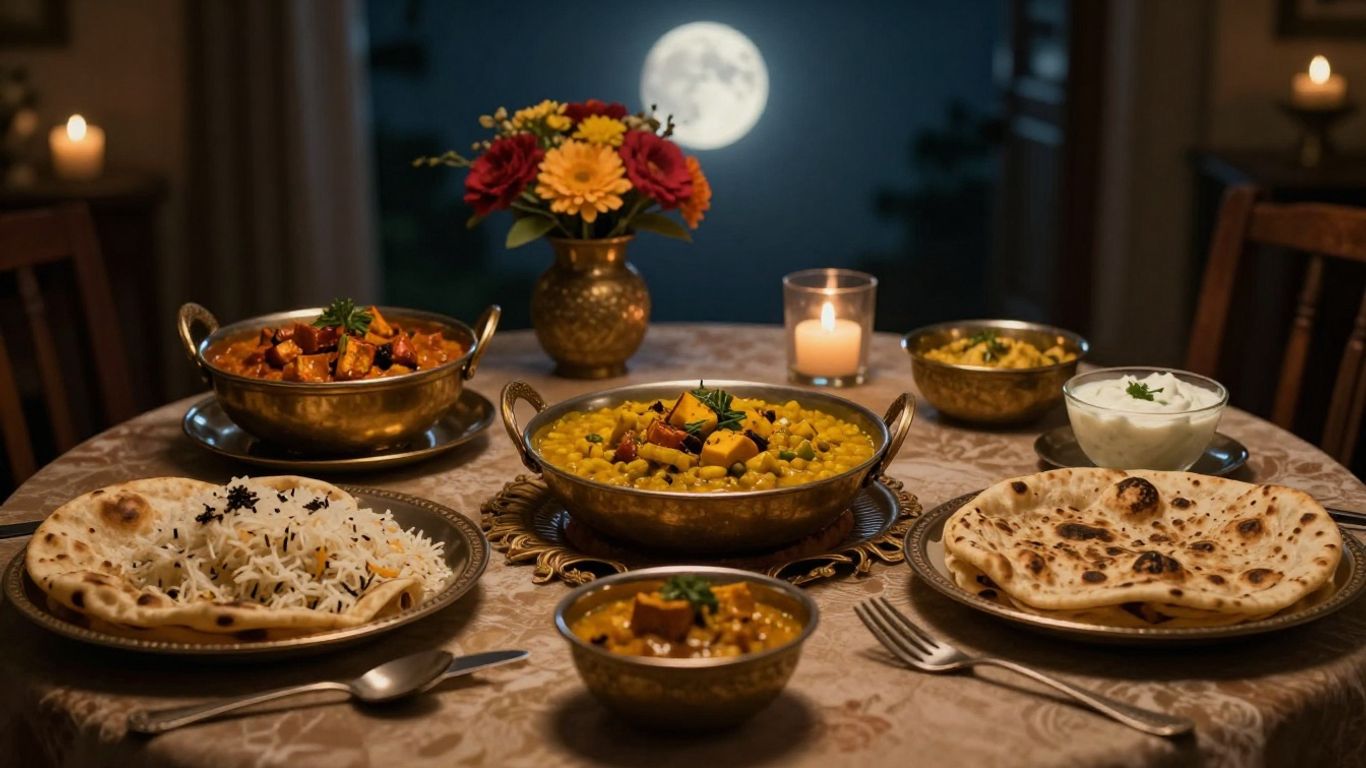
Mild dal and rice combinations
Dal tadka with jeera rice is a reliable pairing because both dishes are familiar and easy to portion. Moong dal, masoor dal or a softly cooked mixed dal can work well, with the final tadka adding aroma just before serving. If the table needs a more substantial centrepiece, rajma chawal gives the meal a deeper, slow-cooked character.
Keep the rice loose and the dal pourable, so guests can combine them as they like. A small bowl of yoghurt on the side can soften the plate without making the menu complicated.
Roti, naan and warming curry pairings
Warm roti or naan gives a curry-led dinner a satisfying centre, particularly when served with a mild paneer dish, kadhi or a vegetable curry. If you are making breads at home, cook them close to serving time; otherwise, wrap them in a clean cloth so they do not dry out.
A curry with a gentle masala works better here than a very hot sauce. The meal should invite slow eating and conversation, not require everyone to reach for water after every bite.
Vegetarian mains for a family-style table
A vegetarian table can still feel abundant with one saucy dish and one drier sabzi. Paneer, chole, rajma, aloo gobi, bhindi or baingan bharta each bring a different texture, so choose two rather than placing every favourite on the table at once.
For a menu that needs very little last-minute cooking, Saakshi's Kitchen offers home-cooked Indian meals prepared in its FSA 5-star kitchen, delivered frozen and ready to reheat. A familiar dish can take the pressure off while you focus on the ritual and the people around the table.
Halal meat dishes for guests who eat meat
If some guests eat meat, a gently spiced chicken curry or a simple keema-style dish can sit alongside the vegetarian mains. Keep the meat dish in its own serving bowl and label it clearly, especially when several relatives are helping themselves.
Saakshi's Kitchen kitchen-cooked meats are halal, which can make planning easier for households serving a mixed table. Pair the meat with rice or roti and a cooling side, rather than adding several strongly flavoured curries that compete with one another.
Add traditional Karwa Chauth flavours
Small sides often make the dinner feel distinctly festive. Seasonal vegetables, cumin, coriander, yoghurt and a little tang can turn a straightforward main course into a table with plenty of character. The aim is not to recreate every dish from every region, but to include flavours that feel familiar to your family.
Festive sabzi ideas with seasonal vegetables
Choose a sabzi that gives the meal colour and a different texture from the main curry. Gobi, peas, carrots, potatoes, spinach or aubergine can be cooked with cumin, coriander and garam masala for a simple home-style dish. A dry sabzi is particularly useful at a family table because it is easy to serve in small spoonfuls.
If the main dish is creamy or richly spiced, keep the vegetable preparation quieter. If the main is dal, a more fragrant sabzi can provide the contrast.
Raita, chutneys and pickles for contrast
Raita brings a cool, spoonable element to the plate, while mint chutney, coriander chutney or mango pickle adds a sharper edge. Offer these in small bowls so people can choose their own level of tang and spice.
Do not feel obliged to make all three from scratch. A bowl of yoghurt with roasted cumin and salt may be all that is needed beside a carefully chosen pickle.
Simple dishes inspired by North Indian home cooking
The most comforting menu may be the least showy: dal, rice, roti, one sabzi and a side that someone in the family already knows by heart. These are the flavours of a regular home meal, given a little more care in the way they are served. For more ideas around the structure of an everyday Indian meal, explore this home-style comfort food guide.
A real tadka added to dal near the end can fill the kitchen with the familiar aroma of cumin, garlic and spices. That small finishing step often does more for the sense of occasion than another elaborate dish.
How to include family recipes and regional traditions
Make space for the recipe that only one relative makes in quite the same way. It might be a particular kadhi, a family pickle or a sweet prepared for festival evenings. Write down the ingredients and serving notes if the recipe is usually passed on by memory.
Regional traditions can sit comfortably beside Punjabi home cooking when the portions stay modest and the menu has a clear centre. A family recipe is not an extra obligation; it can be the one detail that makes the dinner feel personal.
Select sweets and celebratory treats
Sweets mark the occasion and give everyone something to look forward to after the savoury food. Still, there is no need to put out a full mithai counter. One classic sweet, some fruit and a drink that people enjoy will usually feel more thoughtful than a crowded selection.
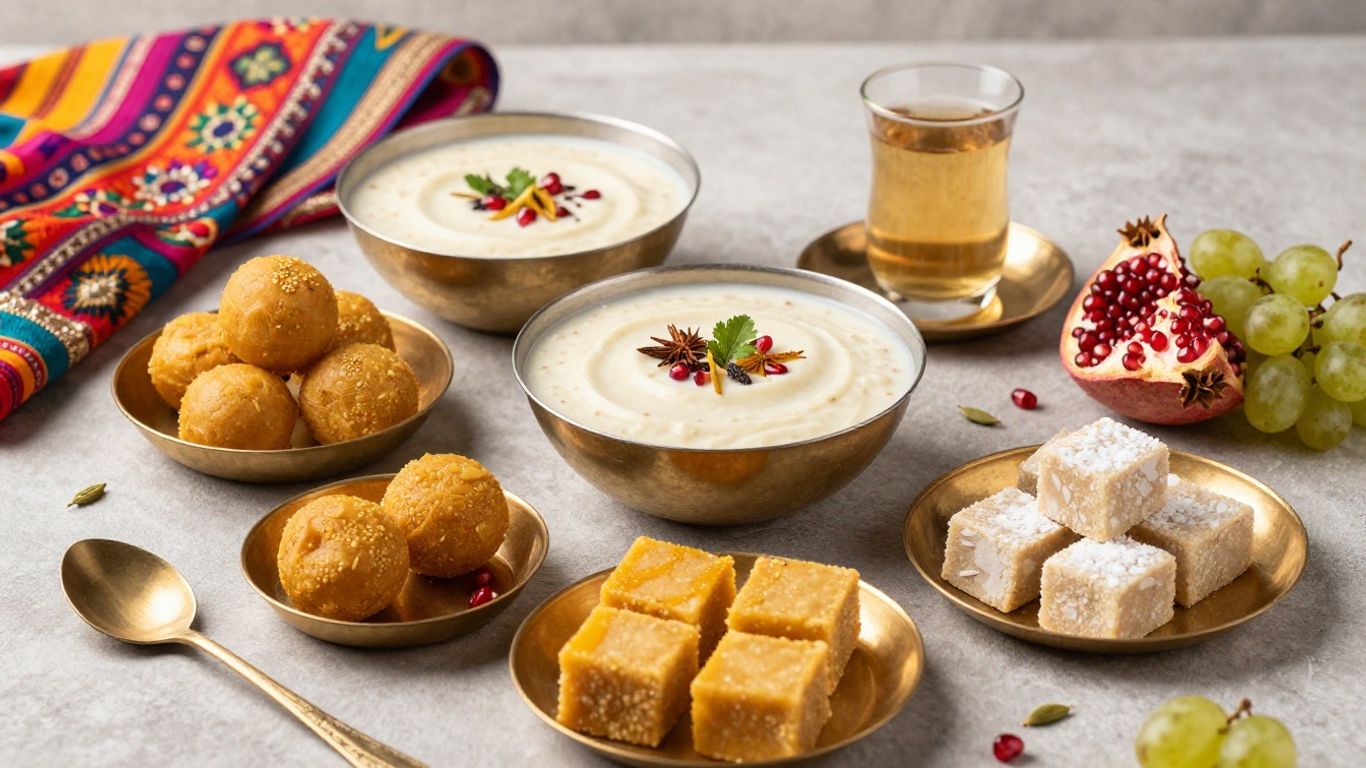
Classic Indian sweets for the dinner table
Kheer, gulab jamun, jalebi, ras malai, laddoo or barfi can all work, depending on what your family traditionally serves. Choose one or two rather than buying every variety, and cut larger sweets into smaller pieces so guests can taste them without committing to a large portion.
Serve sweets after the main meal has had time to settle. A small bowl or plate looks celebratory and makes it easier for people to decide how much they want.
Fruit-based options after the fast
Fruit offers a lighter-looking finish and adds colour to the table. Sliced pear, apple, grapes, pomegranate or a simple fruit bowl can be prepared earlier and served cold from the fridge. Keep the pieces easy to pick up and avoid covering them with too many competing flavours.
Fruit can also be offered at the beginning, alongside water, for anyone who would rather take a gradual approach to dinner. It is a simple way to give guests another choice without creating a second dessert.
Tea, lassi and other drink ideas
Water should remain easy to reach throughout the meal. Later, masala tea, plain lassi or a lightly flavoured drink can extend the evening, while cardamom tea pairs naturally with sweets. Keep drinks separate from the first few bites so the table does not become cluttered.
A jug of water, a bowl of yoghurt-based drink and tea made towards the end are usually enough for a small gathering. For a larger one, label any drinks containing dairy or nuts so guests can choose confidently.
Choosing treats that suit different preferences
A celebratory spread works best when it includes a range of textures and sweetness. Some guests may want a rich mithai, others a few pieces of fruit, and some may prefer tea after dinner. Ask about preferences before shopping, particularly when relatives are travelling in.
You can also keep one treat aside for the following day. That prevents the evening from becoming a test of how much everyone can eat and gives the celebration a pleasant aftertaste.
Build a practical dinner menu
A practical menu has a beginning, middle and end. Start with water and a small first bite, move to one or two mains with rice or bread, then finish with a sweet or fruit. This structure keeps shopping manageable and helps the cook decide what genuinely needs to be prepared at home.
A simple two-course menu for couples
For two people, try a small bowl of dal or yoghurt followed by rajma chawal, a seasonal sabzi and one sweet. This gives you a warm centrepiece without filling the kitchen with half-used ingredients. Add roti only if both diners genuinely prefer it to rice.
A smaller menu often feels more special when each dish has room on the plate. Set out the pickle and chutney in little bowls rather than adding another cooked course.
A larger spread for family celebrations
For a family gathering, choose two mains with different textures, one rice dish, one bread, one cooling side and one sweet. A serving table makes it easier for guests to build their own plates, and it keeps the host from carrying dishes back and forth throughout dinner.
Use this simple planning table to match the menu to the size and mood of the evening:
| Gathering | Main dishes | Accompaniments | Sweet finish |
|---|---|---|---|
| Couple | One dal or curry | Rice, yoghurt | One shared sweet |
| Small family | Two mains | Rice, roti, raita | Mithai or fruit |
| Larger gathering | Two or three mains | Rice, breads, sides | Two contrasting treats |
The table is a guide rather than a rule. If one dish is a family favourite, let it take the lead and keep the supporting dishes simple.
A low-effort menu for busy households
When the day is already full, make one dish at home and use prepared components for the rest. Rice, yoghurt, fruit and a purchased sweet can sit beside a single curry without the meal feeling unfinished. The point is to be present for the celebration, not to prove how many pans you can manage.
Saakshi's Kitchen meals are delivered frozen and ready to reheat, so they can be planned around the moon sighting rather than cooked at the last minute. Keep the instructions with each dish and allow enough time for reheating before the first serving.
Ingredient swaps for dietary preferences
Ask guests about preferences before finalising the menu, then make straightforward changes. Paneer or a vegetable curry can replace a meat dish, rice can stand in for bread, and a mild dal can give diners an option when a curry feels too rich.
For a mixed household, separate serving spoons and clear labelling are useful. They avoid awkward questions at the table and help everyone choose without having to inspect each dish.
Prepare and serve dinner with less stress
The calm of the evening often depends on what happens before the fast begins. Make a short plan, clear space in the fridge and decide which dishes will be served first. A little organisation means the host can join the moon-sighting ritual instead of watching the clock in the kitchen.
What to prepare before the fast begins
Before the day starts, wash and cut vegetables, portion garnishes and put serving dishes where you can find them. Make chutneys, raita and desserts ahead if they are part of the menu, and write down the reheating order for anything stored in the freezer.
A useful preparation list might include:
- Confirm the moon-sighting time and allow for a late start.
- Set aside water, first-bite foods and small plates.
- Label dishes with their names and any key ingredients.
- Check that rice, breads, cutlery and serving spoons are ready.
After that, the remaining jobs are easier to see. You will know what needs heat, what can be served straight away and what can wait until after the first course.
How to organise reheating and serving
Reheat the dish that takes longest first, then work backwards through rice, breads and sides. Keep lids on until the food reaches the table, and use smaller serving bowls so food can be replenished rather than left exposed for the whole meal.
If you are using frozen meals, Saakshi's Kitchen provides home-cooked Indian meals that are ready to reheat. Follow the packaging instructions and leave a little time between reheating and serving, so you are not assembling plates while guests are waiting.
Using frozen home-cooked meals for convenience
Frozen home-cooked food can be especially helpful when the household is observing the fast and nobody wants to cook a full dinner at the end of the day. Choose dishes that complement one another, rather than ordering a random assortment, and plan the rice, bread and sides around them.
Saakshi's Kitchen cooks home-cooked Indian meals in its FSA 5-star kitchen and delivers them frozen across mainland UK mainland. Its FSA 5-star kitchen is another practical detail for households that want a dependable meal plan without turning the festival into a takeaway-style spread.
Setting the table for a special evening
The table does not need elaborate decoration. Use your best plates, place water within reach and add a small bowl of flowers, fruit or candles if that suits your home. Keep serving dishes close enough for guests to help themselves, but leave clear space for the ritual items.
Dim lighting and a little music can make an ordinary dining room feel different. Most of all, sit down together when the first plate is served; the shared pause is part of what makes the meal memorable.
Conclusion
The best karwa chauth dinner ideas are generous in feeling, not necessarily in the number of dishes. Begin gently after moon sighting, serve food your family recognises, and prepare enough in advance that the evening belongs to the people gathered around the table.
Frequently Asked Questions
What is usually served for a Karwa Chauth dinner?
Common choices include dal, rice, roti, paneer or vegetable curries, seasonal sabzi, raita, chutney, pickles and an Indian sweet. Families often adapt the menu around their own traditions.
When should dinner be served on Karwa Chauth?
Dinner is generally served after the moon has been sighted and the customary rituals are complete. It can help to have a small first course ready before serving the rest of the meal.
What should someone eat first after breaking the fast?
Start with water and a small amount of a mild food, such as fruit, yoghurt, rice or dal. Larger portions can follow once the first few bites have settled comfortably.
How many dishes are enough for two people?
One main, one rice or bread option, a cooling side and a sweet are usually enough for a couple. Add a second main only if both diners particularly want it or if leftovers are useful.
Which sweets work well for Karwa Chauth?
Kheer, barfi, laddoo, jalebi, gulab jamun and ras malai are familiar choices. Fruit can be offered alongside them for anyone who prefers a less rich finish.
How can I plan a Karwa Chauth dinner when I am busy?
Prepare sides and desserts earlier, choose dishes that reheat well and keep the menu focused. A single curry with rice, yoghurt, fruit and one sweet can still feel festive.
How can I make the dinner feel special without cooking many dishes?
Use attractive serving bowls, warm the breads, place water within reach and give attention to the order of serving. A favourite family recipe and a calm table often matter more than a long menu.
Order home-cooked Indian meals from Saakshi's Kitchen · UK delivery locations.