

Indian Tiffin Service for Students in Oxford | Home-Cooked Delivery | Saakshi's Kitchen
Saakshi's Kitchen EditorialKey Takeaways
Oxford students can make term-time meals simpler by planning around their timetable, freezer space and delivery address. A frozen tiffin box can provide familiar Punjabi home cooking without relying on a takeaway every evening.
- Plan deliveries around lectures, placements and university breaks.
- Keep frozen meals in a clearly labelled part of the shared freezer.
- Choose portions that suit one student or a group order.
- Check your Oxford postcode and delivery details before paying.
- Reheat each meal according to the instructions on its packaging.
Indian food delivery for students in Oxford during term time
Term at Oxford can mean early lectures, long library sessions, society meetings and the occasional placement day. When cooking falls to the bottom of the list, a freezer-friendly meal can make the evening feel more manageable. The useful question is not only what you fancy, but when you will actually have time to eat. For students searching for indian food delivery for students oxford, planning matters as much as the menu.
Managing meals around lectures, libraries and placements
A meal waiting in the freezer gives you more choice than an improvised snack between commitments. You might eat before an evening seminar, after a late tutorial or during a quiet break at home. Since the meals arrive frozen and are ready to reheat, you can plan a few dinners without needing to cook every night.
It helps to look at the week as a whole. Mark the nights when you will be in college late, then keep those portions easy to reach. Leave more flexible meals for days when you expect to have time for shopping or cooking.
Choosing home-cooked Indian meals instead of takeaway
Restaurant Indian food can be a treat, but it is not always the meal you want on an ordinary Tuesday. Ghar ka khana means the kind of food associated with a family kitchen: dal tadka, rajma chawal, chole, kadhi or a seasonal sabzi, served as an everyday meal rather than a sharing platter. The cooking here follows a Punjabi home-style approach, with a masala built from onion, tomato, ginger and garlic, spices blended in the kitchen and a tadka added at the end.
That distinction can matter during a packed term. You can choose a portion, heat it when convenient and sit down with something that feels more like dinner than a last-minute order. For broader background on the format, this Oxford Indian tiffin service page explains the idea of frozen, ready-to-heat meals and one-off boxes.
Ordering for halls, shared houses and term-time addresses
Student accommodation can make delivery slightly less straightforward. Halls may have a reception desk, a block number or a preferred drop-off point, while a shared house usually needs the correct flat or room detail. Add your mobile number and any access instructions clearly, and make sure someone can receive the box when it is due.
If you move between addresses during term, keep the delivery address up to date rather than relying on an old checkout detail. Students in OX1, OX2, OX3 or OX4 should still confirm their exact postcode during the ordering process, as availability and delivery arrangements need to be checked for the individual address.
Planning deliveries around holidays and university breaks
Oxford terms have clear pauses, and student housing can be quiet during them. Before ordering, check when you will be away and how much freezer space you will have when you return. A smaller box may suit a short stay, while a larger order can work when several housemates are remaining in Oxford.
Do not arrange a delivery for a day when the property is empty. It is also sensible to leave room for frozen meals before the box arrives, particularly if you share a freezer with several people.
What Saakshi's Kitchen offers Oxford students
Saakshi's Kitchen prepares home-cooked Indian meals in a Brighton kitchen and delivers them frozen, ready to reheat. The food is intended for ordinary home meals, with familiar dishes and portions that can work for one person or a household. Students can use a box as a term-time store of meals rather than treating it like a restaurant order. The details below explain what that means in practice.
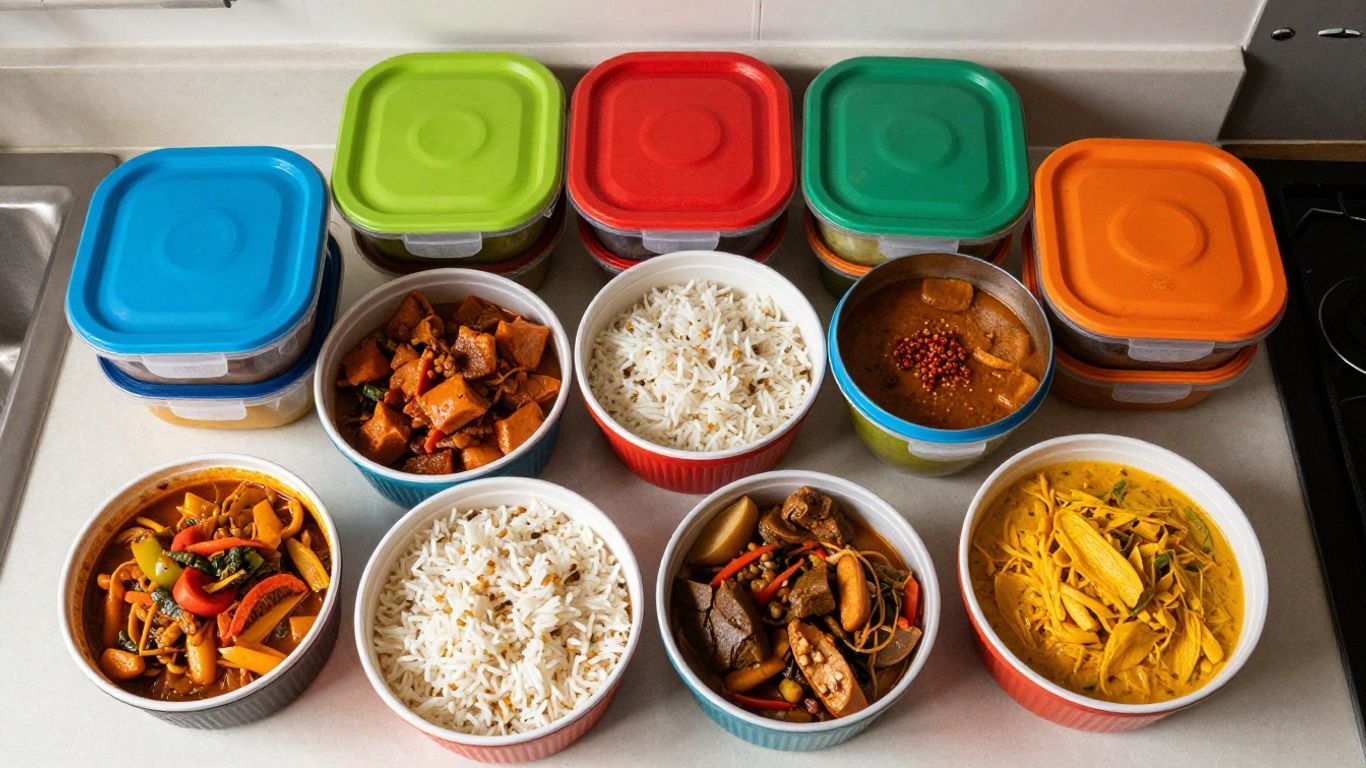
Ghar ka khana prepared in a Brighton kitchen
Saakshi's Kitchen makes home-cooked Indian meals, also described as ghar ka khana, in its Brighton kitchen. The approach is rooted in Punjabi family cooking: dal, rajma, chole, kadhi and sabzi are the sort of dishes that belong on a weekday table. The masala is built from scratch in each batch, with onion, tomato, ginger and garlic cooked properly before the dish is finished with a real tadka.
The flavour is spiced rather than simply hot, with the sort of heat level many families use at home. That makes the meals a practical choice when you want Indian food during term without ordering a restaurant-style spread.
Frozen meals designed to be stored and reheated
The meals are delivered frozen and designed to be stored in a freezer until needed. This suits students who do not know exactly which evening they will be home, since the food can wait while the timetable changes. Pack instructions tell you how to reheat each meal; follow them until the food is piping hot.
Think of the delivery as a small freezer plan. Put the meals away promptly, keep them frozen and bring out only what fits your evening. That simple routine is often easier than trying to coordinate cooking around every lecture.
Indian dishes for individual meals or shared ordering
A student may order for individual meals, while a group of housemates may prefer to combine choices in one box. The useful distinction is portion planning: decide whether each person wants a separate dinner or whether the order will form part of a shared meal. Meals are portioned as meals, not as a single restaurant platter intended for everyone at the table.
Before ordering, compare the number of portions with your likely week. A one-off box can suit a busy period, while a regular plan may fit students who want to keep a routine through term.
Halal kitchen-cooked meats
Saakshi's Kitchen states that its kitchen-cooked meats are halal. Students ordering meat dishes should still read the product information for the particular meal, alongside any preparation or storage guidance. Vegetarian choices can also be included when a household wants a mixture of dishes.
This is a useful point to check with flatmates before placing a shared order. Agreeing on meat and vegetarian preferences early avoids confusion at the checkout and when the box is divided.
How to order an Indian tiffin service for Oxford
Ordering need not become another task to postpone. Start with the delivery address, then look at the available meals and decide how many portions you will use. A little preparation is worthwhile when the food will be stored in a shared student kitchen. The Oxford delivery information page is a useful place to begin checking the local ordering route.
Finding the student ordering journey
Use the student-focused ordering route or the Oxford collection, then browse the available boxes and dishes. One-off ordering can work well for testing the routine, while a recurring arrangement may suit a student who already knows how many meals they need each week.
Take a moment to understand what arrives frozen, what needs freezer storage and how the meals are intended to be reheated. That gives you a clearer idea of whether the service fits your accommodation before you commit to a larger order.
Checking your Oxford postcode and delivery details
Enter the complete postcode and the address where you will be living during term. Oxford addresses can be detailed, particularly in halls or larger shared buildings, so include the building name, room or flat information where relevant. Check the delivery day and any access notes before confirming payment.
If your plans change, update the address before placing a later order. A delivery is easiest when the recipient, building access and freezer arrangements have all been considered in advance.
Choosing meals and reviewing product information
Read each meal description and note whether it is vegetarian or contains kitchen-cooked meat. Check the portion information, storage guidance and reheating instructions rather than choosing only by name. Familiar dishes such as dal tadka or rajma chawal can be a comforting starting point, while a mixed selection lets you vary the week.
The product page should answer practical questions about the individual meal. If anything remains unclear, pause before ordering and ask for clarification rather than guessing about storage or ingredients.
Coordinating an order with flatmates or family
A shared order can be organised in a group chat, with one person collecting dish choices and another checking the delivery details. Family members may also place an order for a student living away from home, provided the term-time address and recipient details are correct.
Keep a simple record of who has chosen which meals and how the cost will be divided. It removes an awkward conversation when the box arrives and makes it easier to repeat the order next time.
Making student meal deliveries work on a budget
A food budget is easier to manage when meals are planned before hunger makes the decision. Compare the cost of a box with the number of dinners it provides, then consider how often you would otherwise order food at short notice. The aim is not to remove every spontaneous meal, but to make weekday eating more predictable. Freezer space and delivery timing belong in the calculation too.
Comparing meal delivery with repeated takeaway orders
Takeaway spending can accumulate through several small orders, especially during essays, exams or long days in the library. A frozen meal box changes the timing: you pay for several portions together and use them across the week. The value depends on your actual habits, so count likely dinners rather than assuming every meal will be used.
A box also gives you a meal option at home when leaving the house feels like too much effort. That can make a planned order easier to compare with repeated delivery fees and last-minute decisions.
Planning portions across a busy week
Write down the evenings when cooking is least likely. Then match the order to those nights, leaving a little flexibility for plans changing. A simple weekly outline can be enough:
- Two meals for late lecture or placement days.
- One or two portions for library evenings.
- A spare meal for an unexpected change of plan.
- Fewer portions during a week when you will be travelling.
This approach keeps the order connected to your timetable. It also helps prevent a crowded freezer full of meals that do not match how you actually live.
Sharing an order with housemates
Housemates can reduce the practical friction of ordering by combining delivery details and choosing dishes together. One person may prefer vegetarian meals, while another may want a halal kitchen-cooked meat dish. Decide how the box will be divided before checkout, and check that there is enough freezer room for everyone.
A group order works best when it remains simple. Agree on the collection point, payment split and a message to confirm when the delivery has arrived.
Checking delivery timing, storage space and household needs
Cost is only one part of the decision. Ask whether someone will be home, whether the accommodation accepts food deliveries and whether the freezer has enough capacity. If the answer to any of these is uncertain, solve it before paying rather than after the box is on its way.
Small practical checks make the service easier to use. Students can also review a wider UK tiffin delivery guide when comparing how a freezer-based meal routine might work beyond Oxford.
Storing and reheating your delivered meals
Frozen delivery works best when the storage routine is clear from the start. Put the meals away promptly, keep them frozen and avoid balancing them on a crowded shelf where packets may be forgotten. In shared accommodation, a little organisation protects both your food and your housemates' space. Always use the packaging instructions for the particular meal.
Making room in a shared freezer
Before delivery, remove old items and decide which shelf or drawer is available. Keep your meals together, with the labels visible, so you can find the right portion without moving everything around. If the freezer is very full, speak with housemates before ordering a larger box.
A small inventory on your phone can help. Note the dish and date received, then choose meals in an order that suits your plans rather than opening several packets at once.
Following the reheating instructions on each meal
Different meals may need different timings, so read the pack rather than relying on memory. The instructions explain how to reheat the food, and meals should be heated until piping hot. Use the recommended appliance settings and allow the food to stand if the instructions say to do so.
That short pause is part of the process, not wasted time. It lets you prepare rice, a drink or the table while the meal finishes heating.
Allowing time for meals to thaw or heat safely
Some evenings leave no spare minute, but rushing can make reheating uneven. Check the instructions early enough to allow for the stated cooking or heating time, and use a suitable container if the packaging directs you to transfer the meal. Stirring or resting may be required for even heat.
Make the meal part of your evening plan. Taking it out when you get home, rather than when you are already hungry, gives you time to follow the guidance properly.
Handling leftovers and packaging in student accommodation
Serve only what you expect to eat and follow the packaging advice about any remainder. Do not leave food sitting out while you disappear to a seminar. Once you have finished, deal with the packaging according to your accommodation's recycling and waste arrangements, keeping shared kitchen surfaces clear.
A small rubbish bag and a designated freezer shelf can make the routine much less irritating for everyone. Good storage is ordinary housekeeping, but it is what keeps a convenient order convenient.
Why students and parents choose Saakshi's Kitchen
For students, familiar food can make a rented room feel a little more settled. Parents may value knowing that a term-time address has meals available without asking their child to cook after every long day. Saakshi's Kitchen brings together home-cooked Indian meals, a Brighton kitchen and frozen delivery, with proof points that give families context when choosing a service. The claims below describe the kitchen and the business's recorded customer response, not a guarantee about any individual order.
Home-cooked Indian meals for a taste of home
Saakshi's Kitchen makes home-cooked Indian meals, or ghar ka khana, for people who want the flavour and rhythm of family food while living elsewhere. Punjabi recipes such as dal, rajma, chole and kadhi fit the ordinary meal occasion rather than a special celebration. The same family-kitchen approach is intended to make ordering feel familiar, whether the recipient is a student or a parent arranging food from a distance.
FSA 5-star Brighton kitchen
Saakshi's Kitchen operates from a Brighton kitchen with an FSA 5-star rating. That is a specific kitchen and hygiene point, rather than a general promise about every part of a student's accommodation or routine. Students can still check the meal labelling and follow the storage instructions once the delivery arrives.
4.6★ from 800+ verified reviews
Saakshi's Kitchen has a rating of 4.6★ from 800+ verified reviews. Reviews can help a family understand how other customers experienced the service, but they should sit alongside practical checks such as postcode coverage, delivery timing and freezer capacity.
16,000+ deliveries and returning-family demand
Saakshi's Kitchen records 16,000+ deliveries, and 79% of orders come from returning families. These figures indicate ongoing use of the service, while each student still needs to decide whether the meals, portions and delivery arrangement suit their own term-time household.
Conclusion
For Oxford students, a frozen Indian tiffin box can turn uncertain weekday eating into a manageable part of the term routine. Check the postcode, plan around the timetable, leave room in the freezer and follow the reheating instructions. With those details sorted, home-cooked Punjabi meals can be ready for the ordinary Tuesday nights when cooking is the last thing you want to organise.
Frequently Asked Questions
Is an Indian tiffin service practical for Oxford students?
It can be practical when the delivery address, freezer space and weekly timetable are clear. Frozen meals allow you to keep portions at home and reheat them on the evenings that suit you.
Can students order meals for halls or shared houses?
Yes, provided the delivery details are accurate and the accommodation can receive the parcel. Include building, flat or room information where needed, and agree a storage space with housemates.
How should frozen tiffin meals be stored?
Put them into the freezer promptly and keep them frozen until needed. In shared accommodation, keep the meals together and make sure the labels remain visible.
How do you reheat a delivered Indian meal?
Follow the instructions on the individual pack, including the stated timing and appliance guidance. Heat the meal until piping hot and allow any recommended standing time before eating.
Is a one-off box better than a weekly order for students?
That depends on your timetable and how often you expect to be away. A one-off box can suit a short or changing term, while a regular order may suit someone who wants a repeating meal routine.
Can flatmates share a tiffin order?
Flatmates can coordinate a shared order by agreeing on dishes, portions, payment and freezer space before checkout. It is helpful to record who has chosen each meal when different preferences are involved.
What should parents check before ordering for a student?
Confirm the student's term-time address, delivery availability, preferred dishes and freezer capacity. It is also worth checking when the student will be away during university breaks.
Order home-cooked Indian meals from Saakshi's Kitchen · UK delivery locations.
Students: 15% off every order over £40
Verify once with Student Beans and 15% comes off every one-off order over £40 at checkout, for as long as you are studying. First order? Use FIRST20 for 20% off instead. One code per order, so the two do not stack.
Get the student discount → · Student meal boxes for students in Oxford