

Indian Tiffin Service for Students in Coventry | Home-Cooked Delivery | Saakshi's Kitchen
Saakshi's Kitchen EditorialKey Takeaways
A student tiffin service can make weekday meals simpler without turning dinner into another takeaway order. The practical details matter: storage, reheating, quantities and delivery availability all deserve a quick check.
- Frozen, ready-to-reheat meals can fit around lectures, shifts and study sessions.
- Punjabi home cooking brings everyday dishes such as dal, rajma, chole and kadhi to the weekly rotation.
- Students can choose individual dishes or plan several meals at once.
- Vegetarian meals and halal kitchen-cooked meats give households useful options.
- Checking the Coventry delivery area, meal labelling and freezer space helps avoid surprises.
Indian food delivery for students in Coventry: what to expect
Indian food delivery for students in Coventry is not always the same thing as ordering a restaurant curry. A tiffin service is built around everyday meals, portions and reheating, which can suit a student kitchen with limited time and equipment. The food arrives frozen, so the freezer becomes part of the meal plan rather than an afterthought.
How a tiffin service differs from a takeaway
A takeaway usually centres on ordering a meal for one occasion, often with sharing dishes and extras. Tiffin delivery is more useful when you want a few individual meals ready for different evenings. The idea is closer to a home kitchen’s weekly rhythm: dal, rajma, chole, kadhi or a seasonal sabzi, portioned as a meal rather than a platter.
That difference can be welcome after a long day at university. Restaurant Indian is celebration food; ghar ka khana is Tuesday night. A tiffin box is designed for the ordinary Tuesday, when you want dinner without shopping, chopping and washing several pans.
What home-cooked Indian meals from Saakshi's Kitchen include
Saakshi's Kitchen prepares home-cooked Indian meals in a FSA 5-star kitchen, with Punjabi family cooking as the reference point. The masala is built from onion, tomato, ginger and garlic, with the base bhuno'd properly and a tadka added at the end where the dish calls for it. That method gives the meals a recognisable home-kitchen character rather than one standard sauce used for everything.
Expect familiar pantry ingredients such as haldi, jeera, dhania, rai, hing, ajwain, methi and garam masala, alongside dal, atta, rice and ghee. Depending on the dish, a meal may include a sabzi, dal, roti or rice. The flavour is intended to be spiced rather than aggressively hot, which makes it easier to fit into a shared student household.
Why meals arrive frozen and ready to reheat
Frozen delivery gives students a practical way to keep meals until they are needed. You can put the boxes away after they arrive, then choose one when a lecture runs late or a shift changes your plans. Follow the reheating guidance supplied with the meal and make sure it is piping hot before serving.
This arrangement also helps parents who want to send food to a student without expecting daily coordination. The useful question is not whether a meal was delivered for one particular evening, but whether it can be stored safely and fitted into the week ahead.
Who the service may suit during term time
A tiffin service may work for students living in halls, shared houses or private accommodation, especially where kitchen time is limited. It can also suit a parent ordering meals for a student who misses familiar cooking. Students with different timetables can each reheat a portion when convenient instead of trying to eat together every night.
It is still worth checking the basics before ordering: freezer space, microwave access, spice preferences and any ingredient restrictions. A little planning at the start makes frozen meal delivery feel like part of the routine rather than a box that needs rescuing at the last minute.
Choosing meals around student routines
University weeks rarely follow a neat pattern. One day may have a morning seminar and an evening society meeting; another may leave plenty of time to cook. Choosing Indian meals around those changes means thinking in terms of occasions, portions and storage, not just picking the most tempting dish on the menu.
A small amount of variety helps too. Familiar favourites can anchor the week, while regional dishes offer something different without requiring a cupboard full of spices or a recipe search at 8pm.
Planning lunches, dinners and busy study days
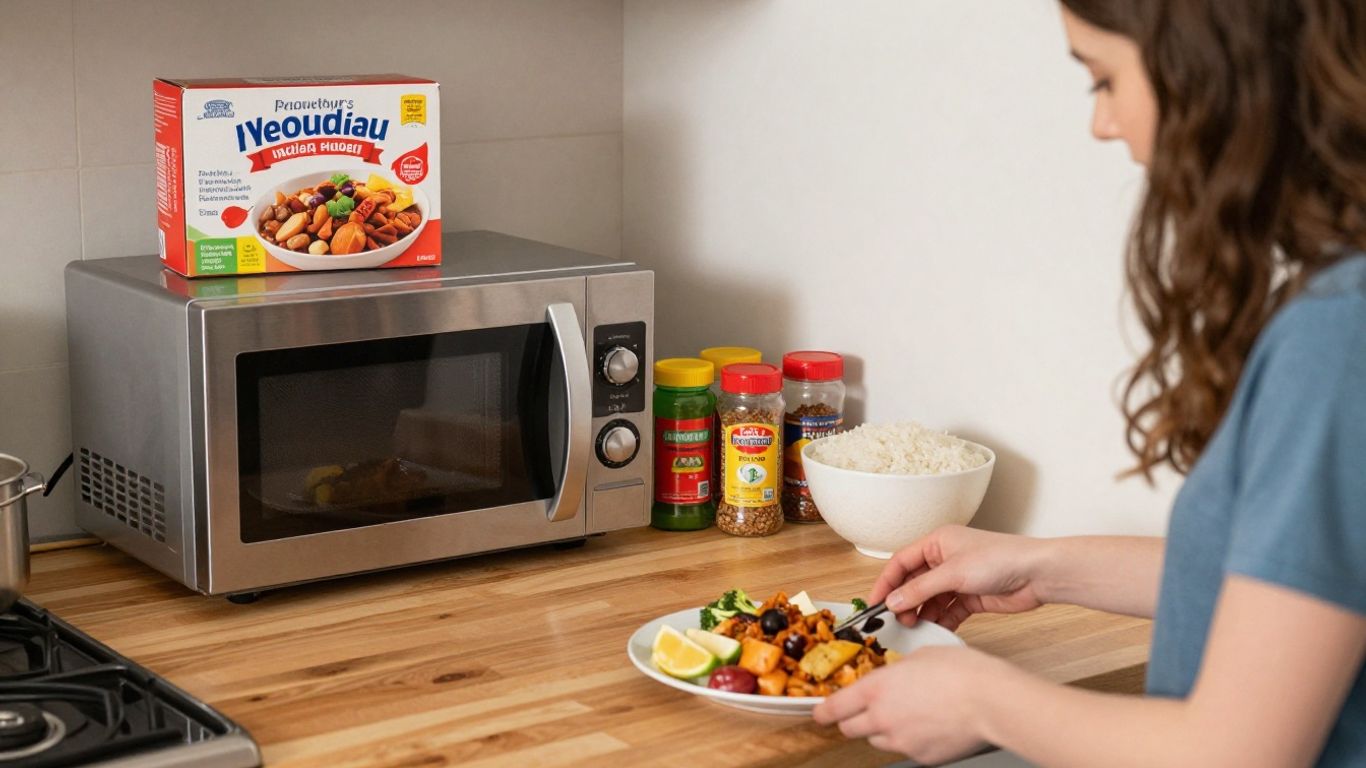
Start with the meals you are least likely to cook. For many students, that might be dinner after a late library session or lunch between campus commitments. Keep one or two portions for those awkward days and leave more flexible meals for evenings when you have time to prepare rice, salad or another side.
A useful plan does not need to cover every meal. It simply removes a few decisions from the busiest part of the week. A little planning goes far when the alternative is an expensive last-minute order made while tired.
Selecting individual dishes or meals for the week
Individual dishes make it easier to build a week around your own appetite and timetable. You might choose a few complete meals, then add a curry or dal to pair with rice or roti already in the cupboard. Students trying the service for the first time may prefer a smaller order before deciding which meals deserve a regular place.
Read the portion and preparation details carefully. The right quantity is the one that suits your evening, freezer and appetite, rather than the largest box available. It is also sensible to leave room for social meals and nights when you cook with housemates.
Balancing familiar favourites with regional Indian flavours
Familiar dishes can make a new routine feel settled. Rajma chawal is kidney beans with rice; chole is chickpeas cooked with spices; kadhi brings a tangy yoghurt-based curry to the table; and baingan bharta is smoky mashed aubergine. These are everyday-style choices with distinct textures and flavours, not interchangeable curry names.
Try pairing one known favourite with one dish you have not cooked before. That gives you an easy option on a busy night while keeping the weekly rotation from becoming repetitive. If you prefer gentler heat, check the dish description rather than assuming every curry will be fiery.
Ordering for one student or sharing with housemates
Ordering for one student keeps portion choices straightforward, but a shared house can make delivery more economical and varied. Housemates might agree on a mixed order, then label their boxes as soon as they reach the freezer. That avoids the familiar flat-share mystery of whose dinner is whose.
Before combining orders, check that everyone is happy with the spice level, meat choices and ingredient labelling. Shared delivery works best when quantities and costs are agreed before payment, not while the food is already on the doorstep.
Exploring the Saakshi's Kitchen menu
The menu is easiest to understand as a collection of meal components rather than a restaurant-style list of dishes. Students can think about what will make a complete dinner, what can be paired with cupboard staples and which flavours they would like to repeat. This approach leaves room for both dependable choices and regional variety.
For anyone with an allergy or strict dietary requirement, menu descriptions and labels should be read before ordering. A familiar dish name is not a substitute for checking its ingredients.
Curries, rice dishes and other meal components
Curries can form the centre of a meal, while rice, roti or dal may complete it depending on the box. Some students will prefer an all-in-one meal after class; others may enjoy choosing a curry and adding their own rice. The flexibility is useful in a small kitchen where cupboard staples vary from house to house.
Think about texture as well as flavour. A dal can sit alongside rice, a rajma dish can become a filling evening meal, and a vegetable preparation can add contrast to a spiced curry. The best combination is usually the one you will actually look forward to reheating.
Vegetarian choices and meat dishes
Vegetarian and meat dishes can be selected around personal preference and the needs of a shared household. A student who eats meat may still want several vegetarian meals in the freezer for variety, while a vegetarian flatmate can order separately without changing the rest of the delivery.
Keep the labels with the boxes once they are stored. This is especially helpful when several dishes look similar after reheating or when more than one person shares a freezer drawer.
Halal kitchen-cooked meats
The kitchen-cooked meats are halal. That gives students and families a clear point to consider when choosing meat dishes, while the menu still needs to be checked for the details of each particular meal.
If you are ordering for someone else, ask them which meats and spice levels they prefer before building the box. A short message can prevent an otherwise avoidable substitution or misunderstanding.
Checking ingredients and allergens before ordering
Ingredient checking belongs before payment, not after delivery. Read the menu information, look for allergen labelling and contact the service if a detail is unclear. Do not rely on a dish being familiar or on a housemate’s assumption about what it contains.
It is helpful to keep a note of meals that worked well and any ingredients that need avoiding. That makes future ordering quicker without treating the first order as a blanket answer for every dietary question.
How to order Indian tiffin delivery to Coventry
Ordering should take only a few deliberate steps, but availability comes first. Coventry has students spread across different neighbourhoods and postcodes, so the delivery checker is more useful than guessing from a general service area. Once availability is confirmed, the remaining decisions are mainly meals, quantities and delivery details.
The Coventry student delivery page is the natural starting point for a student order. It keeps the search focused on the relevant city and audience rather than making you work through unrelated options.
Finding the Coventry student delivery page
Begin with the student-facing Coventry page and browse the available meal choices. Look at the dish descriptions, portion information and storage guidance as you go. If you are ordering for a student from home, it helps to have their address and preferences nearby.
Do not assume that a page for another city applies to Coventry. Delivery areas, days and options can vary, so use the page that matches the student’s location.
Using a university or postcode to check availability
Enter the relevant university or postcode when the page asks for it. A university address may be useful for halls, while a postcode is usually the better check for a private house or shared accommodation. Make sure the delivery address is one where someone can receive the order.
If the result does not look right, check the postcode carefully and try the full delivery address. It is better to resolve availability before choosing meals than to build a basket that cannot be sent to the student.
Choosing delivery options and quantities
Choose between individual meals and any available meal-box or weekly-plan format according to the student’s timetable. Count freezer space before ordering, especially in shared accommodation where one small drawer may serve several people. A modest first order can help establish how quickly meals are used.
For a weekly order, mark which meals are intended for late nights, which are flexible and which should be eaten earlier. That simple distinction can make the freezer much easier to manage.
Reviewing the order before payment
Review the address, delivery choice, quantities and meal labels before payment. Check that vegetarian selections, meat dishes and spice preferences match what the student expects. If an ingredient needs clarification, ask before placing the order rather than relying on a guess.
The final review is also a good moment to confirm that the recipient has freezer space and a suitable way to reheat the meals. Those small details are what turn an online order into a workable term-time plan.
Storing and reheating your meals
Frozen food is convenient only when it is handled with care. Clear a space in the freezer before delivery, keep the meal labels visible and follow the instructions supplied with each box. Students sharing a kitchen should agree where the food will go before the delivery arrives.
Reheating is part of the service, not an invitation to improvise. Microwave power, meal size and equipment can differ, so use the package instructions as the primary guide.
Putting frozen deliveries away safely
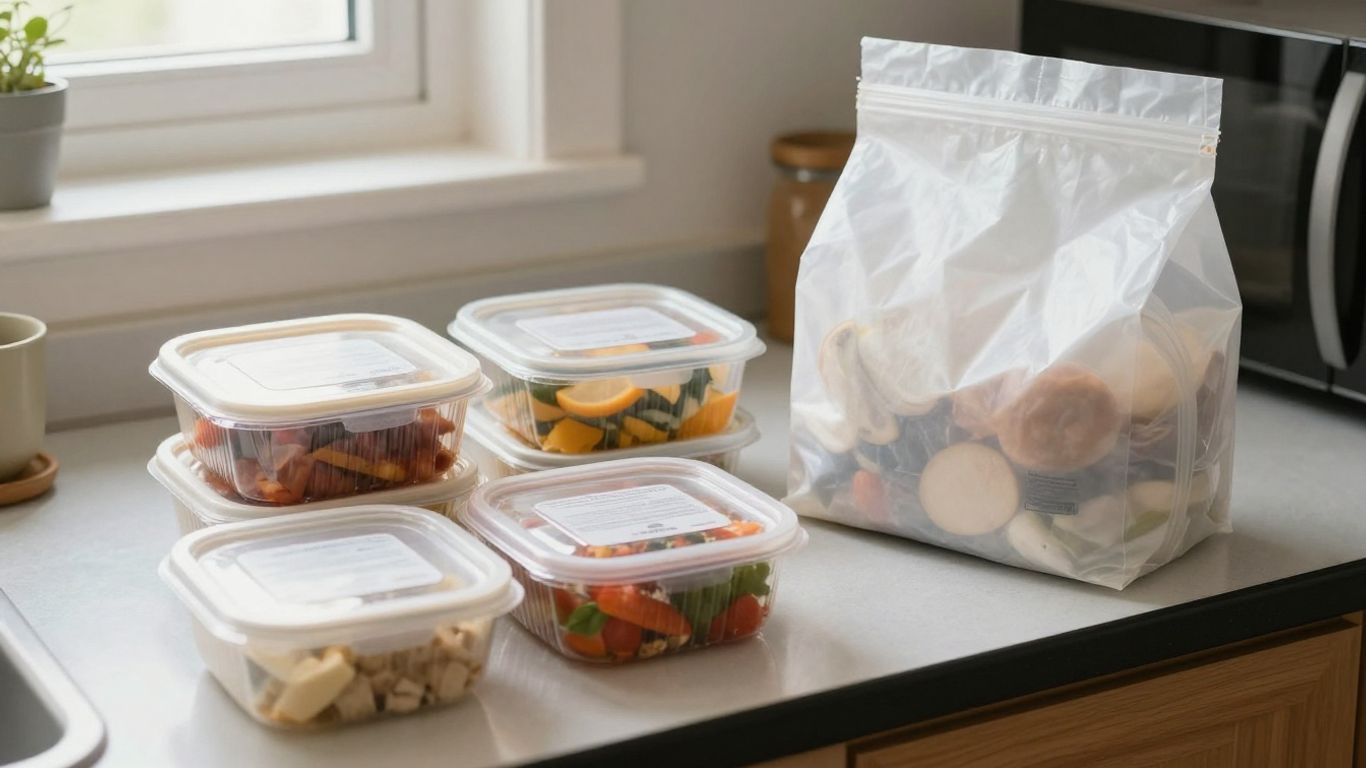
Move the meals into the freezer as soon as you can after receiving them, following the delivery and storage guidance provided. Stack boxes so labels remain readable and avoid burying the portions you intend to use first. If the freezer is full, that is a sign to order fewer meals next time rather than squeezing boxes into an unsafe space.
A simple first-in, first-out arrangement works well. Put the earliest planned meals where they are easiest to reach, and keep a note on the fridge if several housemates are using the same freezer.
Following the reheating instructions on each meal
Read the instructions on the individual meal rather than applying one time to every dish. Heat it for the stated period, stir or stand it if directed, and check that it is piping hot throughout before serving. Equipment varies, so add care rather than assuming the first attempt will be identical to the last.
For a busy student, the most useful habit is to start the microwave before unpacking everything else. Once the meal is heating, the rest of dinner can be organised without needing a saucepan or several ingredients.
Planning defrosting around lectures and shifts
You can plan reheating around the moments when you know cooking will be difficult. Take a portion from the freezer according to its instructions, allow any required standing or defrosting time, and leave enough space in the evening for safe preparation. Avoid making a meal depend on a five-minute gap between two commitments.
A weekly calendar can show which evenings need the quickest option. It also prevents the same favourite being eaten twice simply because it was the easiest box to reach.
To make that routine practical, many students find it useful to keep these habits together:
- Check the meal instructions before the evening becomes rushed.
- Keep labels visible and separate personal orders in a shared freezer.
- Leave time for the meal to stand or cool as directed.
- Plan a backup option for nights when plans change.
These small steps do not add much work, but they make reheating more predictable. They also reduce the chance of forgetting a box until it is buried behind everything else.
Serving and handling leftovers responsibly
Serve the meal once it has reached the required temperature and use clean utensils. If there are leftovers, follow the package guidance rather than repeatedly reheating the same portion. When in doubt about storage after heating, check the label or ask for clarification.
Students often eat at irregular times, so portioning onto a plate before sitting down can help avoid leaving a half-heated box on the desk. Treat leftovers as a food-safety question, not merely a tidying-up job.
Making a student meal plan work
A meal plan should reflect real student life, including nights out, society events, cooking with friends and the occasional meal on campus. It does not need to replace every other way of eating. Instead, it can provide a dependable base for the days when time, energy or kitchen access is limited.
The most useful measure is how consistently the meals fit the week. If the freezer stays crowded or several boxes remain untouched, reduce the next order. If meals disappear quickly, adjust the quantity gradually.
Estimating how many meals to order
Begin by counting the evenings when cooking is unlikely. Add a few lunches only if the student normally eats at home during the day, then leave space for plans that cannot be predicted. Ordering for four or five difficult meals is often easier to assess than trying to plan every breakfast, lunch and dinner for a whole month.
After the first delivery, compare the planned number with what was actually eaten. That real-world record is more useful than an ambitious timetable made before term gets busy.
Comparing tiffin delivery with cooking and takeaway costs
Compare like with like. Cooking involves ingredients, preparation time, washing up and the risk of unused food; takeaway involves a single order and often extra items; tiffin delivery involves planned portions and freezer storage. The cheapest option on paper may not be the one a student can manage consistently.
A simple weekly calculation can include the number of meals, delivery cost, cupboard ingredients and any meals bought elsewhere. It gives the student a clearer view without pretending every week will follow the same pattern.
Coordinating orders with flatmates
Flatmates can share delivery logistics even when they choose different meals. Agree who will receive the box, how payment will be split and which freezer shelf belongs to whom. Keep meat and vegetarian selections clearly labelled, and make sure everyone knows the reheating arrangements.
If one person is collecting preferences, set a cut-off time before ordering. That avoids a last-minute group chat full of substitutions and makes the final basket easier to check.
Using a repeat order routine during the university term
A repeat routine can be as simple as reviewing the freezer every Sunday and choosing meals for the coming week. Keep a short list of favourites, dishes to try and meals that were not a good fit. This gives future orders a memory without forcing the same menu every time.
It is also worth reviewing the routine after reading week, moving house or changing work hours. Student schedules shift quickly, and a useful plan should shift with them rather than becoming another obligation.
| Weekly question | Why it helps | Practical check |
|---|---|---|
| How many meals were eaten? | Sets a realistic quantity | Compare planned and actual use |
| Which dishes were repeated? | Identifies reliable favourites | Keep a short meal list |
| Is freezer space available? | Prevents overcrowding | Check before ordering |
| Did delivery suit the address? | Confirms the routine works | Recheck after moving |
The table is best used as a quick Sunday review, not a rigid rule. Four clear answers can tell you whether to repeat the order, change the quantities or pause until the next busy week.
Why students and parents choose Saakshi's Kitchen
Parents and students often want the same thing: food that feels familiar, but a routine that works from a distance. The appeal is not only convenience. It is the combination of everyday Punjabi cooking, frozen delivery and clear meal choices for a student household.
The FSA 5-star kitchen story gives useful context for how the wider service is positioned, while the student still needs to check the Coventry page for local availability. That distinction keeps the emotional reason for ordering separate from the practical delivery check.
Home-cooked Indian food prepared in a FSA 5-star kitchen
Saakshi's Kitchen prepares home-cooked Indian meals in a FSA 5-star kitchen, drawing on family recipes and the everyday pantry of Punjabi cooking. The menu language is grounded in dishes such as dal tadka, rajma, chole and kadhi, with the masala built from scratch in each batch rather than relying on a standing gravy base.
For a student living away from home, those details can matter more than a long restaurant menu. A familiar dish, portioned for one and waiting in the freezer, can make an ordinary weekday feel a little more settled.
The reassurance of an FSA 5-star kitchen
The kitchen has an FSA 5-star rating. For parents, that provides a clear, specific piece of reassurance about the setting in which the meals are prepared, while students can focus on the practical details of delivery and reheating.
It should sit alongside sensible food handling at home. Once meals arrive, the recipient remains responsible for storing and heating them according to the supplied instructions.
Customer feedback and returning-family orders
The available customer evidence includes a 4.6★ rating from 800+ verified reviews, 16,000+ deliveries and the fact that 79% of orders come from returning families. These figures describe the service’s recorded activity; they are not a promise that every student will have the same experience.
Returning orders can still offer a useful clue. Families tend to come back when the meals fit their household’s taste and routine, but an individual student should make their own decision after checking the menu and delivery details.
Getting support when an order or ingredient needs clarification
Questions about an ingredient, delivery detail or reheating instruction are worth raising before payment or before opening a meal. Keep the order reference and meal label nearby so the question can be answered accurately. This is especially helpful when a parent is ordering for a student who is not at home.
Good support should clarify the particular point rather than invite assumptions. If the answer changes what you want to order, update the basket only after the detail is clear.
Conclusion
A student tiffin plan works best when it is treated as part of real university life: a few reliable meals for busy days, enough variety to keep the freezer interesting and sensible checks around delivery, storage and ingredients. For students and parents considering Indian food delivery for students in Coventry, the right starting point is a Coventry availability check followed by a modest order that matches the student’s timetable and freezer space.
Frequently Asked Questions
What is a tiffin service?
A tiffin service provides prepared individual meals or meal boxes designed to be stored and reheated, giving students an alternative to cooking every day or ordering a takeaway each evening.
Are tiffin meals suitable for student accommodation?
They can be, provided the accommodation has enough freezer space and a suitable way to reheat the meals. Shared houses may also need a clear system for labelling and storing each person’s food.
How many meals should a student order?
Start with the number of lunches or dinners that are usually difficult to prepare during the week. After the first order, adjust according to what was actually eaten and how much freezer space remains.
Can housemates share one delivery?
Housemates can share delivery logistics while choosing separate meals. They should agree on payment, quantities, dietary requirements, labelling and freezer space before ordering.
How should frozen tiffin meals be reheated?
Follow the instructions supplied with the individual meal, including the stated heating time and any standing guidance. Check that the food is piping hot throughout before serving.
Should ingredients and allergens be checked before ordering?
Yes. Read the menu and meal labelling before payment, and ask for clarification if an ingredient or allergen detail is not clear. Do not rely only on the dish name.
Can parents order meals for a student in Coventry?
Yes, a parent can arrange an order, but they should confirm the student’s delivery address, availability to receive it, freezer space, reheating equipment and meal preferences first.
Order home-cooked Indian meals from Saakshi's Kitchen · UK delivery locations.
Students: 15% off every order over £40
Verify once with Student Beans and 15% comes off every one-off order over £40 at checkout, for as long as you are studying. First order? Use FIRST20 for 20% off instead. One code per order, so the two do not stack.
Get the student discount → · Student meal boxes for students in Coventry