

Indian birthday party food at home: how to plan a memorable menu
Saakshi's Kitchen EditorialKey Takeaways
A memorable birthday meal at home comes from thoughtful choices rather than an enormous spread. Plan around the people, the room and the amount of cooking you can genuinely manage.
- Confirm guest numbers, ages and dietary requirements before choosing dishes.
- Build contrast with snacks, substantial mains, rice or breads, cooling sides and dessert.
- Choose food that can be prepared ahead and served without constant kitchen attention.
- Organise quantities, equipment and timings several days before the party.
- Keep the atmosphere relaxed so you can enjoy the birthday as well.
Start with the guest list and party format
The guest list is the foundation for Indian birthday party food at home. A gathering of eight adults needs a different rhythm from a room full of children, parents and grandparents. Before choosing recipes, write down who is coming, when they will eat and how much space they have to move around. That small bit of planning prevents both waste and last-minute panic.
Estimate portions for children and adults
Children often graze on starters, cake and a few familiar sides rather than eating a full adult plate. Adults usually want a proper portion of the main meal, especially if the party runs through lunchtime or dinner. Count likely eaters rather than simply multiplying one serving by the whole guest list, then add a modest margin for popular dishes.
It is also worth asking whether guests will arrive hungry or after another activity. A generous snack table can reduce pressure on the main meal, while a short afternoon party may need little beyond savoury bites, drinks and cake.
Account for vegetarian, halal and allergen requirements
Ask about dietary requirements when invitations go out, not when people are already reaching for a serving spoon. Keep vegetarian dishes clearly separate from meat dishes, and check each recipe for nuts, dairy, gluten-containing ingredients and other allergens. If you are serving halal meat, make sure the preparation and serving utensils are handled accordingly.
A simple menu note beside each dish is more useful than expecting guests to ask. When ordering, Saakshi's Kitchen can be considered for a celebration menu; its kitchen-cooked meats are halal, while the rest of your menu should still be checked dish by dish.
Choose between a sit-down meal and a relaxed buffet
A sit-down meal feels special, but it needs enough chairs, table space and coordinated serving. A buffet is generally easier for a birthday because guests can eat at different times and choose their own combination of dishes. It also lets children sit together while adults circulate, talk and help with younger guests.
Put plates at one end and cutlery and napkins at the other, so the queue moves naturally. Keep sauces and chutneys near the dishes they accompany, and leave enough room for people to return for seconds without blocking the whole table.
Plan for the available kitchen and serving space
Walk through the journey from freezer, fridge or oven to table before you finalise the menu. A small kitchen may cope better with one large pot and a few oven trays than with several pans that all need attention at once. Measure the surface available for serving bowls, drinks and cake, too.
If the room is tight, use a sideboard or a second table for drinks and desserts. Keep the main walkway clear, and reserve one quiet corner for plates, serving spoons and containers. Even practical questions such as a home-buying guide can remind us that the space itself shapes how people use it; the same is true of a party room.
Build a balanced Indian birthday party menu
A good menu has a little movement in it: crisp beside soft, tangy beside mellow, and a few dishes that feel familiar alongside something guests may not have tried. You do not need every regional speciality on one table. Three or four well-matched elements usually feel more generous than ten unrelated dishes.
Select crowd-pleasing starters and snacks
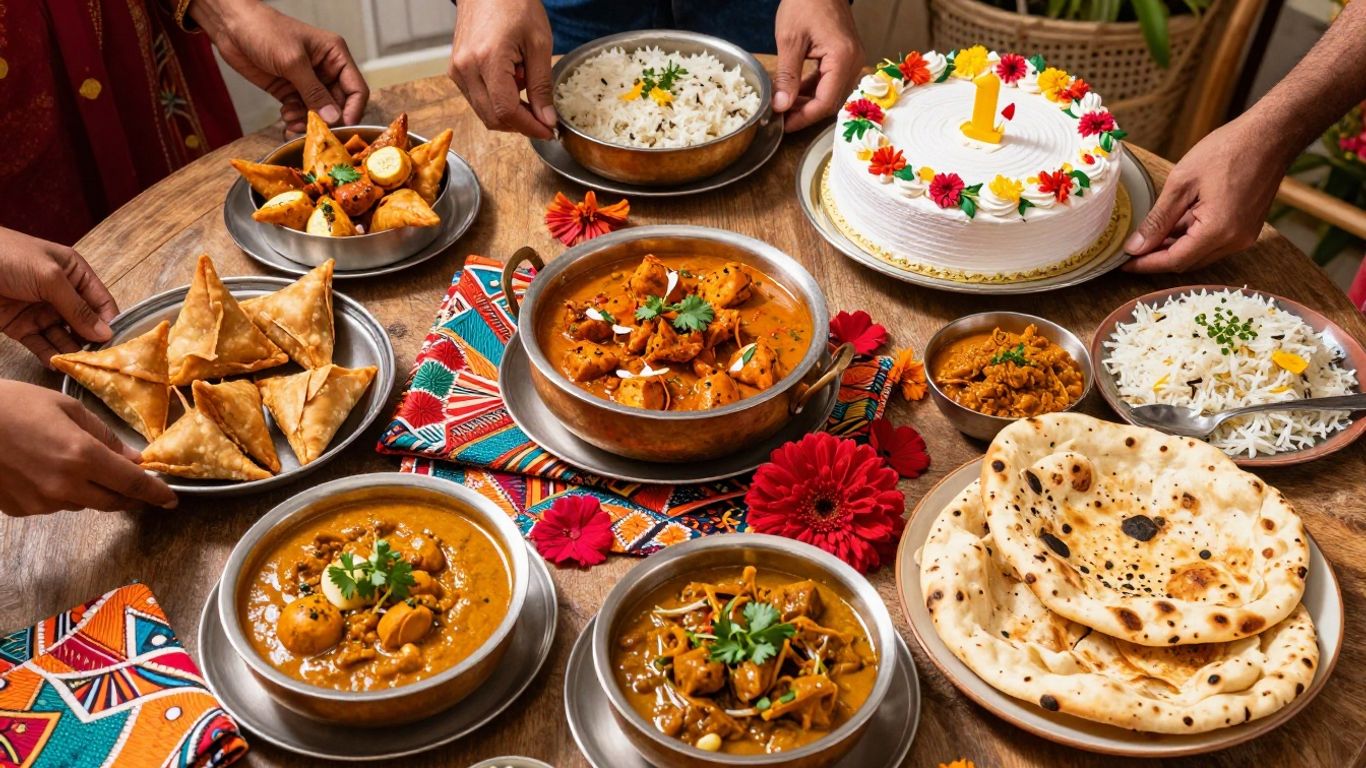
Start with food that can be eaten while standing and chatting. Samosas, pakoras, paneer tikka, aloo tikki and small kebabs all work well, provided they are served in manageable portions. Include at least one vegetarian option, and offer chutneys in small bowls so guests can adjust each bite.
For more ideas, browse this collection of vegetarian party starters or use a party platter guide for inspiration. Choose two or three starters rather than preparing every appealing recipe; variety is helpful, but a crowded table can make the whole menu feel unfocused.
Choose substantial mains with different flavours
Choose one saucy main and one drier or roasted dish, then decide whether you want a vegetarian centrepiece as well. Rajma chawal brings slow-cooked kidney beans and rice, chole offers a spiced chickpea dish, and kadhi gives the table a gently tangy yoghurt-based option. A chicken curry or paneer dish can sit alongside them without making every plate taste alike.
Saakshi's Kitchen provides frozen, ready-to-reheat home-cooked Indian meals, which can be useful when the host wants proper mains without cooking every pot on the day. The combination still works best when you add contrast with sides and garnishes rather than ordering several similar curries.
Add rice, breads, raita and chutneys
Rice or biryani gives guests an easy base, while naan, roti or paratha makes a saucier dish feel complete. Raita brings a cool, creamy contrast, and mint, tamarind or coriander chutney adds brightness in small amounts. Think of these as the framework that helps guests build a plate, not as extra dishes that need complicated preparation.
Keep breads wrapped until serving so they remain soft, and put rice in a broad bowl for easier serving. A few lemon wedges, sliced cucumber and chopped coriander can make a simple buffet look considered with very little work.
Include a birthday cake and Indian-inspired desserts
The birthday cake remains the centre of the celebration, so give it its own table or clear space away from the savoury dishes. Alongside it, offer one Indian-inspired sweet such as gulab jamun, kulfi, jalebi or a small tray of burfi. A single additional dessert is usually enough, particularly when children are already looking forward to cake.
Serve bite-sized sweets after the photographs and candles, rather than placing everything out at once. If you want to plan a wider celebration folder, a bridal glow timeline is an unrelated but useful reminder that memorable occasions benefit from preparation well before the event.
Choose dishes that are practical for home entertaining
The best party dish is not necessarily the one with the longest ingredient list. It is the one that tastes good after resting, can be portioned neatly and does not demand your attention when the doorbell rings. When you choose food for the way it behaves in a real kitchen, hosting becomes much more comfortable.
Prioritise recipes that can be prepared in advance
Curries, dals, marinades, chutneys and many desserts can be made or portioned ahead. This gives flavours time to settle and leaves the party day for reheating, garnishing and welcoming people. Make a short note beside every recipe showing what can be completed early and what must wait.
A useful home-cooking preparation guide can help you think about pantry staples and advance chopping. Keep the plan realistic: two make-ahead dishes are more valuable than six ambitious ones that all need finishing together.
Pick dishes that hold well on a buffet
Choose dishes that stay appealing for a reasonable serving window. Dal, rajma, chole and many curries are forgiving when held warm, while fried snacks are best served in smaller batches so they retain their texture. Put only part of each dish out if guests will be eating over a long period, replenishing from the kitchen when needed.
Use wide, stable bowls and serving spoons that match the food. A deep bowl for rice and a shallow one for starters will make the table easier to navigate and reduce accidental spills.
Avoid a menu with too many last-minute cooking steps
Do not plan a menu that requires frying, blending, griddling and bread-making at the same time as candles are being lit. Pick one special finishing task, such as warming naan or tempering dal, and make everything else straightforward. The host should be able to leave the kitchen for more than thirty seconds.
A useful test is to write the final hour as a timeline. If the list contains more jobs than one person can reasonably do, remove a dish or replace it with something that reheats well. This is also where Saakshi's Kitchen can fit into a plan, with frozen meals that are ready to reheat.
Match spice levels to your guests
Spice should create flavour and warmth, not make every guest reach for water. Keep the main dishes moderately spiced when children or mixed-age groups are attending, then offer chilli pickle, sliced chillies or a hot chutney separately. This lets confident spice eaters add heat without changing the whole meal.
Remember that milder does not mean bland. Ginger, garlic, cumin, cardamom, coriander and a finishing tadka can give depth without relying on chilli heat.
Plan quantities, shopping and serving equipment
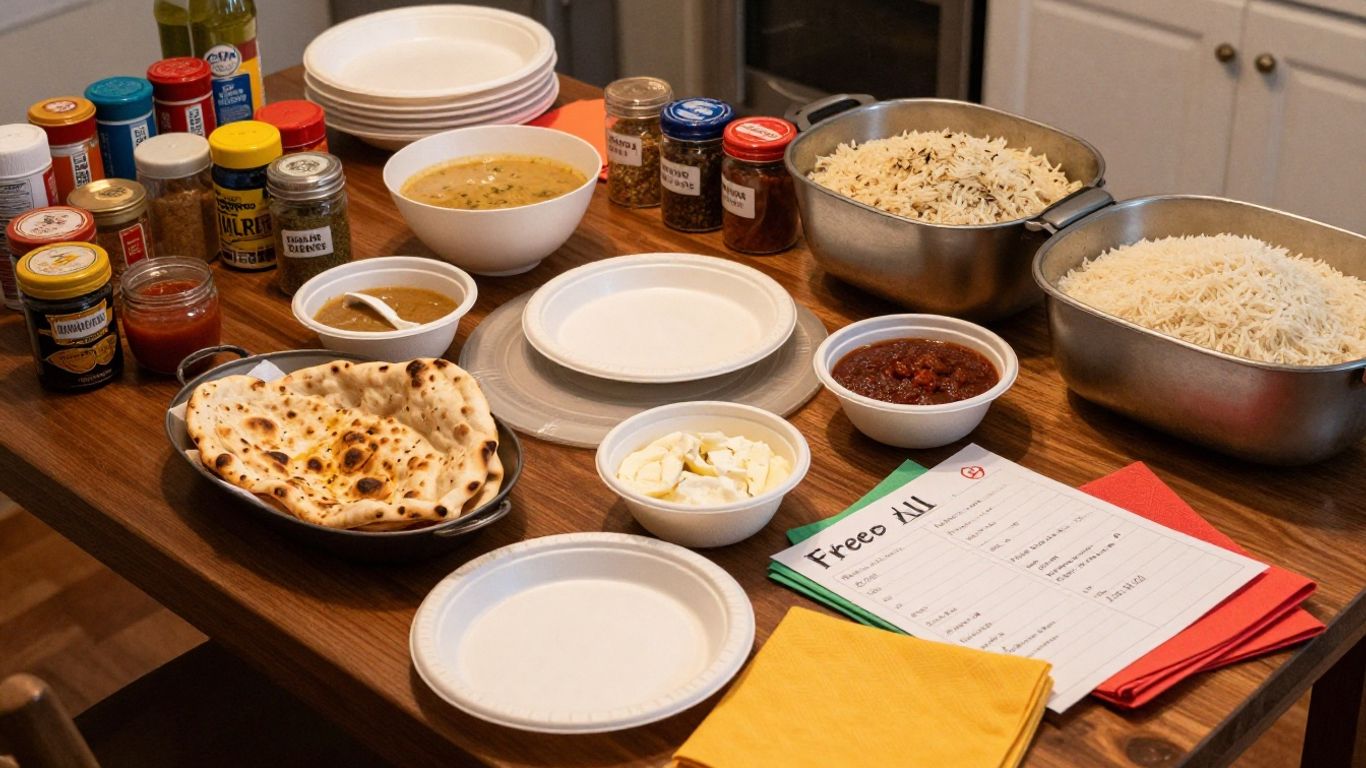
Once the menu is settled, turn it into a practical list. Count portions, check what you already own and decide which dishes need oven space, hob space or refrigeration. A little paperwork here saves repeated trips to the shops and avoids discovering that the only large serving bowl is already being used for salad.
Work out how much food to prepare
Estimate starters by the number of pieces guests are likely to eat, then calculate mains by adult portions with a smaller allowance for children. Add extra rice, breads and raita before adding another curry; these supporting foods often stretch a meal more effectively. If you are using ordered meals, check the supplier's stated serving guidance rather than guessing from the container size.
This simple table gives you a starting point. Adjust it for the time of day, the age mix and whether cake is served soon after the meal.
| Menu element | Starting guide per adult | Planning note |
|---|---|---|
| Starters | 3–5 pieces | Use fewer if the meal follows quickly |
| Main curry or substantial dish | 200–250 g | Offer two different mains rather than large amounts of each |
| Rice or biryani | 150–200 g cooked | Add more when breads are not served |
| Raita and chutney | 2–3 tbsp each | Small bowls can be replenished |
| Dessert besides cake | 1 small portion | Choose one Indian sweet for simplicity |
Use the table as a guide, not a rule. It is better to have a little extra of rice or dal than to overbuy several rich mains that guests may only sample.
Create a shopping list by recipe and food category
Write ingredients under headings such as produce, dairy, cupboard staples, spices, drinks and disposable supplies. Then check each recipe for duplicates: onions, tomatoes, yoghurt, coriander, rice and lemons often appear several times. Mark items that must be bought close to the party and those that can be stored earlier.
If you are cooking from scratch, a classic Indian dishes guide may help you settle on a manageable group of recipes. For ordered food, keep a separate list for reheating instructions, collection or delivery timing and any serving garnishes you want to add yourself.
Gather warmers, serving bowls and reusable tableware
Count plates, bowls, glasses, forks and serving spoons before the day itself. You may need insulated carriers, foil, ovenproof dishes or electric warmers, but do not place hot equipment where children can pull at cables. Use labels on serving utensils if vegetarian and meat dishes need to remain separate.
Plan where every dish will sit before food arrives. A buffet with clear gaps between bowls is easier to use than a tightly packed table, and it leaves room for people to put down their plates while serving themselves.
Label dishes and keep allergen information visible
Labels can be as simple as “paneer tikka — vegetarian” or “chicken curry — contains dairy”. Include the main allergens where relevant and tell guests if a chutney contains nuts, sesame or yoghurt. This is especially helpful when several dishes look similar or when children are choosing food independently.
Put the labels in front of the bowls rather than behind them. A small card also means you will not need to answer the same question throughout the meal, leaving more time for conversation.
Organise a stress-free preparation schedule
A calm party usually begins with a calm week. Work backwards from the time guests arrive, allowing space for reheating, dressing the table and changing clothes. The schedule should protect a little breathing room, because birthday parties rarely run exactly to the minute.
Prepare make-ahead dishes the day before
Make chutneys, desserts, marinades and dishes that improve after resting on the previous day where suitable. Portion ordered frozen meals into labelled ovenproof containers only if the supplier's instructions allow it, and keep everything stored as directed. Put the next day's cooking order on the fridge door so you do not need to remember it while busy.
Do not crowd the refrigerator with uncovered bowls. Covered, labelled containers make it easier to see what is ready and reduce the chance of mixing up ingredients or portions.
Complete chopping, garnishing and table setting early
Chop vegetables, wash herbs, set out plates and arrange decorations well before guests arrive. Keep delicate garnishes separate until serving, but prepare the bowls and spoons in advance. If children are helping, give them a safe task such as folding napkins or arranging paper decorations.
A small checklist makes the final hour less scattered:
- Put drinks in their serving area.
- Set out labels and serving utensils.
- Check the oven and reheating order.
- Move the cake into its planned position.
Once these jobs are done, the remaining work is usually simple finishing rather than a complete kitchen reset. That distinction makes a big difference to how present you feel at your own party.
Keep hot and cold foods at appropriate temperatures
Follow the cooking, storage and reheating instructions for every dish, especially frozen food. Heat food thoroughly, keep hot dishes hot for serving and return perishable cold dishes to refrigeration when they are not needed. Use smaller serving bowls and replenish them rather than leaving the entire supply out for hours.
Keep raw ingredients away from ready-to-eat food, and use clean utensils when topping up a bowl. If you are uncertain about a particular dish, follow the label or ask the supplier before serving it.
Leave time for the cake, photos and welcoming guests
Build in at least half an hour before arrival for getting dressed, checking the cake and taking a few photographs. The birthday child may want a quiet moment before the noise begins, and adults often arrive with coats, gifts and questions. A host who is ready early can greet people warmly instead of apologising from behind a saucepan.
Keep the final food check short and visible: reheating underway, drinks accessible, cake safe and music ready. Then step away from the kitchen when the first guests arrive.
Use frozen, ready-to-reheat meals to simplify the party
Frozen, ready-to-reheat meals can take the pressure off without turning the celebration into a compromise. They are particularly useful when the guest list is larger than your usual household cooking, or when the birthday falls on a work or school day. The key is to order dishes that fit the rest of your menu and to follow their storage and reheating directions carefully.
Decide which dishes are easiest to order
Order the dishes that would otherwise take the most attention: substantial curries, dal, rajma, chole or a family-style rice dish. Keep one or two personal touches for yourself, such as a chutney, salad, garnish or dessert. This gives the table a homemade character without requiring every component to be cooked from the beginning.
For larger celebrations, Saakshi's Kitchen offers frozen, ready-to-reheat home-cooked Indian meals. Choose quantities early enough to check the delivery and storage arrangements, then build the rest of the menu around what you have selected.
Reheat home-cooked Indian meals safely
Read the packaging before planning the serving time. Allow frozen food to be handled as directed, reheat it thoroughly and use suitable ovenproof or microwave-safe containers. Stir or rotate food when instructions call for it, and check that the centre is hot before transferring it to the buffet.
Do not guess at timings when several containers are being heated together. Make a written order for the oven or hob, leaving space between dishes so heat can circulate properly.
Combine ordered mains with homemade sides and decorations
A party can feel personal even when the mains arrive ready to reheat. Add a bowl of cucumber raita, chopped coriander, lemon wedges, homemade chutney or a colourful salad. Use serving dishes that belong to your family, and bring out a favourite tablecloth or set of napkins.
This approach also keeps the workload in proportion. You are adding care where guests will notice it, rather than spending the whole afternoon repeating tasks that the main dishes already solve.
Explore Saakshi’s Kitchen meals for a Brighton home celebration
For a Brighton celebration, Saakshi's Kitchen prepares home-cooked Indian meals in its FSA 5-star kitchen and delivers them frozen, ready to reheat. The kitchen has an FSA 5-star rating, and the menu reflects Punjabi home cooking rather than a restaurant-style spread. Check the current menu and instructions before ordering, as availability and serving details can vary.
If you are comparing wider catering arrangements, this birthday catering guide may help you think through delivery, dishes and setup. For a different perspective on food businesses, this restaurant digital case study covers online infrastructure rather than party menus, so treat it as background rather than a food recommendation.
Create the right atmosphere for an Indian birthday party
Food sets the tone, but it is not the whole party. Colour, music and the ease with which guests find drinks can make a modest gathering feel beautifully considered. Keep decoration cheerful and practical, especially if children will be moving between the table, presents and activities.
Plan a colourful table setting and buffet layout
Use bright napkins, marigold-coloured flowers, brass-toned serving pieces or patterned fabric to bring warmth to the room. Keep decorations low enough that guests can see one another across the table. Place the birthday cake somewhere visible but away from hot dishes and passing elbows.
A useful layout has plates first, mains in the middle, sides after them, and cutlery and napkins at the end. Drinks can sit separately so people are not carrying glasses through the food queue.
Choose music and activities for different age groups
Create a playlist with a gentle start while guests arrive, then add livelier songs once everyone has settled. Children may enjoy a treasure hunt, musical statues or a craft table, while adults often prefer room to chat. Older relatives should have a comfortable seat away from speakers and the busiest walkway.
The best activity is one that does not require every guest to participate at once. Leave room for people to dip in and out, just as they can with a buffet.
Make drinks and desserts easy for guests to serve
Put water, soft drinks and cups where guests can reach them without entering the kitchen. A jug of lime and mint, masala chai in a thermal pot or familiar fizzy drinks can sit alongside the food without creating another queue. Pre-cut cake and small dessert plates make the final course easier for children and adults alike.
Keep a few unbreakable cups and plates available for younger guests. A clearly marked bin or tray for used items also helps the room stay tidy while the party is in progress.
Prepare containers for storing leftover food
Set aside clean, stackable containers before the first guest arrives. Label leftovers with the dish and date, then cool and store them according to food-safety guidance rather than leaving covered dishes on the table overnight. Send small portions home with close family only when you know the food has been handled and stored safely.
A little preparation means the end of the evening is not dominated by a pile of mismatched boxes. You can pack away the food, wipe the table and return to the birthday memories while the room is still full of warmth.
Conclusion
The loveliest Indian birthday party food at home is food that suits the guests, the space and the host's energy. Choose a focused menu, prepare what you can ahead, use ready-to-reheat dishes when helpful and leave enough time to be part of the celebration. The meal will feel memorable because everyone is gathered around it, not because every item required a full day in the kitchen.
Frequently Asked Questions
How many Indian dishes should I serve at a birthday party?
For most home parties, two substantial mains, one rice or bread option, two starters and a few sides are plenty. Add dessert and cake without making every course elaborate.
What Indian food is easiest to serve at a buffet?
Dal, rajma, chole, curry, biryani, raita and chutneys generally work well when held and served in suitable containers. Fried snacks are best replenished in smaller batches.
How can I cater for vegetarian and meat-eating guests?
Offer at least one substantial vegetarian main rather than treating vegetables as a garnish. Keep vegetarian and meat dishes clearly labelled and use separate serving utensils.
How do I plan food for children at an Indian birthday party?
Include familiar, mild choices such as rice, naan, paneer, samosas or lightly spiced curry. Serve sauces and chilli accompaniments separately so children can choose comfortably.
Can I prepare an Indian birthday menu the day before?
Yes. Chutneys, desserts, marinades and many curries can be prepared ahead, while garnishes, breads and final reheating can be completed nearer to serving time.
How do I keep a buffet manageable in a small home?
Use one table for food and another surface for drinks or desserts. Choose fewer dishes, use wide stable bowls and keep walkways clear so guests can serve themselves safely.
What should I do with leftover party food?
Transfer leftovers into clean containers, label them and cool or refrigerate them according to food-safety guidance. Avoid leaving perishable food at room temperature for a prolonged period.
Order home-cooked Indian meals from Saakshi's Kitchen · UK delivery locations.