

Difference between saag and palak: ingredients, flavour and cooking explained
Saakshi's Kitchen EditorialKey Takeaways
Saag and palak are related terms, but they do not describe exactly the same thing. The difference between saag and palak usually comes down to the leafy greens used, along with the resulting flavour and texture.
- Saag is a broad term for cooked leafy greens.
- Palak specifically refers to spinach.
- Saag often has a deeper, earthier and more varied flavour.
- Palak usually creates a smoother, milder green sauce.
- Both work well with paneer, meat, lentils and vegetables.
What saag and palak mean
The words are often seen together on Indian menus, particularly in dishes served with paneer. Their meanings are straightforward once the distinction between a broad category and one particular leaf is clear. Cooking methods and regional habits can still blur the boundary. That is why two dishes with similar names may look and taste noticeably different.
The meaning of saag in Indian cooking
Saag is a general term for leafy greens used in cooking. It can refer to a dish made from one green or from a combination, depending on the region, season and family recipe. Mustard greens, spinach, fenugreek leaves and other edible leaves may all appear in a saag preparation. The word therefore tells you more about the type of base than about one fixed recipe.
What palak refers to
Palak means spinach, so a palak dish is built primarily around spinach. Palak paneer, for example, places paneer in a spinach-based sauce, usually with aromatics and spices. The spinach can be cooked and blended until smooth, giving the dish its familiar green appearance. Other ingredients may vary, but the leafy foundation remains spinach.
Why the terms are sometimes used interchangeably
Palak is technically within the wider family of saag because spinach is a leafy green. In everyday menu language, however, saag often suggests a mixture of greens or a more regionally specific preparation. The names may also be used loosely when a cook has adapted a recipe to suit the ingredients available. For a useful side-by-side explanation, this comparison of the two curries provides another way to see why the labels overlap.
The main difference between saag and palak
The central difference between saag and palak is the range of leaves in the pot. Saag can be made from several greens, while palak centres on spinach. That distinction affects the colour, bitterness, aroma and texture of the finished dish. It is a small change in wording that can signal a quite different bowl of curry.
Saag can contain several leafy greens
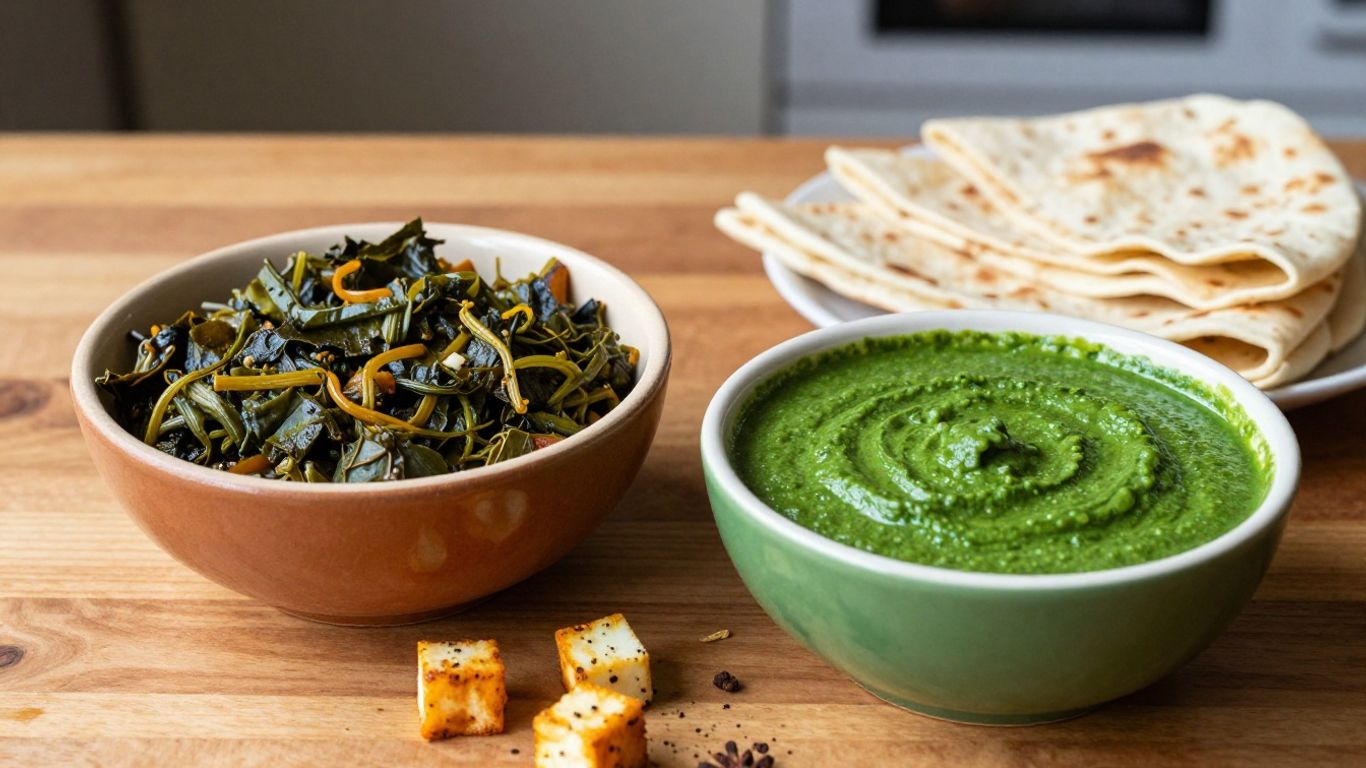
A saag mixture may include mustard greens, spinach, fenugreek leaves, bathua or other regional greens. The exact combination is not universal, and the proportions can change the character of the dish. Mustard greens bring a peppery edge, while fenugreek contributes a particular savoury bitterness. The result is usually more layered than a sauce made from spinach alone.
Palak is made primarily with spinach
Palak is the more specific term, and spinach is its defining ingredient. The leaves are commonly softened, blended and cooked with onion, tomato, garlic, ginger and spices. This creates a focused spinach flavour rather than the varied profile of a mixed saag. Paneer is a familiar pairing, but the same base can be used with lentils or vegetables.
How regional usage affects the definition
Indian food names are shaped by region, household and context, so there is no single formula for every dish called saag. In Punjab, sarson ka saag has a particularly strong association with mustard greens, while another cook may use a broader mixture. Restaurant menus can simplify names for familiarity too. Reading the ingredient list, when available, is often more reliable than relying on the title alone.
How the ingredients change the flavour
Leafy greens are not interchangeable in the pan. Each one carries its own bitterness, sweetness, pepperiness and aroma, and those qualities become more pronounced with longer cooking. Spices, onions, garlic and the finishing tempering then round out the base. This is why two green curries can have similar appearances but very different flavour journeys.
The earthy, varied taste of saag
Mixed greens give saag a deeper, more rustic taste. Mustard can be pleasantly pungent, fenugreek can add a bitter-savoury note, and spinach can soften the mixture. Slow cooking brings these flavours together rather than leaving each leaf tasting separate. The finished curry often has a fuller character that stands up well to sturdy breads.
The milder flavour of palak
Spinach has a gentler flavour, especially when paired with onion, ginger, garlic and warm spices. A palak sauce may taste clean and lightly sweet, with the seasoning taking a more visible role. Some versions include dairy for extra richness, while others rely on the blended spinach and cooking base. For readers who prefer a softer green flavour, palak is often the easier starting point.
The role of mustard greens, fenugreek and other leaves
The supporting leaves decide how assertive a saag becomes. Mustard greens add a bold, slightly peppery note; fenugreek leaves bring bitterness and fragrance; and other greens can contribute body or a subtle vegetal sweetness. Cooks balance these leaves with aromatics and spices rather than treating them as interchangeable. Saakshi's Kitchen describes the broader role of everyday Indian spices in its guide to building flavour with spices, which is useful context when comparing leafy-green dishes.
Saag dishes compared with palak dishes
The names become easier to understand when attached to familiar dishes. Sarson ka saag, palak paneer and saag paneer all use leafy bases, but they do not promise the same ingredients. Their pairings also reflect how the sauce is meant to be eaten. A thick, earthy preparation may call for a different bread from a smooth spinach curry.
Sarson ka saag and its traditional ingredients
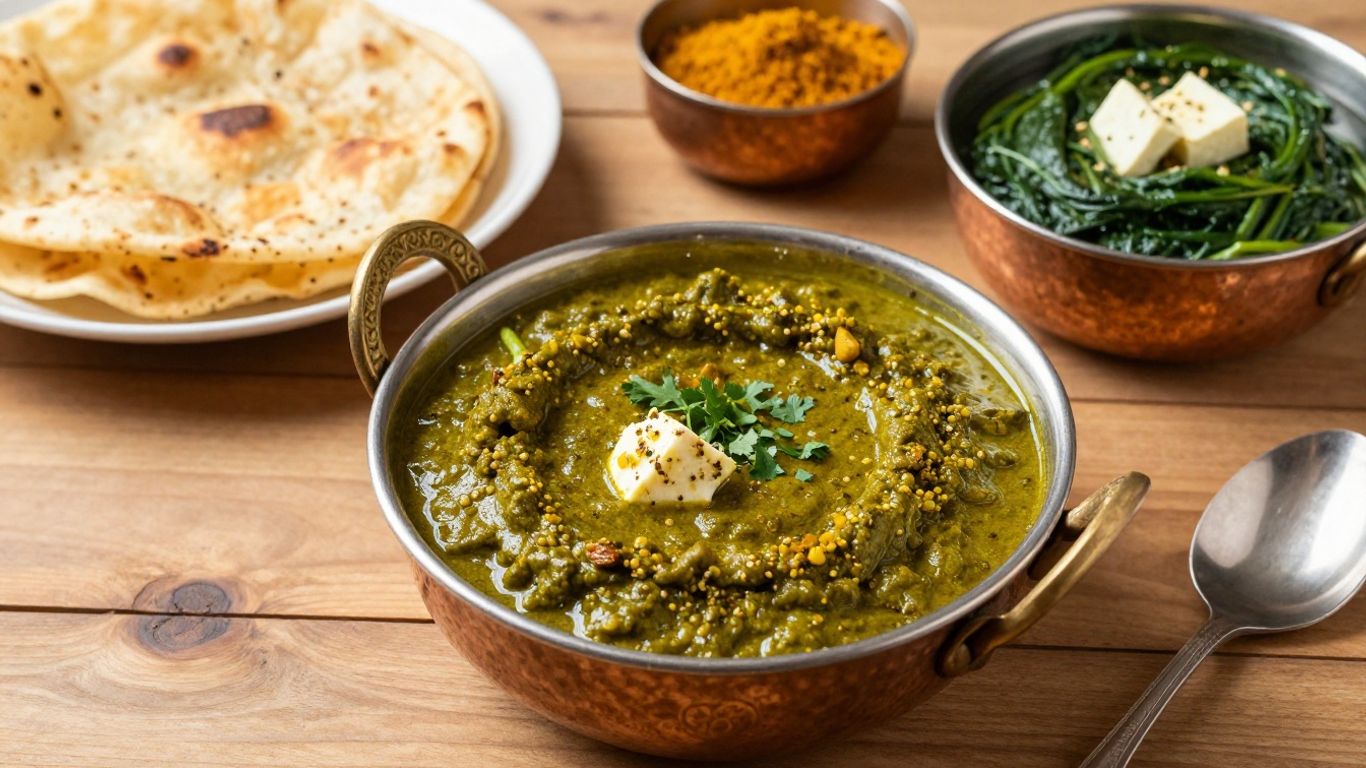
Sarson ka saag is closely associated with mustard greens and Punjabi cooking. Spinach or other leaves may be added to soften the mustard flavour and adjust the texture, but mustard remains central to its identity. It is commonly cooked down into a thick preparation and served with makki di roti. Butter or ghee may be offered alongside, depending on the household recipe.
Palak paneer and its spinach-based sauce
Palak paneer pairs soft cubes of paneer with a spinach-based sauce. The spinach is often blended, giving the curry a smooth consistency and a clear green colour. Garlic, ginger, onion, tomato and spices provide the savoury structure around the leaf. A familiar example is Palak Paneer, which shows how the dish fits within a wider selection of home-cooked Indian meals.
Other popular saag and palak combinations
Leafy bases are flexible, so they appear with more than paneer. Saag may be combined with potatoes, chicken or lamb, while palak is often used with dal, paneer or vegetables. The choice of partner changes how much body and seasoning the sauce needs. A delicate ingredient suits a gentle spinach base, while a stronger saag can support a more substantial centrepiece.
Differences in texture and appearance
Texture is one of the quickest ways to tell these dishes apart at the table. Spinach breaks down readily, whereas tougher or more fibrous leaves can retain a little structure after cooking. Blending, chopping and cooking time all matter as much as the choice of greens. Colour can vary too, so brightness alone should not be treated as a quality test.
Why saag is often thicker and more rustic
A mixed saag may be chopped or blended only partly, leaving tiny pieces of leaf in the sauce. Mustard greens and other substantial leaves can give it a thicker, more spoon-coating texture. Long cooking further reduces the mixture and develops its savoury depth. That rustic finish is part of the appeal rather than a sign that the dish has been prepared incorrectly.
Why palak usually has a smoother green sauce
Spinach softens quickly and blends into a relatively even purée. This gives palak dishes their smooth, almost velvety mouthfeel, particularly when the leaves are blended before being returned to the pan. The sauce may be bright green or darker depending on the cooking method and added ingredients. Paneer then provides a soft contrast to the liquid base.
How blending and cooking time affect the final dish
There is no single correct texture for either dish, but the main choices can be summarised clearly. The following guide shows what you might notice when the preparation changes.
| Cooking choice | Likely texture | Visual effect | Common result |
|---|---|---|---|
| Fine blending | Very smooth | Even green surface | Palak-style sauce |
| Coarse blending | Slightly textured | Visible flecks of leaf | Rustic saag |
| Longer cooking | Thick and concentrated | Darker, deeper colour | More developed flavour |
| Shorter cooking | Looser and brighter | Livelier green tones | fuller-tasting leaf character |
The table is a guide rather than a rule. A cook can blend saag smoothly or leave palak slightly textured, so the ingredient list and method together give the clearest picture.
Choosing between saag and palak
Choosing between the two is mostly a matter of taste and what you want beside the curry. Palak is often the more straightforward option when you want spinach to lead. Saag is better suited to diners who enjoy the changing notes of several leafy greens. Both can be mild or strongly spiced, depending on the recipe.
Which dish suits a milder flavour preference
Palak usually has the gentler starting point because spinach is softer in flavour than mustard or fenugreek. It works well when you want a smooth sauce that lets paneer, dal or vegetables remain prominent. The spice level can still vary, but the leafy base is less assertive. Saakshi's Kitchen serves frozen, ready-to-reheat home-cooked Indian meals, including spinach-based dishes, for a convenient meal at home.
When to choose a more robust leafy-green curry
Choose saag when you want a darker, earthier curry with more contrast between the leaves. It pairs especially well with makki di roti, naan or another bread that can scoop up a thick sauce. The flavour can be slightly bitter or peppery, which makes it satisfying alongside simple accompaniments. It is also a good choice when you enjoy regional Punjabi cooking with a rustic character.
How paneer, meat and vegetables work with each base
The best pairing depends on the strength of the leafy base and the texture of the main ingredient. These combinations are useful starting points:
- Paneer with palak for a soft, gentle contrast.
- Paneer with saag when the sauce can carry a stronger leafy flavour.
- Chicken or lamb with a robust saag that will not disappear beside the meat.
- Potatoes, peas or lentils with palak for a smoother, more delicate meal.
These are flexible suggestions rather than strict rules. A family recipe may use the same green base with several different ingredients, adjusting the spices and cooking time to suit.
How to serve and reheat saag and palak
Both dishes are designed to be eaten as part of a larger meal rather than alone. The right bread or rice helps carry the sauce, while a sharp or cooling accompaniment can make the flavours feel more balanced. If the dish has been frozen, gentle reheating matters because leafy sauces can thicken as they warm. Stirring and checking the seasoning are small steps that make a noticeable difference.
Traditional breads and rice to serve alongside
Makki di roti is the classic partner for sarson ka saag, particularly in Punjabi cooking. Naan, roti and chapati also work well with either saag or palak, while jeera rice offers a lighter way to carry the sauce. A spoonful of yoghurt or a simple onion salad can provide contrast, depending on the recipe. Serve the curry hot and allow the bread to do some of the work.
What to expect from frozen, ready-to-reheat dishes
A frozen leafy curry may look firmer when first removed from the freezer, and the sauce can separate slightly as it warms. That is normal for a dish that has been stored frozen and then reheated. Saakshi's Kitchen meals are delivered frozen and ready to reheat, making them practical for a weekday meal without changing the basic serving approach. Follow the product labelling, use suitable cookware and stir at the recommended points.
A short video demonstration can be helpful if you are unfamiliar with the way a leafy sauce loosens during reheating. Watching the texture change is often more useful than judging it while still frozen.
How to check the texture and seasoning after reheating
Stir from the centre outwards, checking that the middle is hot as well as the edges. If the sauce seems unusually thick, a small amount of water can help loosen it, while a final pinch of seasoning may restore its balance. Taste only after it has heated through, since cold food can seem flatter and thicker. The ideal result is a cohesive sauce with the leaves, spices and main ingredient working together.
Conclusion
Saag describes a broad family of leafy-green preparations, while palak points specifically to spinach. Once that distinction is clear, the differences in flavour, texture, colour and pairings make much more sense. Choose palak for a focused, smooth spinach sauce, or saag for a deeper and more varied leafy character.
Frequently Asked Questions
Is palak the same as saag?
Not exactly. Palak means spinach, while saag is a broader term for cooked leafy greens, which may include spinach alongside mustard greens, fenugreek or other leaves.
Is palak paneer made with spinach?
Yes. Palak paneer is centred on spinach, which is usually cooked into a green sauce and served with cubes of paneer.
What greens are used in saag?
Saag may contain mustard greens, spinach, fenugreek leaves, bathua or other regional leafy greens. The exact mixture depends on the recipe and location.
Which has a milder flavour, saag or palak?
Palak is usually milder because spinach has a softer flavour. Saag can be more earthy, bitter or peppery when it contains mustard and fenugreek.
Is saag always made with mustard greens?
No. Mustard greens are central to sarson ka saag, but the wider term saag can describe many combinations of leafy greens.
Which bread is traditionally served with saag?
Sarson ka saag is traditionally served with makki di roti. Naan, roti and chapati can also work well with different saag dishes.
Can palak and saag be reheated?
Yes. Reheat them gently according to the dish instructions, stir thoroughly and check that the centre is hot. Adjust the consistency or seasoning only after heating through.
Order home-cooked Indian meals from Saakshi's Kitchen · UK delivery locations.