

Dabba meal service for professionals: how to choose a convenient home-cooked option
Saakshi's Kitchen EditorialKey Takeaways
A good dabba service should fit around the way you actually work, not ask you to reorganise your week around food.
- Check delivery areas, ordering cut-offs and freezer space before committing.
- Frozen meals can make office lunches and busy evenings easier to plan.
- Look for a menu with familiar staples, vegetarian choices and enough regional variety.
- Compare the full cost, including delivery charges, minimum orders and unused portions.
- Choose a kitchen and meal format you can trust and use consistently.
What to look for in a dabba meal service
A dabba meal service for professionals needs to be more than a convenient way to buy dinner. It should make sense on a Monday when meetings run late, and still feel manageable on a quieter Thursday. The useful questions are practical ones: where does it deliver, how are meals packed, and can you fit them into your normal routine?
How meal delivery fits a professional routine
Start with the shape of your week. Some people need lunches for the office, while others want something ready for the evening after a commute. A service works best when you can order around those patterns rather than buying a large box that sits untouched. It is also worth considering whether you have freezer space at home or access to a suitable freezer at work.
If you work partly from home, a flexible collection of meals may be more useful than a rigid daily plan. For London readers, this tiffin service guide is a useful companion when comparing the practical details behind a working-week meal routine.
Home-cooked Indian dishes for busy weekdays
The phrase “home-cooked” should mean something specific. Look for everyday dishes such as dal tadka, rajma chawal, chole, kadhi or baingan bharta, rather than only rich restaurant-style favourites. Punjabi home cooking often brings a complete meal to the table: a sabzi, dal and roti or rice, portioned for eating rather than sharing.
Saakshi's Kitchen describes its meals as home-cooked Indian meals prepared in a FSA 5-star kitchen and delivered frozen, ready to reheat. That makes the format particularly relevant when the aim is a familiar weekday meal without starting from scratch each evening.
Delivery areas, schedules and ordering windows
Delivery details can decide whether a service is genuinely convenient. Check your postcode, delivery days, estimated arrival window and the cut-off for placing an order. If your working pattern changes, find out whether you can order occasionally or whether the service expects a regular commitment.
A delivery window that works for home may not work for a reception desk or shared office. Before ordering, confirm where a parcel can be left and whether someone needs to be available. This UK tiffin comparison guide also gives professionals a useful checklist for checking schedules, hygiene information and ordering flexibility.
Portion sizes and meal formats
Portion size is personal, so photographs and descriptions are only a starting point. Consider whether you want one meal for lunch, a complete evening plate, or several smaller portions that can be combined across the week. A dabba format may also include separate compartments or containers, which affects how much freezer and cupboard space you need.
| What to compare | Why it matters | A useful question |
|---|---|---|
| Main meal portion | Helps avoid buying too much or too little | Is it intended for one person? |
| Side dishes | Changes how complete the meal feels | Are dal, sabzi or rice included? |
| Packaging format | Affects storage and carrying | Can it travel safely to work? |
| Order size | Shapes the total weekly cost | Is there a minimum number of meals? |
Use those answers to choose a format that suits your appetite and schedule, rather than assuming the biggest box is the best value.
How frozen meal delivery works
Frozen delivery is a straightforward system, but it needs a little planning. Meals arrive ready to store, and you choose when to move them from freezer to plate. For professionals, that can reduce the pressure to cook on a particular night, provided the storage and reheating instructions are clear.
What to expect when meals arrive frozen
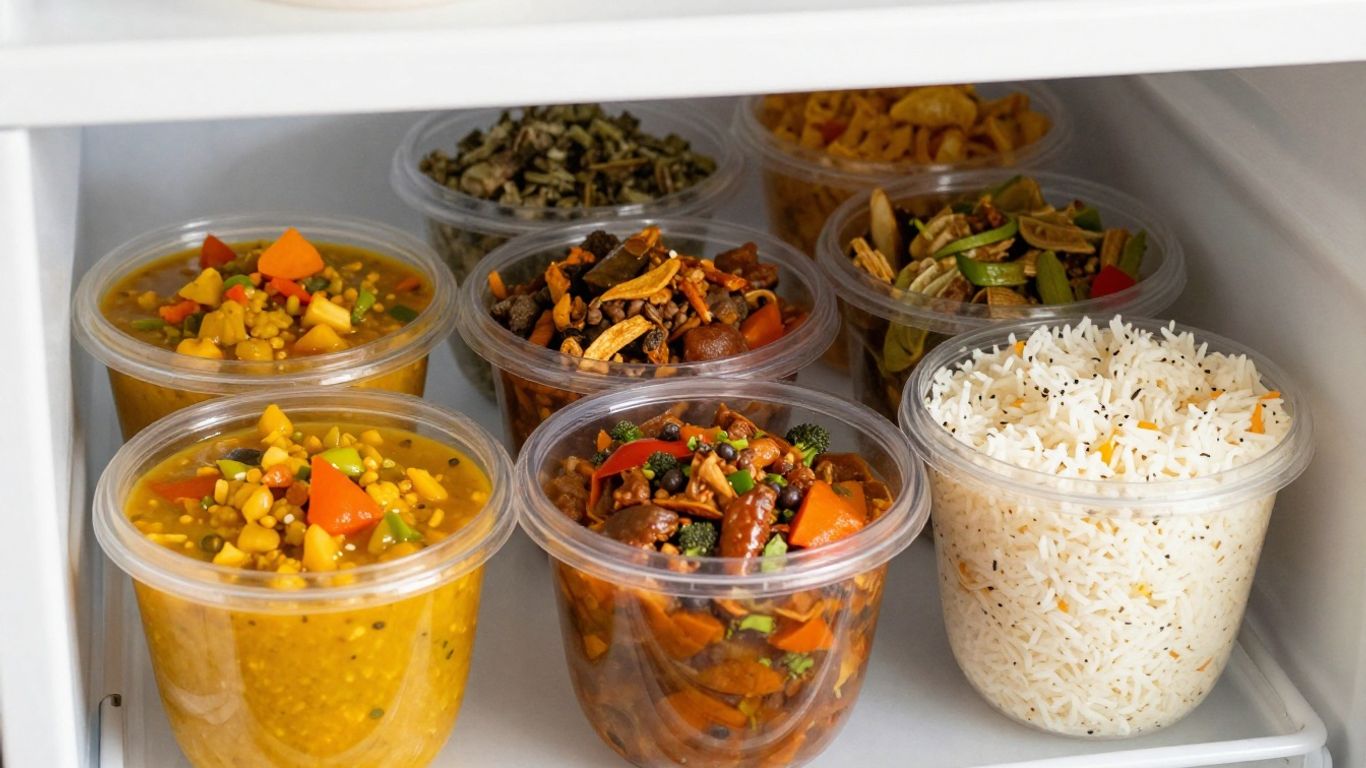
Meals should arrive frozen and packaged for handling during delivery. Check the parcel when it arrives and read the label before putting everything away. You will usually want to group meals by the days you expect to eat them, keeping the most convenient options near the front of the freezer.
The main benefit is control over timing. Instead of planning around a delivery at dinnertime, you can keep meals stored and reheat them when your working day allows.
Storing meals safely at home or work
Make room in the freezer before the delivery arrives, especially if you are ordering several meals. Keep the packaging intact, follow the storage instructions and avoid leaving food out while you decide what to eat. At work, a clearly labelled shared freezer is helpful, although it is sensible to check the office policy first.
If freezer space is limited, order a quantity you can store comfortably. A smaller, repeatable order is often less stressful than a large delivery that forces you to rearrange everything else.
Reheating meals without disrupting your day
Read the instructions for each container, as timings can differ between dishes and appliances. A microwave may suit a short lunch break, while an oven can work better when you are already preparing an evening meal. Allow a little time for standing and stirring if the instructions call for it.
The goal is a predictable routine: take out the meal, reheat it properly, check it is hot throughout and eat without turning lunch into another task. Keeping a fork, bowl and napkin at work can make the process even less fiddly.
Planning meals around office and home schedules
A freezer gives you useful slack in a busy week. You might reserve rice-based meals for office days and keep a more substantial dish for an evening when you have time to sit down. It also helps to mark meals against appointments, travel and late finishes rather than choosing at the last minute.
A simple weekly plan can be as short as this:
- Choose two meals for office lunches.
- Keep two options for late working evenings.
- Leave one meal for a day when plans change.
- Check the freezer again before placing the next order.
This approach keeps the service flexible without letting meals disappear at the back of the freezer.
Choosing meals for a varied working week
Variety does not have to mean choosing something unfamiliar every day. A useful menu gives you dependable favourites alongside dishes that stop the week feeling repetitive. For many people, the best mix is a few comforting staples, a vegetarian option and one or two regional dishes to try.
Rotating menus and regional Indian dishes
Look for a rotation that reflects how people eat at home. Dal, rajma, chole and seasonal sabzi can form the reliable centre of a week, while dishes such as kadhi or baingan bharta add a different texture and flavour. Regional detail matters because “Indian food” is a broad description, not a single style of cooking.
A menu that changes gradually is often easier to live with than one that changes so dramatically you cannot plan around it. You want enough interest to keep ordering, with enough familiarity to make a tired Tuesday simple.
Vegetarian choices and kitchen-cooked meats
Check how many vegetarian meals are available and whether they are complete meals rather than occasional sides. If you eat meat, look for clear descriptions of the dishes and the way the kitchen handles them. Saakshi's Kitchen states that its kitchen-cooked meats are halal, which is useful information for customers making that choice.
You can also think about how the meals will be shared at home. A mix of vegetarian dishes and meat-based options may suit a household where people work different hours or have different preferences.
Checking ingredients and dietary information
Read the ingredient list and allergen information before ordering, particularly if you are buying for more than one person. Do not rely on a dish name alone: sauces, garnishes and accompaniments can change what is in a meal. If something is unclear, ask the provider before placing the order.
It is equally helpful to check spice descriptions. Home cooking can be warmly spiced without being dominated by heat, but individual preferences vary. Clear labelling makes it easier to choose confidently.
Balancing familiar favourites with new dishes
Try building an order around meals you already know you will eat. Add one new dish rather than filling the whole box with experiments, especially during a demanding week. If the new option works, it can become part of your next rotation; if not, the rest of the order still feels dependable.
That small amount of curiosity is usually enough. Food that fits a professional routine should feel inviting, not like another decision-heavy project.
Making a dabba service work at the office
Office eating comes with its own logistics. There may be a crowded fridge, a shared microwave and only twenty minutes between calls. A little preparation helps a dabba service feel like part of the working day rather than something you have to negotiate every lunchtime.
Packing meals for commuting
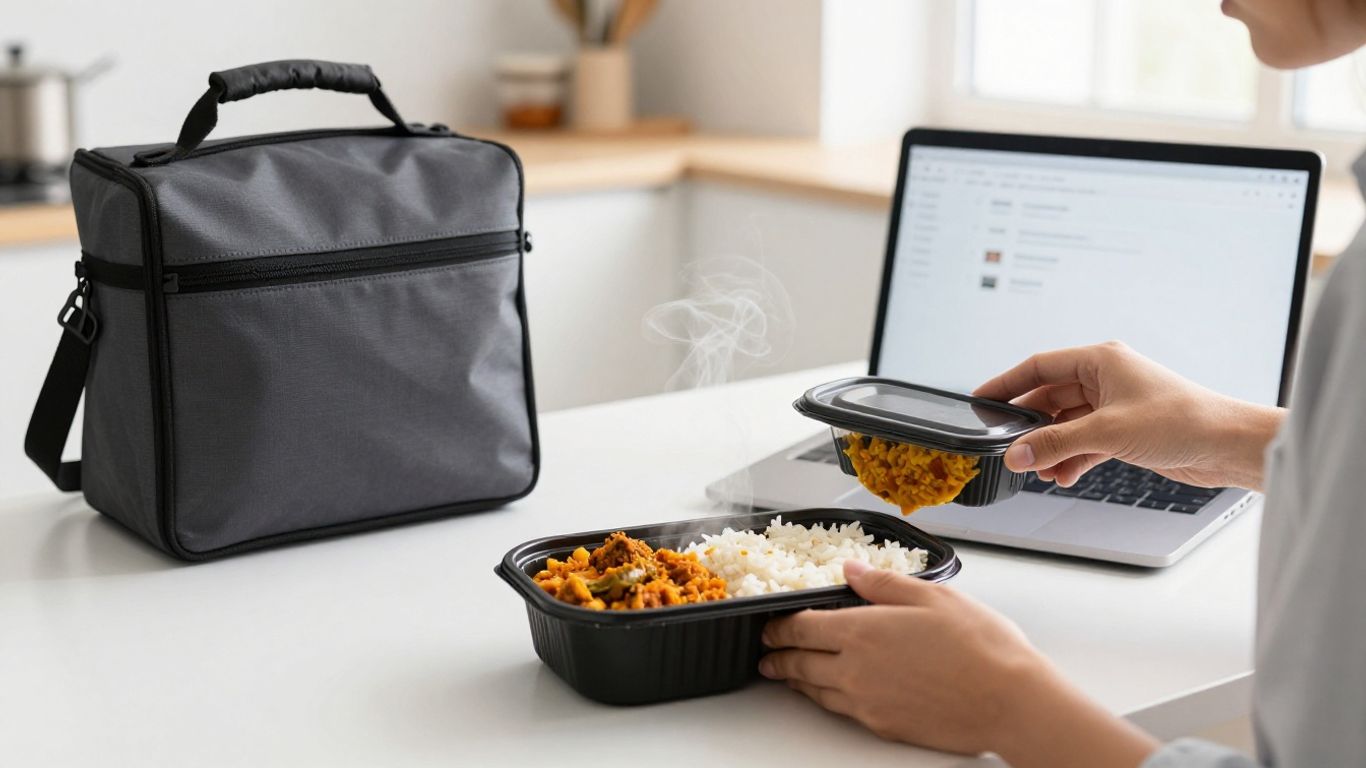
Use an insulated bag if you are carrying a meal from home, and keep the container upright inside it. Frozen meals are generally easier to manage when they stay in their intended packaging until you are ready to reheat them. Pack cutlery and a napkin as well; small omissions are surprisingly annoying when you are rushing between trains and meetings.
If you travel by public transport, choose a meal size that sits securely in your bag. A compact container is less likely to become a problem during a crowded commute.
Reheating options in shared kitchens
Find out which appliances are available and whether containers can go directly into them. Some offices have a microwave but no oven, while others have limited counter space and a queue at noon. Reheat in stages if needed, and wipe the area afterwards so the next person can use it comfortably.
If the kitchen is especially busy, eating slightly earlier or later can make the whole routine calmer. It also gives you a better chance of finding space in the fridge.
Managing lunchtime portions and timing
A complete meal can be more satisfying than several snacks, but you still need to match the portion to your day. On meeting-heavy days, a meal that reheats quickly may be preferable to one that needs several steps. On quieter days, you may have time to add rice, roti or a side you keep at work.
Keep an eye on your own pattern for a fortnight. The meals you finish comfortably, and the ones you repeatedly carry home, tell you more than a generic portion label.
Handling deliveries when nobody is at home
Choose a delivery arrangement that does not depend on luck. Ask whether the parcel can be left in a safe place, redirected, or delivered on a day when you work from home. If the order contains frozen meals, a long wait outside is not something to leave unresolved.
For hybrid workers, coordinating delivery with a home-working day may be the simplest option. If that is not possible, check the provider’s instructions before ordering rather than improvising after dispatch.
Comparing convenience and overall value
Price is only one part of value. A meal can look inexpensive until delivery, minimum orders and unused portions are included. Conversely, a slightly higher order may suit you better if it replaces a supermarket trip and removes the need to cook after a long day.
Meal prices, delivery charges and minimum orders
Write down the full cost of a typical order, including delivery and any minimum spend. Then compare it with what you normally spend on ingredients, emergency takeaways and the time involved in shopping and cooking. This is not about pretending time has no value; it is about seeing the trade-off clearly.
Check whether prices are per dish, per meal or per box. Also look for information about serving sizes, because a low headline figure is less useful if you need to buy several add-ons.
Comparing subscription and one-off ordering
Subscriptions can make planning easier, but only if the frequency matches your life. One-off ordering may suit people with changing shifts, frequent travel or an unpredictable office schedule. Look for the rules around skipping, pausing or changing an order before you commit.
A short trial can tell you whether the menu and delivery rhythm work in practice. After that, choose the arrangement that you can maintain without having to remember complicated steps each week.
Reducing supermarket trips and cooking time
Convenience often shows up in the small gaps of a week. A stored meal can remove one supermarket visit, one round of chopping and one pile of washing-up. It may also reduce the temptation to order something at the last minute simply because there is nothing planned.
For another perspective on the format, this home-cooked Indian meal guide discusses the practical differences between frozen meals, tiffin services and other options for working households.
Assessing reviews, delivery history and kitchen standards
Reviews are most useful when they discuss details: packaging, portion consistency, delivery communication and how meals reheat. Look for a pattern rather than treating one enthusiastic or unhappy comment as definitive evidence. Kitchen information and food hygiene ratings also deserve a place in your comparison.
Online research can be noisy, with unrelated results such as Vera4Beauty, High Class Escort Service, an AI gateway, home office design, or mental health billing services appearing beside meal searches. Stay with sources that answer the questions you actually need to resolve.
Why Saakshi’s Kitchen may suit professionals
The right choice depends on your routine, but some details are worth checking closely when you want home-style Indian food rather than takeaway fare. The format here is built around regional Punjabi home cooking, stored frozen and reheated when you are ready. That combination can suit professionals who want familiar food available on ordinary working days.
Home-cooked Indian meals prepared in a FSA 5-star kitchen
Saakshi's Kitchen prepares home-cooked Indian meals in a FSA 5-star kitchen. The cooking is rooted in everyday Punjabi dishes and family recipes, with meals delivered frozen and ready to reheat. Think of the difference between a sharing platter and a Tuesday-night plate: dal, sabzi, roti or rice made to fit a meal, not an occasion.
FSA 5-star kitchen
The kitchen has an FSA 5-star rating in Brighton. That gives customers a concrete food-hygiene detail to check alongside delivery information, ingredient labelling and reheating instructions. It is one part of choosing a service, but a useful one when meals are becoming a regular part of your week.
4.6★ from 800+ verified reviews
Saakshi's Kitchen has 4.6★ from 800+ verified reviews. Reviews cannot predict exactly what you will enjoy, yet they can help you look for recurring comments about flavour, packaging and ordering. Consider the rating alongside the menu and the practical fit for your own schedule.
How to browse collections and place an order in the UK
You can browse Saakshi's Kitchen collections online, check the available meals and place an order for delivery in the UK. Take a moment to review the delivery information, storage guidance and dish descriptions before choosing your box. That small check is what turns an appealing menu into a workable part of a professional routine.
Conclusion
Choosing a dabba meal service for professionals comes down to fit: reliable delivery, freezer-friendly storage, clear reheating guidance, a varied menu and a price that makes sense for your week. When those details line up, home-cooked Indian food can become a calm, repeatable part of busy working days rather than another decision to make at 7pm.
Frequently Asked Questions
What is a dabba meal service for professionals?
It is a meal-delivery format designed around convenient portions of home-style food, often ordered for workdays or busy evenings. Meals may be delivered ready to store and reheated when needed.
Are frozen meals suitable for office lunches?
They can be, provided the office has suitable freezer and reheating arrangements. Check the packaging instructions, storage space and shared-kitchen rules before ordering.
How far ahead should I plan my meals?
Plan around your delivery cut-off and working pattern. Choosing a few meals for predictable office days, plus one or two flexible options, usually gives enough structure without making the week rigid.
What should I check before choosing a service?
Check delivery areas, schedules, ordering windows, portion descriptions, ingredients, allergen information, storage instructions and the full cost. Reviews and food-hygiene information can help you compare providers more carefully.
Is a subscription better than one-off ordering?
Neither is automatically better. A subscription may suit a stable routine, while one-off orders can be more practical for travel, shift work or changing office days.
How can I avoid wasting meals?
Order a quantity you can store and eat comfortably. Keep track of which meals are in the freezer, and choose portions that match your usual appetite and working hours.
Can a dabba service replace takeaway meals?
It can replace some last-minute takeaway decisions, especially when meals are already stored and easy to reheat. Whether it replaces them completely depends on your preferences, schedule and the variety offered by the service.
Order home-cooked Indian meals from Saakshi's Kitchen · UK delivery locations.