

Can you reheat curry from frozen? A safe UK guide for thawing, heating and serving
Saakshi's Kitchen EditorialKey Takeaways
Yes, you can reheat curry from frozen, provided it was cooled, stored and labelled properly in the first place. The safest method depends on the container, portion size and instructions supplied with the meal.
- Check the packaging before choosing a reheating method.
- Defrost in the fridge when you have time, or use a suitable microwave setting.
- Heat gently and stir so the middle does not stay cold.
- Reheat only the portion you plan to eat.
- Serve only when the curry is steaming hot throughout.
1. Understand whether your curry can be reheated from frozen
The short answer to “can you reheat curry from frozen?” is usually yes, but the packaging comes first. Curry varies widely: a homemade dal behaves differently from a creamy meal, a dish containing rice or a commercially prepared portion. Read the label, follow any stated method and take note of whether the meal is intended to be cooked from frozen or thawed first.
Check the packaging and cooking instructions
Look for instructions covering the oven, hob or microwave, as well as any temperature, timing or container guidance. Packaging may also tell you whether the tray can go directly into an appliance, whether a film should be pierced and whether the meal should stand after heating. If the instructions conflict with general advice, the instructions for that particular product should take priority.
A meal from Saakshi's Kitchen arrives frozen and ready to be reheated, but you should still use the directions supplied with your own portion. The size and shape of the pack make a noticeable difference to the time needed.
Distinguish homemade leftovers from commercially prepared meals
With homemade curry, you are responsible for how quickly it was cooled, how long it stayed refrigerated and what container was used for freezing. A commercially prepared meal should have its own storage and reheating guidance, which may account for the recipe, packaging and portion size. In either case, do not rely on the outside looking hot: the centre needs checking too.
It also helps to remember that texture may change after freezing. Potatoes can soften, cream-based sauces may separate slightly and rice can dry around the edges. These changes do not automatically mean the meal is unsafe, but they may affect which reheating method gives the best result.
Know when cooking from frozen is not recommended
Do not heat a frozen meal in a container that is not marked as suitable for the chosen appliance. Avoid placing sealed tubs, foil trays or ordinary takeaway packaging in the microwave unless the label specifically permits it. If the meal has been left out for an uncertain length of time, or the packaging is damaged, it is safer not to take a chance.
A dish containing separately stored rice may also need different handling from the curry itself. When there is no reliable instruction, thaw the curry in the fridge and reheat it thoroughly rather than improvising with a solid block.
2. Choose between defrosting first and reheating directly
Defrosting first is often the calmer option, particularly for a deep container or a large family portion. It gives heat less distance to travel and makes stirring easier. Direct reheating can still work when the pack and appliance instructions allow it, but it usually needs more attention.
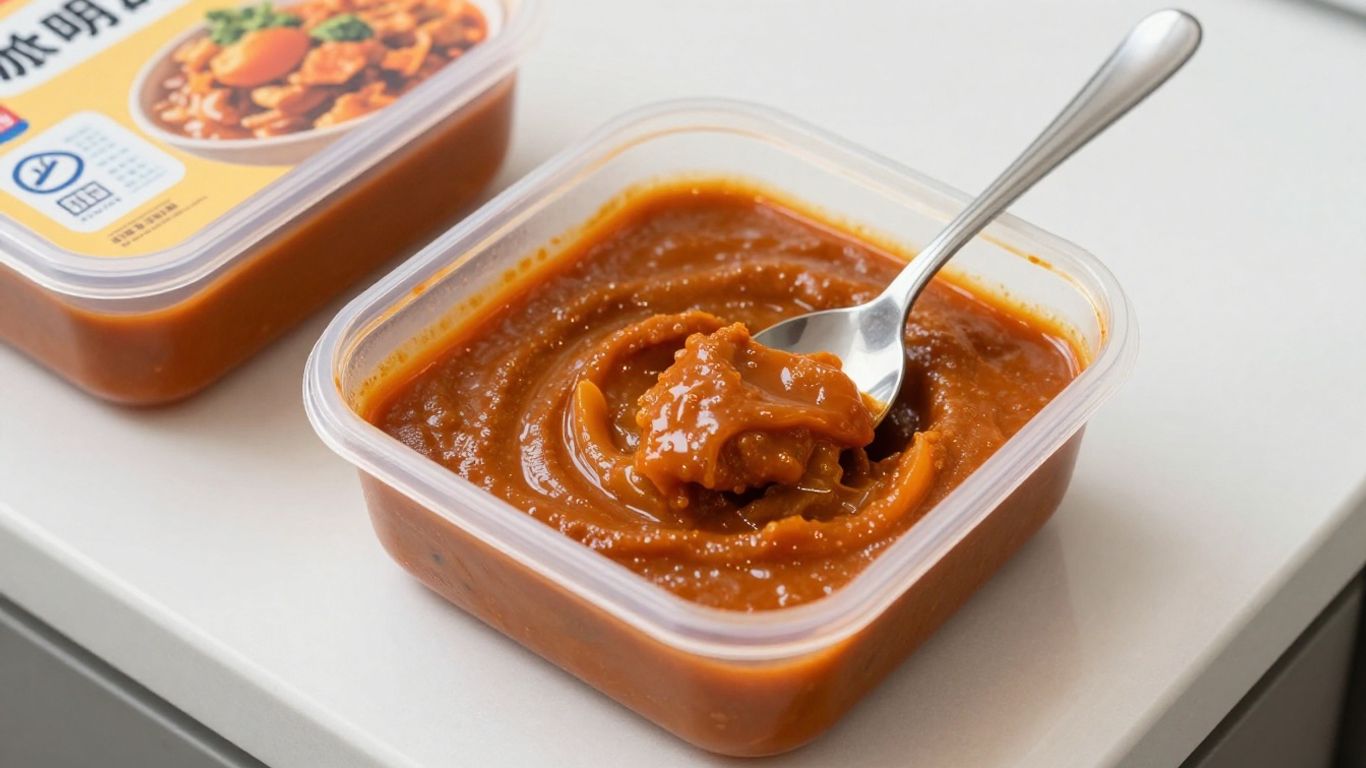
Why gradual defrosting can improve even heating
Move the frozen curry from the freezer to the fridge in its sealed container and allow it to thaw gradually. A shallow portion will generally thaw sooner than a dense block, but timing depends on quantity and packaging. Once thawed, reheat it promptly and do not leave it sitting on the worktop for hours.
A thawed curry is easier to stir, so the sauce and solid ingredients warm more evenly. This is especially useful for meals with meat, vegetables or pulses that have settled into different layers during freezing.
When the microwave can defrost and reheat in one process
Some microwaves have a defrost setting that can take a frozen portion through to reheating. Use a microwave-safe dish, cover it loosely and pause regularly to separate the softened edges from the colder centre. The microwave should not be treated as a set-and-forget appliance; power levels vary considerably.
If the meal’s instructions permit cooking from frozen, begin with the recommended setting and adjust only in short stages. Stirring between stages helps prevent the sauce from becoming scorching hot while the middle remains icy.
How to handle a solid frozen block safely
Do not force a frozen block out of its container with a sharp knife, and do not put a sealed container over direct heat. If necessary, loosen the outside under the method allowed by the packaging, then transfer the portion to a suitable pan or dish. Keep the block intact until it can be moved safely.
For a hob method, start with low heat and a splash of water if the instructions allow it. As the edges soften, break the curry apart with a wooden spoon and continue stirring. This approach is slower, but it reduces the risk of a scorched base.
3. Reheat frozen curry in the microwave
The microwave is convenient for one or two portions, especially when dinner needs to happen quickly. It heats unevenly if the container is too deep or the power is too high, so regular pauses matter more than simply choosing a long cooking time. Treat the stated timings as a guide and use visual and temperature checks at the end.
Select the right container and cover
Transfer the curry to a microwave-safe bowl if the original packaging is unsuitable. Choose a bowl with enough room for stirring and cover it with a microwave-safe lid or vented cover. A loose cover helps retain moisture while allowing steam to escape; never heat a tightly sealed container.
If the packaging gives different instructions, follow those instructions rather than transferring the food unnecessarily. Keep the dish on a microwave-safe plate in case the sauce spills as it bubbles.
Use short heating intervals and stir between them
Start with a short interval rather than committing to one long blast. Pause to stir the softened edges into the colder centre, scrape sauce away from the sides and rotate the dish if your microwave does not turn it automatically. Repeat until the portion is hot throughout.
A practical sequence for a single portion is:
- Heat briefly on a moderate setting.
- Stir from the outside towards the centre.
- Continue in short intervals until steaming hot.
- Leave the covered dish to stand before serving.
The list is a process, not a fixed timetable. A compact portion may need far less time than a deep family container, and stopping to stir is what makes the method more reliable.
Check the centre, sauce and meat before serving
Push a spoon into the thickest part and check that no cold pocket remains. If the curry contains meat, cut through the largest piece; it should be hot in the middle rather than merely warm at the edges. The sauce should be visibly steaming, with no frozen crystals or cool layer underneath.
Take care when lifting the cover because trapped steam can burn. If one area is much hotter than another, stir thoroughly and return the dish for another short interval.
Allow standing time for heat to distribute
Leave the covered curry to stand for a few minutes after heating. This allows heat to move through the portion and gives the sauce time to settle. It is not a substitute for thorough heating, so check the centre before and after standing if the portion is particularly dense.
The result should be hot throughout, with a sauce that is warm and cohesive rather than boiling violently. Gentle handling at this stage helps preserve the texture of meat and vegetables.
4. Reheat frozen curry on the hob
The hob gives you close control over a curry, especially when you have a larger portion or want to adjust a thick sauce as it warms. It does require more hands-on attention than a microwave. Keep the heat moderate and stir often so the base does not catch before the centre has thawed.
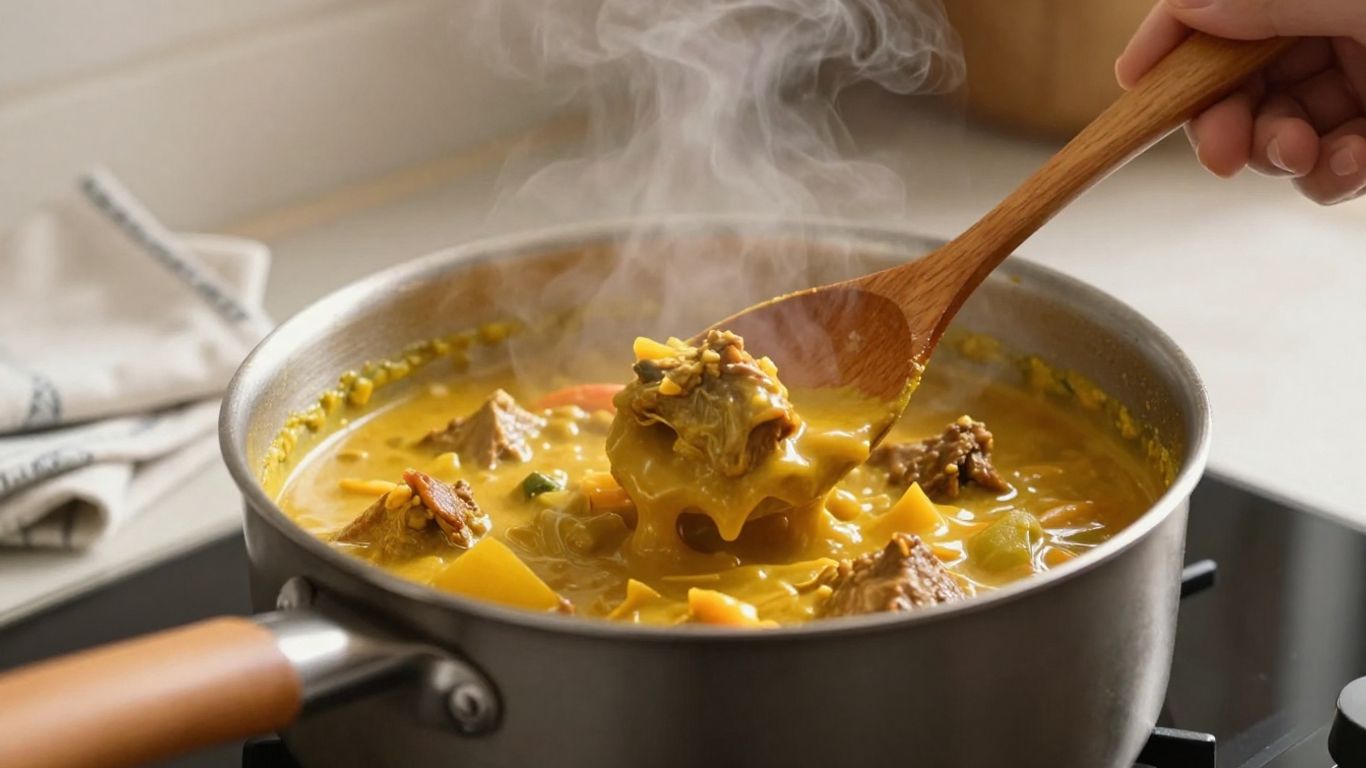
Transfer the curry safely from its container
Check that the container is not intended for direct heat before transferring the curry. Empty the frozen portion into a suitably sized saucepan; a pan that is too wide can make the sauce catch quickly, while one that is too small makes stirring awkward. Use a wooden or silicone utensil to loosen the edges as they soften.
If the packaging is stuck to the food, do not prise it apart with a sharp implement. Follow the label’s instructions for loosening it, or allow the portion to thaw safely in the fridge first.
Add a small amount of liquid if the sauce is thick
Freezing can leave a sauce tighter than it was originally. If needed, add a small splash of water and stir it through rather than pouring in a large amount at once. For a particularly thick curry, add another small splash only after the first has been absorbed.
The aim is to help the sauce move around the pan, not to dilute the flavour. Taste only once the curry is fully heated, since seasoning can seem different while the food is still cold.
Use gentle heat while stirring frequently
Begin on low heat and cover the pan if the instructions permit. Stir around the base and into the centre every minute or so as the frozen portion breaks down. Once it has loosened, keep the heat moderate and avoid an aggressive boil, which can split some sauces and make meat tough.
A good hob method is patient rather than complicated. The freezing and reheating guide also treats gradual thawing, pan heating and regular checks as central parts of handling frozen curry.
Confirm that the curry is steaming hot throughout
Check the thickest part of the pan, not just the sauce around the edges. Stir from the bottom upwards and look for steady steam throughout the mixture. If the centre is still cool, continue on gentle heat and check again rather than turning the hob sharply higher.
Once hot, remove the pan from the heat and serve promptly. Do not leave it standing on a switched-off hob for an extended period.
5. Reheat frozen curry in the oven
The oven can be useful for several portions, particularly when the meal is already in an oven-safe tray. It is slower than a microwave and less immediate than the hob, but it warms a deep dish steadily when covered properly. Always check the packaging before putting any container into the oven.
When oven reheating is useful for larger portions
Choose the oven when you are feeding several people or reheating a substantial portion that would be awkward to stir in a microwave. It can also be practical when the meal’s instructions give an oven method. Allow plenty of time for the centre to heat, especially if the portion is frozen solid.
Avoid using the oven simply because it feels more thorough. For a small serving, the extra time may dry the edges before the middle is ready.
Choose an oven-safe dish and cover it correctly
If the original container is not oven-safe, transfer the curry to a suitable baking dish. Cover it with an oven-safe lid or foil, leaving no exposed corners that could dry out quickly. Do not use plastic film, ordinary takeaway tubs or containers with unknown heat resistance.
A covered dish keeps moisture around the curry as it warms. Place it on a baking tray so it is easier to handle and any bubbling sauce is contained.
Allow extra time for dense or frozen portions
Frozen curry needs more time than a thawed portion, and a deep dish needs more time than a shallow one. Use the temperature and timing on the packaging where provided, then allow a little extra time for the middle if the portion is especially dense. Keep the dish covered while it heats.
Avoid repeatedly opening the oven, since each check releases heat. Instead, plan one careful check near the end and return the dish if the centre is not ready.
Check the middle before serving
Insert a clean spoon into the centre and stir enough to expose the thickest area. Look for steam throughout and check that meat or other substantial pieces are hot in the middle. If the edges are bubbling but the centre is cool, cover the dish again and continue heating.
Let the dish stand briefly once it is hot, then stir before serving. Use oven gloves and take care with steam when removing the cover.
6. Follow food safety rules after reheating curry
Safe reheating begins well before the curry enters the microwave, pan or oven. Cooling, freezing and portioning all affect how confidently you can handle the meal later. A tidy routine also makes it easier to know what is in the freezer and when it should be used.
Cool and freeze leftovers promptly
If you are freezing homemade curry, divide it into smaller portions so it cools more quickly and later reheats evenly. Use clean, suitable containers, leave room for expansion and label each portion with its contents and date. Do not place a large, steaming pot straight into the freezer.
Allow the food to stop steaming, then cool it promptly using a sensible method before freezing. If you are unsure how long it has been sitting out, do not freeze it for another day.
Reheat only the portion you intend to eat
Freezing individual portions is usually easier than repeatedly warming one large container. Take out only what you need, keeping the rest frozen and protected from temperature changes. This is especially helpful when one person wants a smaller serving or when dinner times differ.
Portioning also makes the reheating method clearer: a shallow single serving suits a microwave, while several portions may be easier in a covered pan or oven dish.
Reheat food only once
Only reheat the amount you intend to eat, and do not cool and reheat the same curry repeatedly. Each cycle makes texture less pleasant and complicates safe storage. If you have leftovers after reheating, do not put them back with the untouched frozen portion.
Serve the reheated curry, cool any unavoidable remainder promptly and follow your local food-safety guidance about whether it should be discarded. When in doubt, be cautious.
Keep an eye on storage times and freezer condition
Use labelled portions within the storage period recommended for the recipe or packaging. A freezer that has lost power, thawed food or developed damaged packaging needs extra care. Ice crystals alone do not tell you everything about safety, so consider the full storage history.
Keep the freezer organised so older portions are used first. That simple habit prevents forgotten containers becoming an unidentifiable block at the back.
7. Serve reheated curry with the right checks
Reheating is complete only when the curry is safe and pleasant to eat. Look at the sauce, test the centre and think about what will be served alongside it. The final few minutes are where a careful meal can either come together or become dry and overcooked.
Check texture, sauce consistency and temperature
Stir gently and check that the sauce coats the ingredients without being scorched at the bottom. Meat should be hot through, vegetables should retain some structure where appropriate and pulses should be evenly warmed. A small splash of water can loosen a thick sauce, but add it gradually.
Saakshi's Kitchen prepares frozen Punjabi home-cooked meals intended to be reheated before serving, so the same basic checks still apply: follow the supplied directions, heat the centre and serve promptly. The goal is a properly warmed meal, not a sauce that has boiled for so long that its texture changes.
Pair the curry with separately prepared rice or sides
Prepare rice, roti or other sides separately unless the packaging specifically says they can be reheated together. This gives each component the attention it needs and avoids over-heating the curry while waiting for a cold side to catch up. Keep portions sensible so the curry remains the centre of the plate.
For a family table, you might serve a dal tadka, rajma chawal or kadhi alongside simple breads and vegetables. These familiar dishes suit an everyday meal rather than requiring the timing of a special occasion.
Recognise signs that the curry should be discarded
Discard the curry if it has an unusual smell, mould, a damaged or leaking container, or a storage history you cannot trust. Do not taste food to decide whether it is safe. A strange appearance may sometimes be a harmless texture change, but uncertainty is enough reason not to serve it.
When a sauce has separated slightly after freezing, that alone is not proof of spoilage. Reheat it thoroughly and assess it alongside the date, storage conditions and packaging.
Adapt the method for single portions and family servings
A single shallow portion usually needs less time and benefits from microwave intervals with stirring. Several portions may be easier to thaw in the fridge and warm in a covered saucepan, where you can stir the centre into the sauce. Whatever the size, use the thickest and coldest part as your final check.
For a freezer routine built around home-cooked Indian meals, it helps to label portions by dish and serving size. Saakshi's Kitchen is one example of frozen food delivered ready to reheat, but the practical rule remains the same for any meal: read the instructions, heat steadily and serve only when it is hot throughout.
Conclusion
You can reheat curry from frozen safely when you start with sound storage, choose a suitable method and check the centre rather than relying on the edges. Defrosting in the fridge is often easiest, while careful microwave, hob or oven heating works when the packaging allows it. Take your time, stir as needed and serve the curry once it is steaming hot throughout.
Frequently Asked Questions
Can you reheat curry from frozen?
Usually, yes, provided it was frozen safely and the packaging or recipe permits reheating from frozen. Use a suitable container, heat it thoroughly and check the centre before serving.
Is it better to defrost curry before reheating?
Defrosting in the fridge often gives more even heating and makes stirring easier. Direct reheating can work for suitable portions, but it needs closer attention and usually takes longer.
Can frozen curry go straight into the microwave?
Only if the container and instructions allow it. Transfer the curry to a microwave-safe dish when needed, cover it loosely and heat in short intervals, stirring between them.
Can you reheat frozen curry on the hob?
Yes, if it is transferred to a suitable saucepan. Begin gently, add a small splash of water if necessary, stir as it loosens and continue until the centre is steaming hot.
How do you reheat frozen curry in the oven?
Use an oven-safe, covered dish and allow extra time for the frozen centre to heat. Check the middle before serving, since bubbling edges do not guarantee that the whole portion is hot.
Can you reheat curry more than once?
It is best to reheat only the portion you plan to eat and avoid reheating the same food repeatedly. Keep untouched portions separate and follow reliable storage guidance.
Can rice be reheated with frozen curry?
Rice is best handled according to its own storage and reheating instructions. Unless the packaging specifically allows it, prepare or reheat rice separately from the curry.
Order home-cooked Indian meals from Saakshi's Kitchen · UK delivery locations.